
Harvard Professor Warns of $1 Trillion Cost to U.S. Taxpayers from Iran War
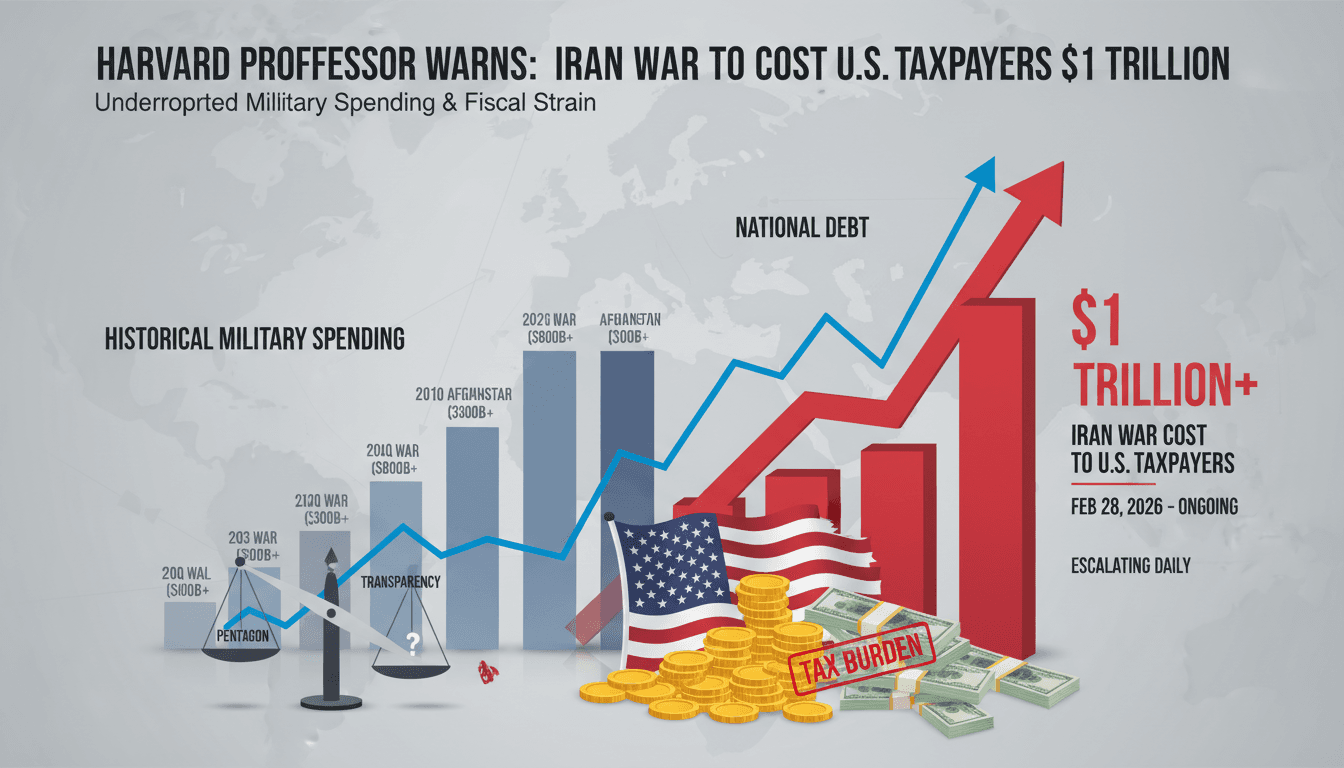
Here's what it means for you.
As a taxpayer, you may face increased financial burdens due to escalating military expenditures and their long-term implications.
Why it matters
The projected $1 trillion cost of the Iran War could significantly impact U.S. fiscal policy and taxpayer obligations.
What happened (in 30 seconds)
- Professor Linda Bilmes of Harvard Kennedy School warned that the ongoing Iran War could cost U.S. taxpayers at least $1 trillion.
- Initial costs were underestimated, with the Pentagon adjusting six-day expenses from $11.3 billion to approximately $16 billion.
- Fragile ceasefires and stalled diplomacy complicate the situation, amplifying fiscal debates about military spending.
The context you actually need
- The Iran War began on February 28, 2026, following U.S.-Israeli airstrikes that killed Iran's Supreme Leader, leading to Iranian retaliation and escalating conflict.
- Historical precedents like the $2 trillion Iraq War highlight the long-term financial burdens associated with military engagements, especially amid a national debt of $31-39 trillion.
- Current economic conditions are exacerbated by the war, with oil prices surging over 60% and fears of a global recession rising, affecting markets and consumer prices.
What's really happening
The ongoing Iran War, initiated by U.S.-Israeli strikes, has spiraled into a costly conflict with significant implications for U.S. taxpayers. Professor Linda Bilmes' projection of at least $1 trillion in costs encompasses not only immediate military expenditures but also long-term financial burdens such as veteran care, reconstruction efforts, and interest on the national debt. The Pentagon's initial underreporting of costs reflects a broader trend of fiscal mismanagement in military operations, where the true financial impact often emerges only after the fact.
The war's escalation has led to substantial military deployments, with over 56,000 U.S. troops currently engaged. The initial expectation of a swift operation has given way to protracted hostilities, munitions depletion, and geopolitical instability, particularly in the Strait of Hormuz, a critical global oil transit route. The closure of this strait has not only disrupted oil flows but also contributed to soaring fuel prices, impacting consumers and businesses alike.
As the Trump administration seeks emergency funding and a defense expansion, the implications for taxpayers are profound. The request for $200 billion in emergency funding and a proposed $1.5 trillion defense budget increase signal a shift in fiscal priorities that could lead to higher taxes or reduced public services. The financial strain is compounded by the national debt, which is already at staggering levels, raising concerns about the sustainability of such military expenditures.
Moreover, the economic fallout from the war extends beyond U.S. borders. In regions like Dubai, residents are grappling with rising fuel and grocery prices due to the conflict's impact on oil benchmarks, which have exceeded $120 per barrel. This situation creates inflation risks and economic strain for households, particularly as expatriate outflows affect local markets.
The combination of military costs, economic instability, and rising consumer prices creates a complex landscape where taxpayers must navigate the consequences of prolonged military engagement. As the conflict continues, the financial implications will likely reverberate through the economy, affecting everything from public services to individual financial stability.
Who feels it first (and how)
- U.S. taxpayers: Facing increased financial burdens due to rising military expenditures and potential tax hikes.
- Veterans: Likely to experience long-term care needs as a result of the conflict.
- Consumers: Individuals in regions affected by rising fuel and grocery prices, particularly in oil-dependent economies like Dubai.
- Investors: Those in the stock market may see volatility as defense spending increases and economic conditions fluctuate.
What to watch next
- Congressional funding decisions: Watch for how lawmakers respond to the Trump administration's funding requests and the potential impact on the national budget.
- Oil price fluctuations: Monitor oil prices as they directly affect consumer costs and economic stability, particularly in regions reliant on oil exports.
- Veteran care policies: Keep an eye on changes in policies regarding veteran benefits and healthcare as the war continues and costs escalate.
The Iran War is ongoing, with significant military expenditures already incurred.
Taxpayer costs will increase as funding requests for military operations grow.
The long-term economic impact on U.S. taxpayers and global markets remains uncertain.
Frequently Asked Questions
- Why it matters?
- The projected $1 trillion cost of the Iran War could significantly impact U.S. fiscal policy and taxpayer obligations.
- What happened (in 30 seconds)?
- Professor Linda Bilmes of Harvard Kennedy School warned that the ongoing Iran War could cost U.S. taxpayers at least $1 trillion. Initial costs were underestimated, with the Pentagon adjusting six-day expenses from $11.3 billion to approximately $16 billion. Fragile ceasefires and stalled diplomacy complicate the situation, amplifying fiscal debates about military spending.
- What's really happening?
- The ongoing Iran War, initiated by U.S.-Israeli strikes, has spiraled into a costly conflict with significant implications for U.S. taxpayers. Professor Linda Bilmes' projection of at least $1 trillion in costs encompasses not only immediate military expenditures but also long-term financial burdens such as veteran care, reconstruction efforts, and interest on the national debt. The Pentagon's initial underreporting of costs reflects a broader trend of fiscal mismanagement in military operations
- Who feels it first (and how)?
- U.S. taxpayers: Facing increased financial burdens due to rising military expenditures and potential tax hikes. Veterans: Likely to experience long-term care needs as a result of the conflict. Consumers: Individuals in regions affected by rising fuel and grocery prices, particularly in oil-dependent economies like Dubai. Investors: Those in the stock market may see volatility as defense spending increases and economic conditions fluctuate.
- What to watch next?
- Congressional funding decisions: Watch for how lawmakers respond to the Trump administration's funding requests and the potential impact on the national budget. Oil price fluctuations: Monitor oil prices as they directly affect consumer costs and economic stability, particularly in regions reliant on oil exports. Veteran care policies: Keep an eye on changes in policies regarding veteran benefits and healthcare as the war continues and costs escalate.
Stock market news, investing ideas, and trading analysis.
"TheStreet provides market news and retail-investor-focused analysis."
— A47 Editor
Harvard academic has blunt message for taxpayers on Iran war
The Pentagon has reported that the initial six days of the Iran war have cost $11.3 billion, but Harvard professor Linda Bilmes argues that this figure is misleading and that the total cost will likely exceed $1 trillion. Bilmes emphasizes that the f...
Corporate leadership, finance, technology, and market trends.
"Fortune covers financial trends, leadership, and innovation with a pragmatic editorial approach."
— A47 Editor
‘I am certain’: Harvard policy expert warns the true cost of the Iran war to U.S. taxpayers will exceed $1 trillion
Harvard policy expert Linda Bilmes has warned that the true cost of the Iran war to U.S. taxpayers is projected to exceed $1 trillion. This estimate aligns with previous calculations made by Bilmes and economist Joseph Stiglitz, who determined that t...
Global business headlines with AI angles.
"General business outlet that frequently covers AI."
— A47 Editor
Iran War Could Cost The U.S. Up To $1 Trillion Over Time, Harvard Economist Warns
A Harvard economist has warned that a prolonged conflict with Iran could cost the United States up to $1 trillion over time, significantly impacting U.S. fiscal policy, defense spending, and long-term debt trajectory.