
Israeli Air Force conducts largest airstrikes on Hezbollah in Lebanon since war began
Here's what it means for you.
Increased regional instability may impact travel and economic conditions in the Middle East.
Why it matters
The escalation of military actions in Lebanon can disrupt global markets and travel, affecting international business operations.
What happened (in 30 seconds)
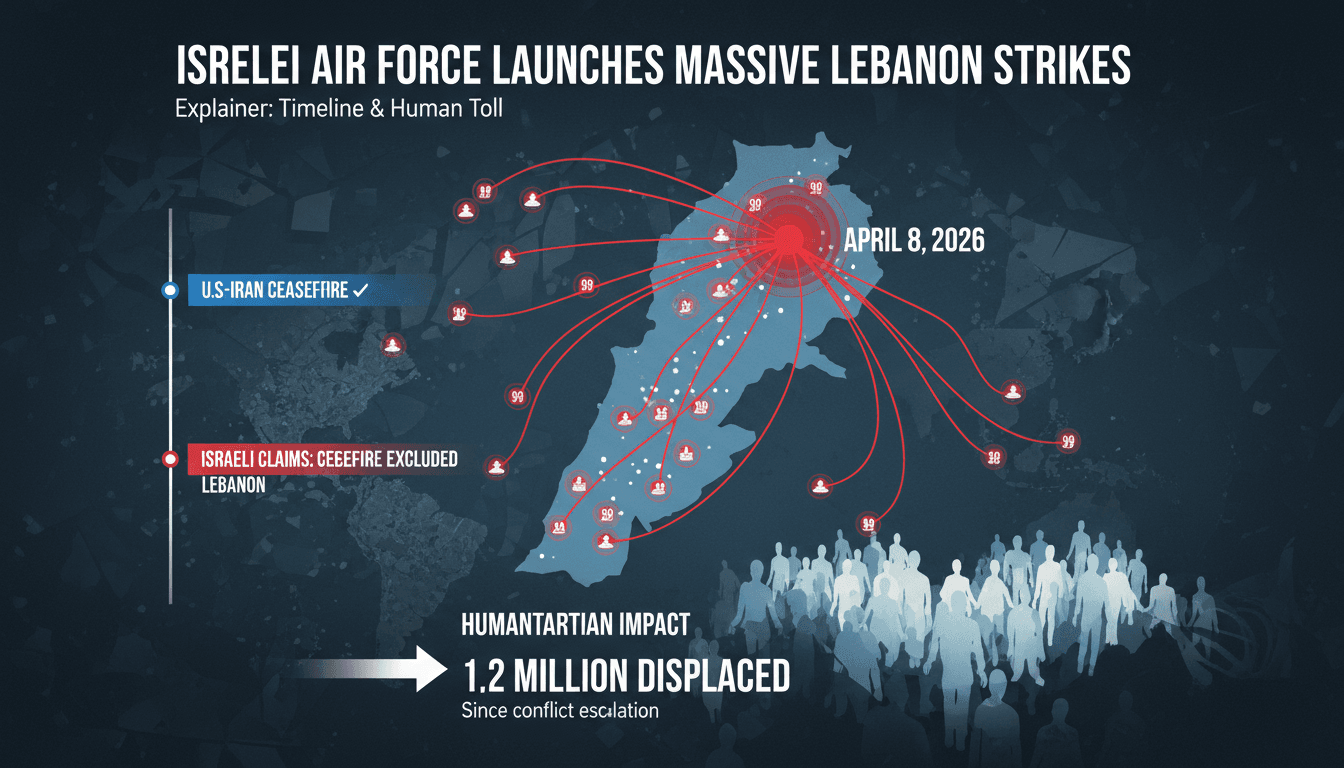
- On April 8, 2026, the Israeli Air Force launched its largest wave of airstrikes against Hezbollah, targeting 100 sites in Lebanon.
- The operation occurred amid a U.S.-Iran ceasefire announcement, which Israel stated does not apply to Lebanon.
- Hezbollah sources reported a pause in attacks on Israel, pending adherence to the ceasefire.
The context you actually need
- The current conflict escalated on March 2, 2026, when Hezbollah launched rocket attacks on Israel in solidarity with Gaza operations.
- Since March 16, Israeli air campaigns and ground operations have displaced over 1.2 million Lebanese and resulted in more than 1,500 deaths, including civilians.
- The U.S.-Iran ceasefire announced on April 8 excludes Lebanon, indicating a complex geopolitical landscape where regional actors are navigating their interests amid broader conflicts.
What's really happening
The Israeli Air Force's airstrikes on April 8 represent a significant escalation in the ongoing conflict between Israel and Hezbollah, which has intensified since early March 2026. The Israeli military targeted 100 sites in a rapid 10-minute operation, focusing on key Hezbollah assets such as command centers and military infrastructure embedded within civilian areas. This strategic choice reflects Israel's intent to diminish Hezbollah's operational capabilities while minimizing the risk of civilian casualties, although the reality often contradicts this aim.
The backdrop to these airstrikes is a complex web of geopolitical tensions involving the U.S., Iran, and various regional actors. The U.S.-Iran ceasefire announced on the same day as the airstrikes further complicates the situation, as Israel has asserted that it does not apply to Hezbollah's actions in Lebanon. This stance underscores Israel's determination to act independently in its security interests, particularly against groups it perceives as threats.
The humanitarian impact of the ongoing conflict is severe, with over 1.2 million Lebanese displaced and significant civilian casualties reported. The Lebanese economy, already fragile, faces additional risks of collapse due to the ongoing violence and instability. The strikes and subsequent military actions are likely to exacerbate these conditions, leading to increased humanitarian needs and potential international responses.
Hezbollah's reported pause in attacks indicates a momentary shift in the conflict dynamics, potentially influenced by the ceasefire announcement. However, the group's leadership has warned of a regional response if the ceasefire is violated, suggesting that the situation remains volatile. The interplay between military actions and diplomatic efforts will be critical in shaping the future of the conflict and its broader implications for the region.
As the situation unfolds, the potential for a wider regional conflict remains a concern. The interconnectedness of various actors in the Middle East means that actions taken in Lebanon can have ripple effects across borders, impacting not only local populations but also international stakeholders.
Who feels it first (and how)
- Travelers: Increased flight cancellations from UAE hubs due to regional tensions.
- Businesses in the Middle East: Heightened risks and uncertainties affecting operations and investments.
- Lebanese civilians: Directly impacted by military actions and humanitarian crises.
What to watch next
- Hezbollah's response: Monitor if the group resumes attacks or adheres to the ceasefire, as this will influence regional stability.
- International diplomatic efforts: Watch for any changes in U.S. or European engagement in the region, which could affect conflict dynamics.
- Market reactions: Keep an eye on commodity prices, particularly gold, which may fluctuate based on escalating tensions.
The Israeli Air Force conducted extensive airstrikes against Hezbollah on April 8, 2026.
The humanitarian situation in Lebanon will worsen, leading to increased international aid needs.
The long-term impact of the U.S.-Iran ceasefire on the conflict dynamics in Lebanon.
Frequently Asked Questions
- Why it matters?
- The escalation of military actions in Lebanon can disrupt global markets and travel, affecting international business operations.
- What happened (in 30 seconds)?
- On April 8, 2026, the Israeli Air Force launched its largest wave of airstrikes against Hezbollah, targeting 100 sites in Lebanon. The operation occurred amid a U.S.-Iran ceasefire announcement, which Israel stated does not apply to Lebanon. Hezbollah sources reported a pause in attacks on Israel, pending adherence to the ceasefire.
- What's really happening?
- The Israeli Air Force's airstrikes on April 8 represent a significant escalation in the ongoing conflict between Israel and Hezbollah, which has intensified since early March 2026. The Israeli military targeted 100 sites in a rapid 10-minute operation, focusing on key Hezbollah assets such as command centers and military infrastructure embedded within civilian areas. This strategic choice reflects Israel's intent to diminish Hezbollah's operational capabilities while minimizing the risk of civil
- Who feels it first (and how)?
- Travelers: Increased flight cancellations from UAE hubs due to regional tensions. Businesses in the Middle East: Heightened risks and uncertainties affecting operations and investments. Lebanese civilians: Directly impacted by military actions and humanitarian crises.
- What to watch next?
- Hezbollah's response: Monitor if the group resumes attacks or adheres to the ceasefire, as this will influence regional stability. International diplomatic efforts: Watch for any changes in U.S. or European engagement in the region, which could affect conflict dynamics. Market reactions: Keep an eye on commodity prices, particularly gold, which may fluctuate based on escalating tensions.
Regional coverage and analysis focused on politics, diplomacy, and business across the Middle East.
"Al-Monitor is known for analytical reporting on Middle East politics and policy developments."
— A47 Editor
Israeli military launches largest strikes against Hezbollah in Lebanon
The Israeli military has conducted its largest strikes against Hezbollah in Lebanon since the onset of the current conflict, targeting the militant group's infrastructure in civilian areas across the country. This escalation follows a series of airst...
Arabic-language digital news outlet covering UAE, regional, and international developments with broad general-news coverage.
"Al Ain News coverage typically blends UAE-focused reporting with wider Arab regional and international news."
— A47 Editor
إسرائيل تنفذ أكبر ضربة في لبنان.. استهداف 100 مقر لحزب الله
The Israeli military has launched an unprecedented escalation against Hezbollah in Lebanon, executing a large-scale and simultaneous strike targeting approximately 100 of the group's military facilities and infrastructure across various regions, incl...
Oil, metals, and agriculture: supply/demand headlines, OPEC chatter, inventories, and price action.
"Solid tape for energy and metals traders tracking macro and micro catalysts."
— A47 Editor
Israeli military launches largest strikes against Hezbollah in Lebanon
The Israeli military has launched its largest strikes against Hezbollah in Lebanon, marking a significant escalation in the ongoing conflict. This military action follows a series of airstrikes targeting Hezbollah infrastructure, including a recent s...