
Travis Kalanick Launches Atoms Robotics to Drive Automation in Key Industries
Here's what it means for you.
The rise of specialized robotics may redefine job landscapes and operational efficiencies across multiple sectors.
Why it matters
Kalanick's vision for Atoms could disrupt traditional industries, leading to significant shifts in labor dynamics and production costs.
What happened (in 30 seconds)
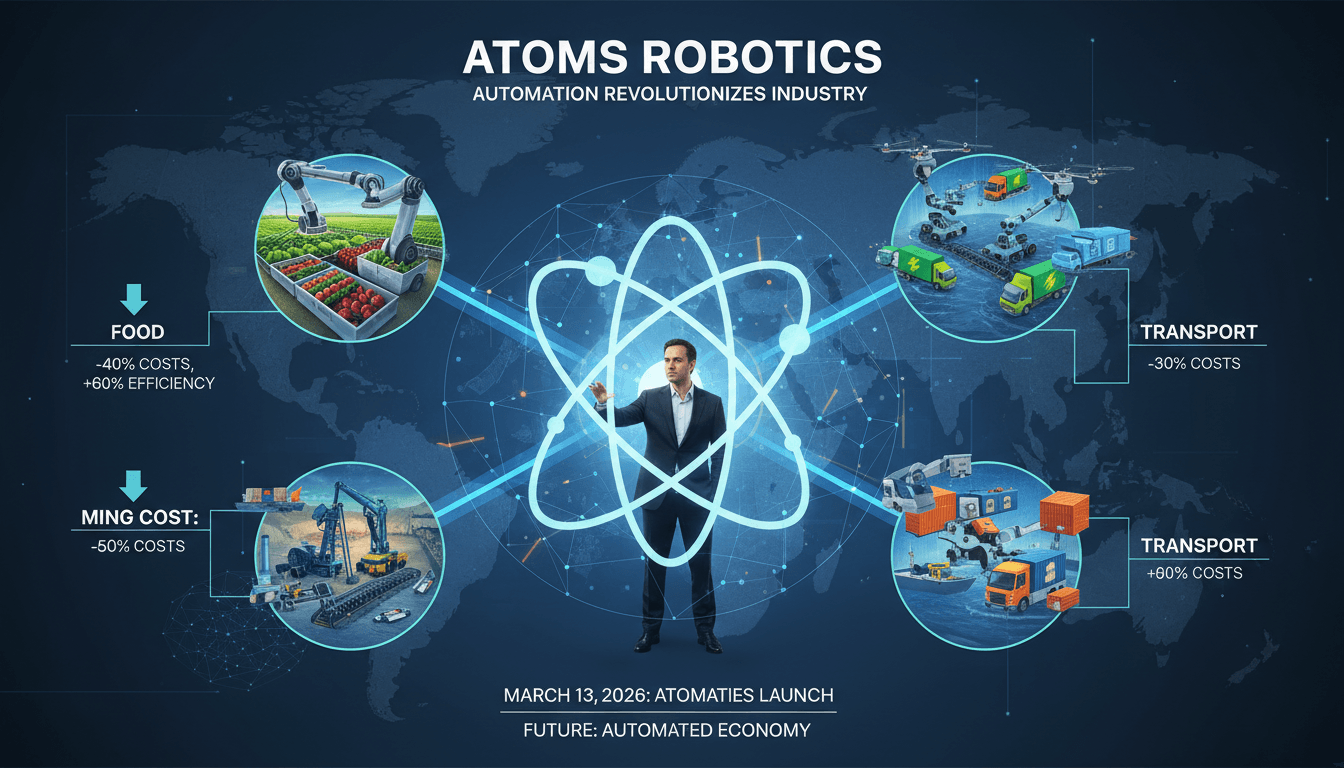
- Travis Kalanick announced the rebranding of his venture City Storage Systems to Atoms on March 13, 2026, during a TBPN livestream.
- Atoms aims to automate physical processes in food, mining, and transport sectors, reducing reliance on human labor.
- Industry response has been overwhelmingly positive, with Kalanick's social media posts garnering millions of views and likes.
The context you actually need
- Kalanick's background includes co-founding Uber and facing challenges that led to his departure in 2017, after which he focused on food infrastructure.
- Atoms operates in a market where AI capabilities have surged, with general intelligence improving nearly 1000-fold over three years, making automation more viable.
- The focus on specialized robots over humanoids suggests a strategy aimed at enhancing productivity while preserving certain job roles in industries.
What's really happening
Travis Kalanick's Atoms represents a significant pivot in the automation landscape, targeting industries that have traditionally resisted technological disruption. By focusing on specialized robotics, Atoms aims to enhance productivity in food production, mining, and transport, sectors that have seen limited advancements compared to software-driven industries.
Kalanick's assertion that full automation can decouple production from human labor hinges on the decreasing costs of computation, minerals, and energy. This shift could lead to a new economic model where abundance is achieved through efficiency rather than traditional labor inputs. The implications are profound: as production costs decrease, prices for goods and services could follow suit, potentially reshaping consumer behavior and market dynamics.
The strategic choice to develop specialized robots rather than humanoid counterparts reflects a calculated approach to mitigate public concerns over job displacement. By positioning these robots as tools that enhance human capabilities, Kalanick aims to create a narrative of collaboration rather than competition between humans and machines. This could foster acceptance among industries and workers who may otherwise resist automation.
Moreover, the timing of this launch aligns with a broader trend of increasing automation across various sectors. As companies seek to optimize operations and cut costs, the demand for effective robotic solutions is likely to grow. Kalanick's Atoms could capitalize on this trend, positioning itself as a leader in the specialized robotics market.
However, the transition to a fully automated future is not without challenges. Regulatory hurdles, public perception, and the need for significant investment in infrastructure and technology remain critical factors that could influence the pace of adoption. Kalanick's past experiences with Uber's regulatory battles may inform his approach to navigating these complexities with Atoms.
In summary, Atoms is not just another tech startup; it represents a vision of a future where physical processes are automated, potentially leading to a new era of economic abundance. The success of this venture will depend on its ability to balance innovation with societal acceptance and regulatory compliance.
Who feels it first (and how)
- Manufacturers: Increased efficiency and reduced labor costs could reshape production lines.
- Logistics companies: Enhanced transport solutions may streamline operations and reduce delivery times.
- Food industry workers: Potential shifts in job roles as automation in food production becomes more prevalent.
- Investors: Early adopters of Atoms may see significant returns as the company scales.
- Regulators: Increased scrutiny on automation impacts on employment and safety standards.
What to watch next
- Market adoption rates: Tracking how quickly industries integrate Atoms' robotics could indicate broader acceptance of automation.
- Regulatory developments: Changes in laws regarding automation and labor rights will shape the operational landscape for Atoms.
- Public sentiment: Monitoring consumer and worker reactions to automation will be crucial in assessing the long-term viability of Kalanick's vision.
Atoms has launched and is operational in stealth mode.
Industries will increasingly adopt specialized robotics to enhance productivity and reduce costs.
The full impact on job markets and regulatory responses remains to be seen.
Frequently Asked Questions
- Why it matters?
- Kalanick's vision for Atoms could disrupt traditional industries, leading to significant shifts in labor dynamics and production costs.
- What happened (in 30 seconds)?
- Travis Kalanick announced the rebranding of his venture City Storage Systems to Atoms on March 13, 2026, during a TBPN livestream. Atoms aims to automate physical processes in food, mining, and transport sectors, reducing reliance on human labor. Industry response has been overwhelmingly positive, with Kalanick's social media posts garnering millions of views and likes.
- What's really happening?
- Travis Kalanick's Atoms represents a significant pivot in the automation landscape, targeting industries that have traditionally resisted technological disruption. By focusing on specialized robotics, Atoms aims to enhance productivity in food production, mining, and transport, sectors that have seen limited advancements compared to software-driven industries. Kalanick's assertion that full automation can decouple production from human labor hinges on the decreasing costs of computation, miner
- Who feels it first (and how)?
- Manufacturers: Increased efficiency and reduced labor costs could reshape production lines. Logistics companies: Enhanced transport solutions may streamline operations and reduce delivery times. Food industry workers: Potential shifts in job roles as automation in food production becomes more prevalent. Investors: Early adopters of Atoms may see significant returns as the company scales. Regulators: Increased scrutiny on automation impacts on employment and safety standards.
- What to watch next?
- Market adoption rates: Tracking how quickly industries integrate Atoms' robotics could indicate broader acceptance of automation. Regulatory developments: Changes in laws regarding automation and labor rights will shape the operational landscape for Atoms. Public sentiment: Monitoring consumer and worker reactions to automation will be crucial in assessing the long-term viability of Kalanick's vision.
Business and tech news excluding paywalled content.
"High-volume business/tech outlet with frequent AI coverage."
— A47 Editor
Why Travis Kalanick believes humans are on the verge of a 'golden age'
Travis Kalanick, the founder of Uber, has launched a new robotics company named Atoms, which aims to develop 'gainfully employed robots' for various industries including food, mining, and transport. This announcement marks Kalanick's return to the te...
Opinionated AI coverage for general audiences.
"TNW’s AI vertical covering tools, ethics, and trends."
— A47 Editor
Uber founder Travis Kalanick launches robotics company Atoms
Travis Kalanick, former CEO of Uber, has launched Atoms, a robotics company that emerged from stealth after employing thousands, with a focus on developing 'gainfully employed robots' for industries like food, mining, and transport.
AI news with an enterprise and cloud focus.
"Covers AI in the context of data infrastructure, cloud, and enterprise stacks."
— A47 Editor
Uber co-founder Travis Kalanick launches robotics venture Atoms
Travis Kalanick, co-founder of Uber Technologies Inc., has launched a new robotics venture named Atoms Inc., which will integrate assets from City Storage Systems Inc. and Pronto AI Inc., focusing on developing 'gainfully employed robots' for various...