
Western Pharmaceutical Firms Engage in Record Licensing Deals with Chinese Biotechs
Here's what it means for you.
The surge in licensing agreements between Western pharmaceutical companies and Chinese biotechs could lead to faster access to innovative therapies for patients worldwide.
Why it matters
This trend signifies a shift in the global pharmaceutical landscape, as Western firms increasingly rely on Chinese innovation to enhance their drug pipelines.
What happened (in 30 seconds)
- Pfizer secured a $1.25 billion licensing agreement with Chinese biotech 3SBio for the cancer drug candidate SSGJ-707 in summer 2025.
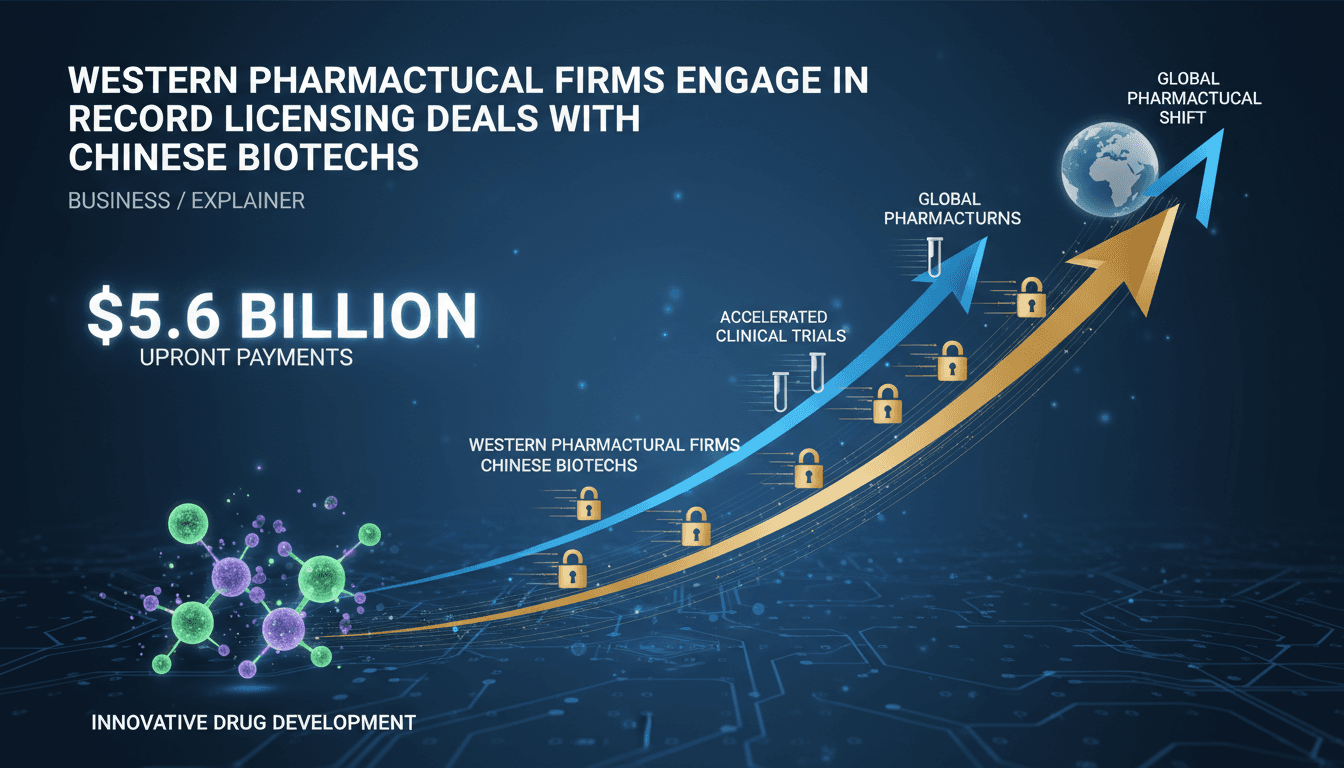
- Western and Japanese pharmaceutical companies conducted 70 transactions with Chinese biotechs in 2025, totaling nearly $5.6 billion in upfront payments.
- Sanofi invested $30 million in GluBio Therapeutics to support the development of therapies targeting sickle cell disease.
The context you actually need
- China's biotech sector has evolved from generic drug manufacturing to a hub for innovative therapies, driven by government investments and a repatriation of talent.
- Geopolitical tensions and export controls have not deterred Western firms from pursuing lucrative partnerships with Chinese biotechs.
- Innovative modalities like bispecific antibodies and CAR-T therapies are in high demand as Western companies seek to replenish their drug pipelines amid patent expirations.
What's really happening
The recent surge in licensing agreements between Western pharmaceutical companies and Chinese biotechs reflects a significant shift in the global pharmaceutical landscape. In May 2025, Pfizer announced an exclusive licensing deal with 3SBio for SSGJ-707, a PD-1/VEGF bispecific antibody designed for cancer treatment. This deal, valued at $1.25 billion upfront, along with additional milestone payments and royalties, underscores the growing recognition of Chinese biotechs as key players in drug innovation.
The driving force behind these transactions is China's rapid advancements in biotechnology, which have transformed the country from a generic drug manufacturing hub into a leader in innovative therapies. Substantial government investments, coupled with the return of overseas-trained scientists, have created an environment ripe for innovation. As a result, Western firms are increasingly turning to Chinese biotechs to access cutting-edge modalities such as bispecific antibodies, CAR-T therapies, and molecular glue degraders.
Despite ongoing geopolitical tensions and U.S. export controls on biotech tools, the appetite for collaboration remains strong. In 2025 alone, Western and Japanese pharmaceutical companies engaged in 70 transactions with Chinese biotechs, amounting to nearly $5.6 billion in upfront payments. This trend is not just a one-off occurrence; it reflects a broader strategy by Western firms to replenish their drug pipelines amid looming patent cliffs. For instance, Sanofi's $30 million investment in GluBio Therapeutics in early 2026 highlights the urgency to secure innovative therapies for diseases like sickle cell.
The implications of these partnerships extend beyond financial transactions. They signal a shift in the competitive landscape, with Chinese biotechs gaining prominence and Western firms increasingly reliant on their innovations. As these partnerships advance into clinical development, the acceleration of clinical trials for licensed assets is likely to reshape the drug approval landscape, potentially leading to faster access to new therapies for patients globally.
Who feels it first (and how)
- Pharmaceutical executives: Increased competition and collaboration opportunities.
- Patients with cancer and sickle cell disease: Potential access to innovative therapies sooner.
- Investors in biotech: Opportunities in emerging markets and technologies.
- Healthcare providers: New treatment options to offer patients.
What to watch next
- Clinical trial outcomes: Success in trials for licensed drugs could lead to quicker market access.
- Further licensing agreements: Continued partnerships may indicate a trend toward more collaboration between Western and Chinese firms.
- Regulatory changes: Shifts in regulations could impact the speed and scope of drug approvals in both markets.
Western pharmaceutical companies are increasingly licensing innovative drug candidates from Chinese biotechs.
The trend will continue, with more deals expected as both sectors seek to innovate.
The long-term impact on global drug pricing and accessibility remains to be seen.
Frequently Asked Questions
- Why it matters?
- This trend signifies a shift in the global pharmaceutical landscape, as Western firms increasingly rely on Chinese innovation to enhance their drug pipelines.
- What happened (in 30 seconds)?
- Pfizer secured a $1.25 billion licensing agreement with Chinese biotech 3SBio for the cancer drug candidate SSGJ-707 in summer 2025. Western and Japanese pharmaceutical companies conducted 70 transactions with Chinese biotechs in 2025, totaling nearly $5.6 billion in upfront payments. Sanofi invested $30 million in GluBio Therapeutics to support the development of therapies targeting sickle cell disease.
- What's really happening?
- The recent surge in licensing agreements between Western pharmaceutical companies and Chinese biotechs reflects a significant shift in the global pharmaceutical landscape. In May 2025, Pfizer announced an exclusive licensing deal with 3SBio for SSGJ-707, a PD-1/VEGF bispecific antibody designed for cancer treatment. This deal, valued at $1.25 billion upfront, along with additional milestone payments and royalties, underscores the growing recognition of Chinese biotechs as key players in drug inn
- Who feels it first (and how)?
- Pharmaceutical executives: Increased competition and collaboration opportunities. Patients with cancer and sickle cell disease: Potential access to innovative therapies sooner. Investors in biotech: Opportunities in emerging markets and technologies. Healthcare providers: New treatment options to offer patients.
- What to watch next?
- Clinical trial outcomes: Success in trials for licensed drugs could lead to quicker market access. Further licensing agreements: Continued partnerships may indicate a trend toward more collaboration between Western and Chinese firms. Regulatory changes: Shifts in regulations could impact the speed and scope of drug approvals in both markets.
Tech business coverage, major deals, product launches, and Silicon Valley trends.
"WSJ’s tech section offers authoritative reporting on the intersection of technology and business, including exclusive industry analysis."
— A47 Editor
Big Pharma Is Turning to China for the Newest Drug Ideas
Big Pharma is increasingly looking to China for innovative drug ideas, as Chinese biotechs are noted for their speed and lower costs in drug research. This shift suggests a growing reliance on China's capabilities in the pharmaceutical sector.
U.S. business news, corporate developments, and economy.
"The Wall Street Journal is respected for deep financial and economic reporting with a center-right editorial perspective."
— A47 Editor
Big Pharma Is Turning to China for the Newest Drug Ideas
Big Pharma is increasingly looking to China for innovative drug ideas, as Chinese biotechs are noted for their speed and lower costs in drug research. This shift indicates a growing recognition of China's capabilities in the pharmaceutical sector, wh...
Public health, medical research, healthcare policy, and pharmaceutical developments.
"Dow Jones is a major financial news provider with a professional tone and broad coverage, including specialized health-sector reporting."
— A47 Editor
Big Pharma Is Turning to China for the Newest Drug Ideas
Big Pharma is increasingly looking to China for innovative drug ideas, as Chinese biotechs demonstrate faster development times and lower costs in drug research. This shift indicates a growing reliance on China's capabilities in the pharmaceutical se...