
Estonian Defence Minister Reaffirms NATO's Strength Amid Russian Threats
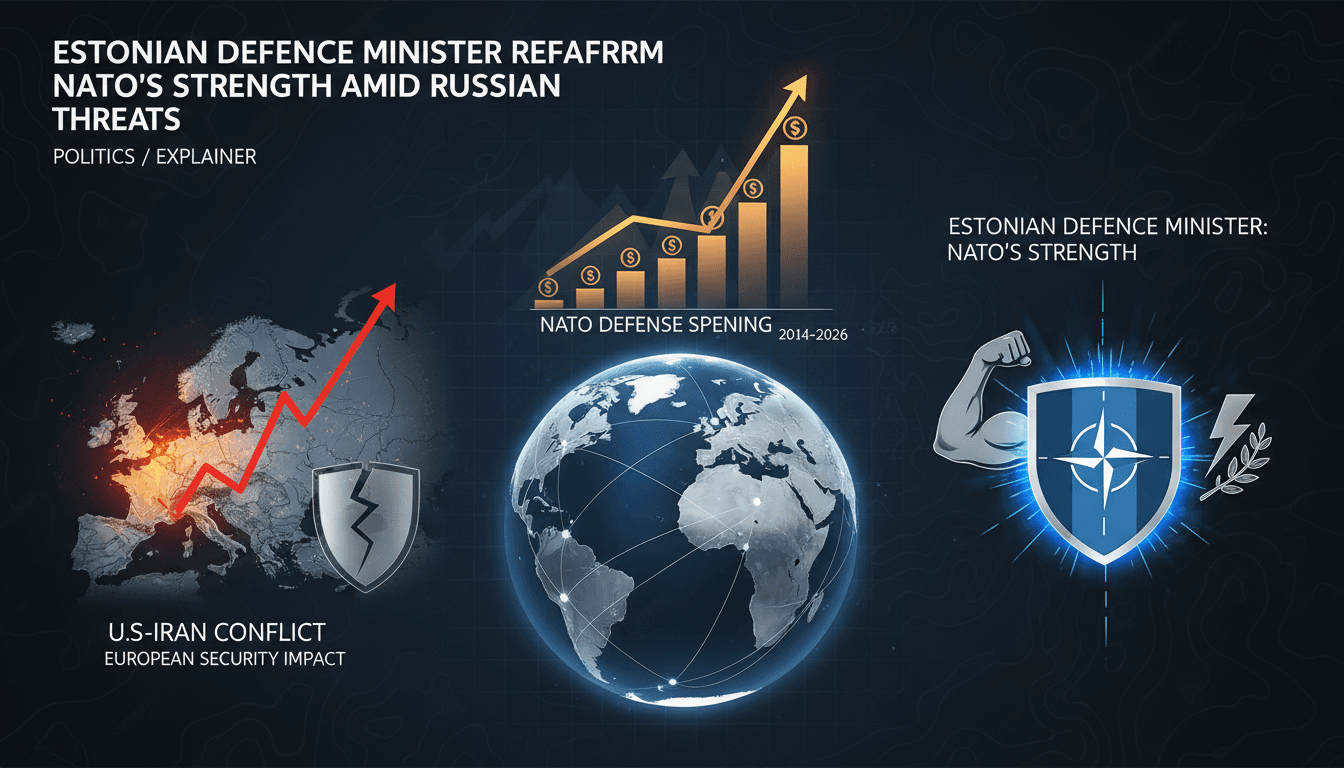
Here's what it means for you.
If you rely on global stability for business or investment, the dynamics of NATO's defense commitments could directly impact your operations.
Why it matters
The ongoing tensions between NATO allies and Russia, coupled with the U.S.-Iran conflict, could reshape defense spending and geopolitical alliances, affecting global markets.
What happened (in 30 seconds)
- Estonian Defence Minister Hanno Pevkur affirmed NATO's resilience and U.S. commitment to defend allies against Russian threats during a Reuters interview in Vilnius.
- Pevkur criticized insufficient NATO defense investments and called for prioritizing resolution of the U.S.-Iran conflict to refocus on Ukraine.
- NATO allies agreed in 2025 to increase defense spending to at least 5% of GDP, but compliance remains low among members.
The context you actually need
- NATO's defense spending target of 5% of GDP was established in response to U.S. President Donald Trump's demands, yet many members have not met this goal.
- The U.S.-Iran conflict escalated with airstrikes in February 2026, leading to Iranian blockades in the Strait of Hormuz, which are critical for global oil transit.
- Estonia plans to spend 5.1% of its GDP on defense in 2026, positioning itself among the highest spenders in NATO, reflecting its concerns over Russian aggression.
What's really happening
The geopolitical landscape in Europe is increasingly precarious, with Russia's military posturing and the ongoing U.S.-Iran conflict creating a complex web of challenges for NATO. Estonian Defence Minister Hanno Pevkur's recent statements underscore a growing anxiety among Eastern European nations regarding their security in the face of potential Russian aggression. His assertion that "NATO will not collapse" is a direct response to fears that the alliance could fracture under pressure, particularly if the U.S. were to withdraw its support.
The backdrop to Pevkur's comments is a significant increase in defense spending commitments among NATO allies, driven by U.S. pressure. However, compliance with these spending targets has been inconsistent, raising questions about the alliance's collective defense capabilities. Estonia's commitment to exceed the 5% GDP target reflects a proactive stance, but it also highlights the disparity in defense readiness among member states. This inconsistency could weaken NATO's deterrent posture against Russia, which has been stockpiling ammunition and preparing for potential conflicts in the region.
Moreover, the U.S.-Iran conflict complicates NATO's strategic focus. The recent airstrikes and subsequent Iranian blockades in the Strait of Hormuz have drawn U.S. military resources away from Europe, creating a potential vulnerability for NATO allies. Pevkur's call for resolving the U.S.-Iran conflict is not just about regional stability; it is about ensuring that the U.S. can maintain its commitment to European security. The tension between addressing immediate threats in the Middle East and maintaining a robust defense posture in Europe is a delicate balancing act that could have far-reaching implications.
As NATO prepares for upcoming summits, the emphasis on increased defense spending and cooperation among Eastern European nations, particularly Estonia and Lithuania, will be crucial. The potential delays in U.S. arms deliveries to Baltic states due to Middle East priorities could further strain the alliance's cohesion and readiness. The situation remains fluid, with ongoing discussions about how to enhance collective defense capabilities while navigating the complexities of global conflicts.
Who feels it first (and how)
- Eastern European nations: Increased defense spending and military readiness are critical for countries like Estonia and Lithuania, which are directly threatened by Russian aggression.
- Defense contractors: Companies involved in military production may see increased demand for arms and equipment as NATO members ramp up spending.
- Global oil markets: Disruptions in the Strait of Hormuz due to the U.S.-Iran conflict could lead to higher oil prices, impacting businesses reliant on stable energy costs.
What to watch next
- NATO summit outcomes: Watch for commitments on defense spending and strategic priorities that could redefine the alliance's posture against Russia.
- U.S.-Iran negotiations: Any progress or setbacks in resolving the U.S.-Iran conflict will directly influence U.S. military focus and resources available for NATO.
- Russian military movements: Increased activity or stockpiling by Russia could signal an escalation in tensions, prompting further NATO responses.
NATO's commitment to collective defense remains strong, with ongoing discussions about increasing defense spending.
Eastern European nations will continue to push for higher defense budgets and military readiness in response to perceived threats from Russia.
The long-term impact of the U.S.-Iran conflict on NATO's strategic focus and resource allocation remains uncertain.
Frequently Asked Questions
- Why it matters?
- The ongoing tensions between NATO allies and Russia, coupled with the U.S.-Iran conflict, could reshape defense spending and geopolitical alliances, affecting global markets.
- What happened (in 30 seconds)?
- Estonian Defence Minister Hanno Pevkur affirmed NATO's resilience and U.S. commitment to defend allies against Russian threats during a Reuters interview in Vilnius. Pevkur criticized insufficient NATO defense investments and called for prioritizing resolution of the U.S.-Iran conflict to refocus on Ukraine. NATO allies agreed in 2025 to increase defense spending to at least 5% of GDP, but compliance remains low among members.
- What's really happening?
- The geopolitical landscape in Europe is increasingly precarious, with Russia's military posturing and the ongoing U.S.-Iran conflict creating a complex web of challenges for NATO. Estonian Defence Minister Hanno Pevkur's recent statements underscore a growing anxiety among Eastern European nations regarding their security in the face of potential Russian aggression. His assertion that "NATO will not collapse" is a direct response to fears that the alliance could fracture under pressure, particul
- Who feels it first (and how)?
- Eastern European nations: Increased defense spending and military readiness are critical for countries like Estonia and Lithuania, which are directly threatened by Russian aggression. Defense contractors: Companies involved in military production may see increased demand for arms and equipment as NATO members ramp up spending. Global oil markets: Disruptions in the Strait of Hormuz due to the U.S.-Iran conflict could lead to higher oil prices, impacting businesses reliant on stable energy co
- What to watch next?
- NATO summit outcomes: Watch for commitments on defense spending and strategic priorities that could redefine the alliance's posture against Russia. U.S.-Iran negotiations: Any progress or setbacks in resolving the U.S.-Iran conflict will directly influence U.S. military focus and resources available for NATO. Russian military movements: Increased activity or stockpiling by Russia could signal an escalation in tensions, prompting further NATO responses.
Arabic-language coverage of political affairs and current events.
"Okaz political coverage typically follows mainstream Saudi framing on national and regional affairs."
— A47 Editor
وزير الدفاع الإستوني: «الناتو» لن ينهار.. وأمريكا لن تتخلى عن الحلفاء
Estonian Defense Minister Hanno Pevkur expressed confidence that NATO will not collapse and that the United States will support its allies, particularly Estonia, in the event of a Russian attack. During a visit to Vilnius, he emphasized that Europe i...
Arabic-language UAE newspaper coverage focused on domestic affairs, public institutions, business, society, and regional developments.
"Al Khaleej coverage generally reflects a mainstream UAE editorial lens with strong attention to public affairs, institutions, and regional developments."
— A47 Editor
وزير دفاع إستونيا: حلف الأطلسي لن ينهار وأمريكا ستدافع عن حلفائها
Estonian Defense Minister Hanno Pevkur stated to Reuters that NATO will not collapse and that the United States will defend its allies. This assertion comes amid ongoing discussions about the alliance's strength and the geopolitical landscape affecti...
Key macro releases (CPI, jobs, PMIs), surprise indexes, and market implications.
"Great for data-print awareness and instant read-through to rates and risk assets."
— A47 Editor
NATO will not collapse and US will defend its allies, Estonian minister says
The Estonian minister has stated that NATO will not collapse and emphasized that the United States will continue to defend its allies. This assertion comes amid ongoing discussions about the alliance's stability and the geopolitical landscape.