
Sudanese Civil War Continues with No Political Resolution in Sight
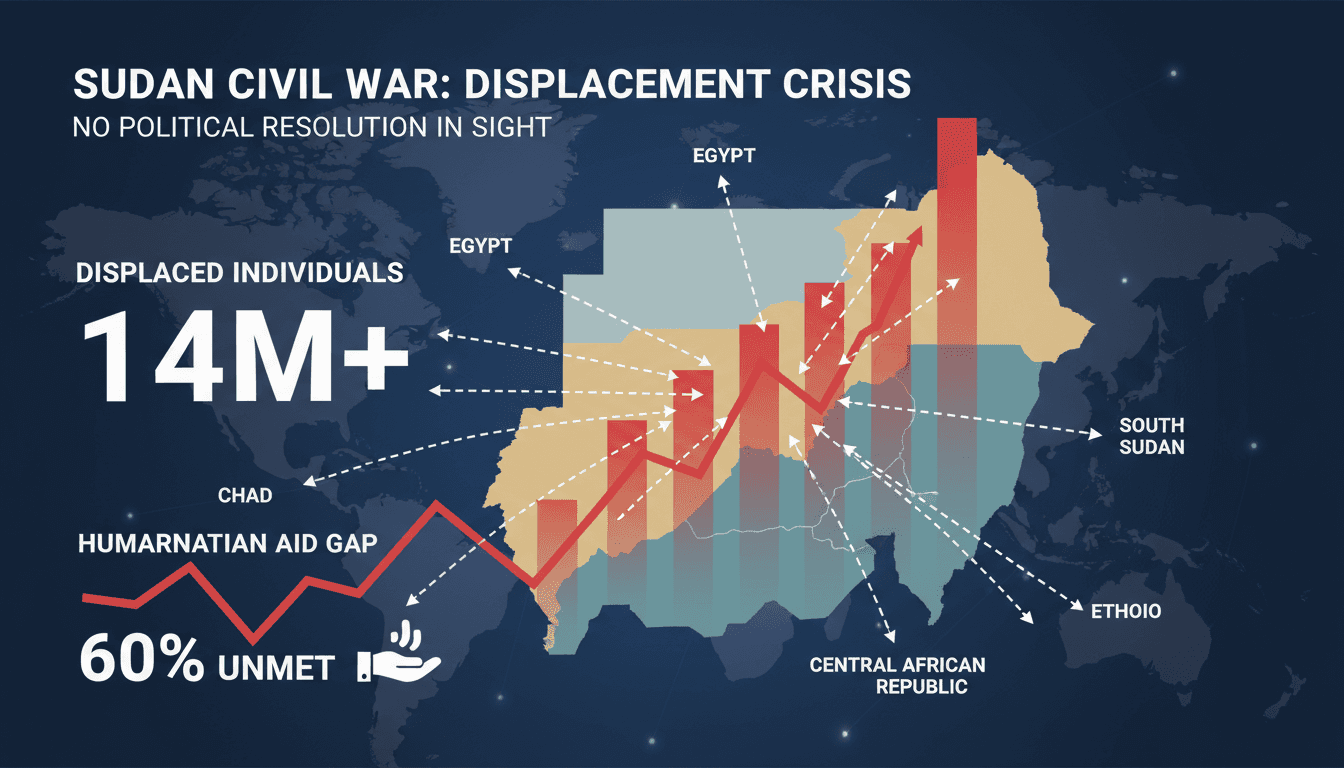
Here's what it means for you.
If you rely on remittances from Sudan, the ongoing conflict could disrupt financial support for your family.
Why it matters
The Sudanese civil war is exacerbating one of the world's largest humanitarian crises, affecting global markets and regional stability.
What happened (in 30 seconds)
- Fighting erupted on April 15, 2023, between the Sudanese Armed Forces (SAF) and the Rapid Support Forces (RSF), leading to widespread devastation.
- Over 14 million people have been displaced, marking the largest displacement crisis globally, with tens of thousands of deaths reported.
- International mediation efforts have stalled, with recent conferences failing to include key parties, prolonging the conflict and humanitarian suffering.
The context you actually need
- Power struggle origins: The conflict stems from a power struggle following the 2021 military coup that ousted a transitional civilian government, leading to tensions over military integration and resource control.
- External influences: Countries like the UAE and Egypt have been accused of prolonging the conflict by supplying arms and funding to the warring factions.
- Humanitarian impact: The ongoing war has triggered the world's largest humanitarian crisis, with funding for aid remaining critically low, under 40% of what is needed.
What's really happening
The Sudanese civil war, which began in April 2023, is rooted in a complex power struggle between the SAF, led by Abdel Fattah al-Burhan, and the RSF, led by Mohamed Hamdan Dagalo (Hemedti). This conflict escalated after the military coup in 2021 that dismantled a transitional civilian government, leading to fierce competition over military control and economic resources, particularly gold mines in Darfur.
As fighting erupted, initial RSF advances were met with heavy SAF airstrikes, resulting in a brutal stalemate. Despite various international mediation efforts, including the Jeddah talks and Quad initiatives, no significant political progress has been made. The humanitarian situation has deteriorated sharply, with over 14 million people displaced and tens of thousands dead, making it the world's largest displacement crisis.
External actors have played a significant role in prolonging the conflict. The UAE has been accused of supporting the RSF through arms supplies and funding, while Egypt and Iran have backed the SAF. This external involvement complicates the conflict, as it introduces additional layers of geopolitical interests that hinder resolution efforts. The recent Berlin conference, which pledged €1.3 billion in aid, excluded both warring parties, drawing criticism from the Sudanese government and highlighting the challenges of achieving a sustainable peace.
The humanitarian crisis is further exacerbated by the use of drone warfare, with 75% of recent civilian deaths attributed to imported UAVs. The ongoing violence has led to significant disruptions in Sudan's economy, particularly in gold exports, which have seen price volatility in regional markets. Humanitarian funding remains critically low, with less than 40% of the required aid being met, leaving millions in dire need of assistance.
Who feels it first (and how)
- Sudanese families: Those relying on remittances from abroad are facing financial instability due to disrupted channels.
- Humanitarian organizations: NGOs and aid agencies struggle to meet the overwhelming needs of displaced populations amid funding shortages.
- Regional markets: Investors and businesses in neighboring countries are affected by gold price volatility and increased regional instability.
What to watch next
- International mediation efforts: Watch for any new initiatives or changes in the involvement of external actors, as these could influence the conflict's trajectory.
- Humanitarian funding levels: Monitor the response from international donors to the ongoing crisis, as increased funding could alleviate some humanitarian pressures.
- Military developments: Keep an eye on the military strategies employed by both SAF and RSF, particularly regarding drone warfare and external arms supplies, as these will impact civilian safety and conflict dynamics.
The conflict has displaced over 14 million people and caused tens of thousands of deaths.
Continued external involvement will prolong the conflict, making a political resolution more difficult.
The effectiveness of future international mediation efforts remains uncertain, particularly with key parties excluded from discussions.
Frequently Asked Questions
- Why it matters?
- The Sudanese civil war is exacerbating one of the world's largest humanitarian crises, affecting global markets and regional stability.
- What happened (in 30 seconds)?
- Fighting erupted on April 15, 2023, between the Sudanese Armed Forces (SAF) and the Rapid Support Forces (RSF), leading to widespread devastation. Over 14 million people have been displaced, marking the largest displacement crisis globally, with tens of thousands of deaths reported. International mediation efforts have stalled, with recent conferences failing to include key parties, prolonging the conflict and humanitarian suffering.
- What's really happening?
- The Sudanese civil war, which began in April 2023, is rooted in a complex power struggle between the SAF, led by Abdel Fattah al-Burhan, and the RSF, led by Mohamed Hamdan Dagalo (Hemedti). This conflict escalated after the military coup in 2021 that dismantled a transitional civilian government, leading to fierce competition over military control and economic resources, particularly gold mines in Darfur. As fighting erupted, initial RSF advances were met with heavy SAF airstrikes, resulting i
- Who feels it first (and how)?
- Sudanese families: Those relying on remittances from abroad are facing financial instability due to disrupted channels. Humanitarian organizations: NGOs and aid agencies struggle to meet the overwhelming needs of displaced populations amid funding shortages. Regional markets: Investors and businesses in neighboring countries are affected by gold price volatility and increased regional instability.
- What to watch next?
- International mediation efforts: Watch for any new initiatives or changes in the involvement of external actors, as these could influence the conflict's trajectory. Humanitarian funding levels: Monitor the response from international donors to the ongoing crisis, as increased funding could alleviate some humanitarian pressures. Military developments: Keep an eye on the military strategies employed by both SAF and RSF, particularly regarding drone warfare and external arms supplies, as these
Arabic-language reporting on global and regional news.
"BBC Arabic is part of the BBC, generally regarded for editorial standards and broad international coverage."
— A47 Editor
السودان: ما فرص التوصل إلى حل سياسي دائم بعد ثلاث سنوات من القتال؟
The German capital, Berlin, hosted an international conference on Sudan coinciding with the third anniversary of the outbreak of war, aiming to rally efforts to end the conflict and halt the deterioration of the humanitarian situation in the country.
Pan-Arab news coverage spanning politics, business, sports, and regional affairs.
"Asharq Al-Awsat reflects a broad Arab editorial perspective with strong attention to regional geopolitics."
— A47 Editor
«مؤتمر برلين»: تعهدات بـ 1.5 مليار دولار للسودان
During a conference held in Berlin, Germany, donor entities pledged a total of $1.5 billion in aid to Sudan. This commitment was made under the auspices of Germany and the United States, highlighting international support for the country.
International coverage from The Guardian's global desks.
"The Guardian is known for its progressive editorial stance and in-depth analysis."
— A47 Editor
More than £1bn pledged for Sudan as humanitarian crisis deepens
More than £1bn has been pledged for Sudan at a Berlin conference aimed at addressing the severe humanitarian crisis resulting from three years of conflict, which has left two-thirds of the population in need of assistance.
Arabic-language digital news outlet covering UAE, regional, and international developments with broad general-news coverage.
"Al Ain News coverage typically blends UAE-focused reporting with wider Arab regional and international news."
— A47 Editor
مؤتمر برلين يتخطى المأمول.. أكثر من 1.5 مليار دولار للسودان
The Berlin Conference has exceeded its initial goal of raising one billion dollars to assist Sudan, with participants pledging over 1.4 billion dollars in support. This significant financial commitment reflects a strong international response to the ...
Arabic-language coverage of political affairs and current events.
"Okaz political coverage typically follows mainstream Saudi framing on national and regional affairs."
— A47 Editor
3 سنوات على الحرب.. لماذا كل هذا الصمت تجاه أوجاع الناس في السودان؟
The Berlin Conference commenced in an effort to alleviate the humanitarian crisis in Sudan, which has been engulfed in a brutal war for three years, resulting in over 150,000 deaths and putting 25 million people at risk of famine. Despite the severit...
UAE-based English-language newspaper covering regional politics, economics, and global affairs.
"The National reflects Emirati policy perspectives while maintaining international editorial standards."
— A47 Editor
Donors pledge $1.5bn for Sudan at war anniversary conference
On April 15, 2026, international donors pledged $1.5 billion at a conference in Berlin to address the ongoing humanitarian crisis in Sudan, which has been engulfed in civil war for three years. The conflict, which began in April 2023, has led to wide...
24/7 international news from a French perspective in multiple languages.
"France 24 is viewed as a globally focused outlet with balanced coverage and a European perspective."
— A47 Editor
Sudan slams Berlin donor conference as ‘unacceptable’ as devastating war enters fourth year
Sudan's government has condemned a donor conference hosted by Germany as 'surprising and unacceptable', asserting that it interferes in the nation's internal affairs and was organized without consultation with Khartoum. This criticism comes as the br...