
Trump Critiques Iran's Compliance with Ceasefire Amid Strait of Hormuz Tensions
Here's what it means for you.
If you rely on oil or energy markets, ongoing tensions in the Strait of Hormuz could impact prices and availability.
Why it matters
The Strait of Hormuz is a critical chokepoint for global oil transit, affecting supply chains and prices worldwide.
What happened (in 30 seconds)
- Trump criticized Iran's handling of the Strait of Hormuz, claiming it undermines the recent ceasefire agreement.
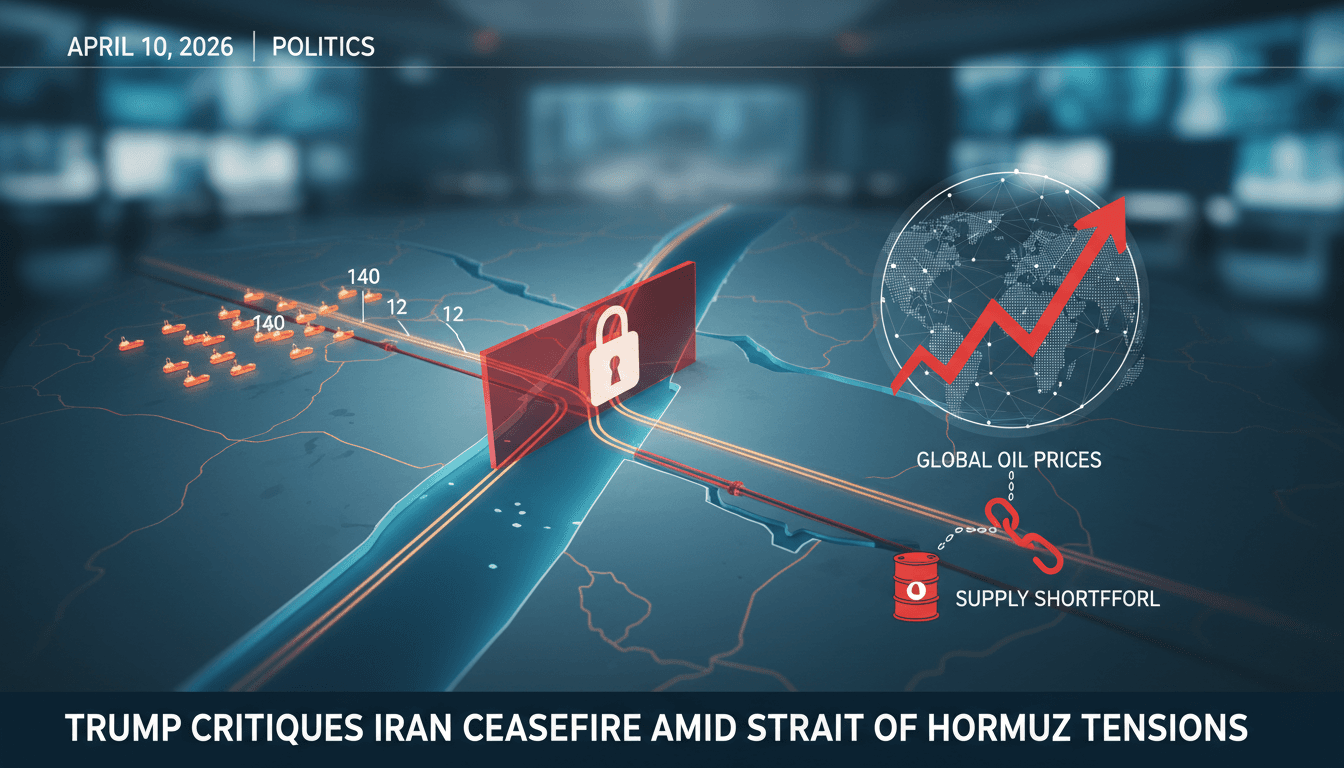
- Iran continues to restrict vessel traffic, allowing only 12 transits since the ceasefire, compared to the normal 140 per day.
- Diplomatic talks are ongoing in Islamabad, but military actions in Lebanon complicate the situation further.
The context you actually need
- The conflict escalated after U.S. and Israeli strikes on Iranian facilities on February 28, 2026, prompting Iran to impose restrictions on the Strait of Hormuz.
- A two-week ceasefire was initiated on April 8, 2026, but it does not address the ongoing Israel-Hezbollah conflict, which remains active.
- Economic pressures from rising oil prices and limited transit options are causing significant strain on markets, particularly in regions dependent on oil imports.
What's really happening
The current situation in the Strait of Hormuz is a complex interplay of military, economic, and diplomatic factors. Following the U.S. and Israeli strikes on Iranian military and nuclear facilities in late February, Iran responded with aggressive measures, including restricting maritime traffic through the Strait of Hormuz. This strait is vital for global oil transportation, with approximately 20% of the world’s oil passing through it daily.
The ceasefire agreement, which was intended to alleviate some tensions, has proven fragile. While it was designed to create a temporary halt in hostilities, Iran's continued restrictions on vessel transit have raised questions about its effectiveness. Trump’s criticism highlights a significant concern: that Iran is not adhering to the terms of the ceasefire, which could lead to further escalations in conflict.
The Iranian Revolutionary Guard Corps (IRGC) has maintained control over the strait, limiting the number of vessels allowed to transit to a mere 12 since the ceasefire began, compared to the typical 140. This drastic reduction in traffic not only affects oil prices but also signals a lack of trust between the U.S. and Iran. The economic implications are immediate; with Brent crude oil prices already rising to $96.83 per barrel, the potential for further price increases looms large.
Moreover, the ongoing military actions in Lebanon complicate the ceasefire's effectiveness. Israel's recent strikes against Hezbollah, resulting in over 300 casualties, indicate that the conflict is far from resolved. The exclusion of Lebanon from the ceasefire terms suggests that regional tensions will continue to simmer, potentially spilling over into broader conflict.
As diplomatic negotiations unfold in Islamabad, the stakes are high. The U.S. delegation, led by Vice President JD Vance, faces the challenge of reconciling Iran's actions with the need for a stable oil supply. The outcome of these talks will significantly influence not only regional stability but also global energy markets.
Who feels it first (and how)
- Energy sector professionals: Fluctuations in oil prices directly impact their operations and profitability.
- Consumers in oil-dependent regions: Rising fuel prices will increase transportation and goods costs.
- Investors in Asian markets: Stock indices may react to changes in oil prices and geopolitical stability.
What to watch next
- Vessel traffic in the Strait of Hormuz: Monitoring the number of vessels allowed to transit will indicate Iran's compliance with the ceasefire.
- Diplomatic outcomes from Islamabad: The results of the talks may set the tone for future U.S.-Iran relations and regional stability.
- Global oil prices: Continued disruptions could lead to further price increases, affecting economies worldwide.
The Strait of Hormuz is critical for global oil transit.
Oil prices will continue to fluctuate based on geopolitical tensions and vessel traffic restrictions.
The long-term effectiveness of the ceasefire and its impact on regional conflicts remains uncertain.
Frequently Asked Questions
- Why it matters?
- The Strait of Hormuz is a critical chokepoint for global oil transit, affecting supply chains and prices worldwide.
- What happened (in 30 seconds)?
- Trump criticized Iran's handling of the Strait of Hormuz, claiming it undermines the recent ceasefire agreement. Iran continues to restrict vessel traffic, allowing only 12 transits since the ceasefire, compared to the normal 140 per day. Diplomatic talks are ongoing in Islamabad, but military actions in Lebanon complicate the situation further.
- What's really happening?
- The current situation in the Strait of Hormuz is a complex interplay of military, economic, and diplomatic factors. Following the U.S. and Israeli strikes on Iranian military and nuclear facilities in late February, Iran responded with aggressive measures, including restricting maritime traffic through the Strait of Hormuz. This strait is vital for global oil transportation, with approximately 20% of the world’s oil passing through it daily. The ceasefire agreement, which was intended to allev
- Who feels it first (and how)?
- Energy sector professionals: Fluctuations in oil prices directly impact their operations and profitability. Consumers in oil-dependent regions: Rising fuel prices will increase transportation and goods costs. Investors in Asian markets: Stock indices may react to changes in oil prices and geopolitical stability.
- What to watch next?
- Vessel traffic in the Strait of Hormuz: Monitoring the number of vessels allowed to transit will indicate Iran's compliance with the ceasefire. Diplomatic outcomes from Islamabad: The results of the talks may set the tone for future U.S.-Iran relations and regional stability. Global oil prices: Continued disruptions could lead to further price increases, affecting economies worldwide.
International coverage from The Guardian's global desks.
"The Guardian is known for its progressive editorial stance and in-depth analysis."
— A47 Editor
Trump warns of fresh strikes if Iran talks fail – as it happened
US President Donald Trump has warned of potential military strikes against Iran if negotiations in Islamabad fail to yield a ceasefire agreement. The talks are critical as tensions escalate in the region, particularly with ongoing Israeli airstrikes ...
Global markets, investing, and macroeconomics from a premier financial newsroom.
"Bloomberg is respected for in-depth financial reporting and data-driven analysis."
— A47 Editor
Trump Warns Iran on Hormuz Fee & Israel-Lebanon To Talk | Daybreak Europe 04/10/2026
U.S. President Donald Trump expressed optimism about reaching a deal with Iran while warning Tehran against imposing fees for passage through the strategically important Strait of Hormuz. This comes amid a fragile two-week ceasefire aimed at reducing...