
Paris Conference Establishes Multinational Mission for Strait of Hormuz Security
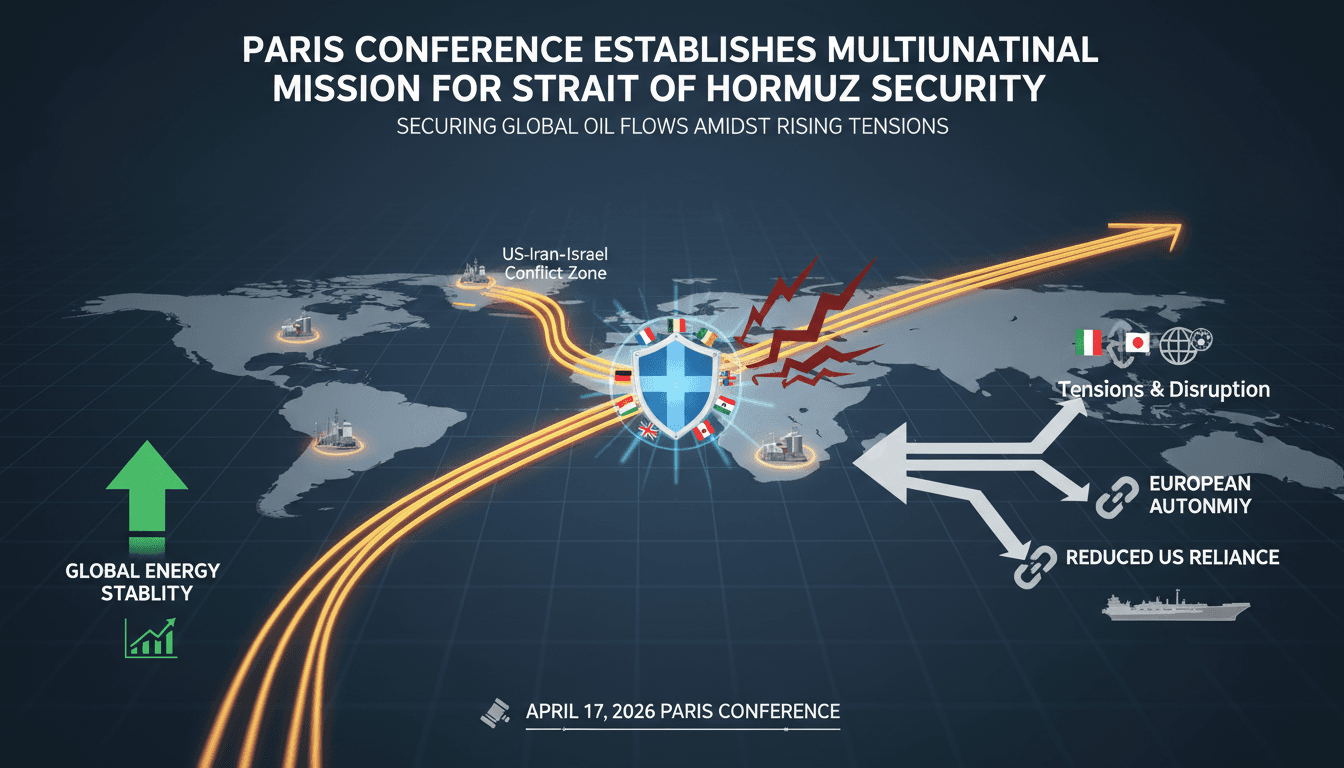
Here's what it means for you.
If you rely on global energy markets, the outcomes of the Paris Conference could directly impact your fuel prices and overall cost of living.
Why it matters
The Strait of Hormuz is a critical chokepoint for global oil supply, with 25% of the world's maritime oil trade passing through it.
What happened (in 30 seconds)
- Leaders from over 40 nations convened virtually on April 17, 2026, to discuss navigation security in the Strait of Hormuz.
- A defensive multinational mission was proposed to ensure safe passage for commercial shipping amid ongoing regional tensions.
- The conference concluded with an initial framework for operations, focusing on demining and escorting vessels.
The context you actually need
- Tensions escalated in March 2026 due to a US-Israel military confrontation with Iran, leading to a naval blockade and a significant drop in shipping traffic.
- Approximately 95% of ship traffic was halted, affecting the transit of 20.3 million barrels of oil per day, which is vital for global energy supplies.
- European leaders are pursuing an independent security plan to safeguard navigation routes, distancing themselves from US-led operations.
What's really happening
The Paris Conference on April 17, 2026, was a pivotal moment in international maritime security discussions, particularly concerning the Strait of Hormuz. This waterway is crucial for global oil transportation, with 20.3 million barrels of petroleum liquids transiting daily, representing 25% of the world's maritime oil trade. The backdrop of the conference was a significant escalation in tensions between the US, Israel, and Iran, which had led to a naval blockade imposed by Iran and a subsequent US blockade on Iranian ports. This situation prompted European leaders to seek a more autonomous approach to maritime security, aiming to protect global energy supplies without relying on US military interventions.
The conference was co-chaired by French President Emmanuel Macron and British Prime Minister Keir Starmer, and it included representatives from over 40 nations. The discussions focused on four key areas: advocating for freedom of navigation, coordinating sanctions, facilitating the release of approximately 20,000 trapped seafarers, and establishing a defensive mission that would involve demining operations and escorting vessels through the Strait. This initiative is characterized by its emphasis on non-escalatory measures, which is a significant departure from the more aggressive tactics previously employed by the US.
The proposed multinational mission aims to create a framework for post-conflict demining and escort operations, which could help restore commercial shipping through the Strait. However, the effectiveness of this mission will depend on the cooperation of various nations and the ability to navigate the complex geopolitical landscape. The UAE has been vocal in demanding the unconditional reopening of the Strait as a public good under international law, while Saudi Arabia has reportedly declined to participate in the initiative.
As the situation evolves, the implications for global oil markets are significant. Oil prices have remained volatile, with benchmarks exceeding $100 per barrel amid ongoing uncertainties. The Gulf governments are advocating for a diplomatic revival while supporting defensive navigation efforts, indicating a collective recognition of the need for stability in this critical region.
Who feels it first (and how)
- Consumers in the UAE: Facing rising fuel prices and increased costs for energy and groceries due to disrupted trade.
- Shipping companies: Experiencing delays and increased operational costs from the halted traffic in the Strait.
- Global oil markets: Volatility in prices affects investors and businesses reliant on stable energy costs.
What to watch next
- Implementation of the defensive mission: Monitoring how quickly and effectively the proposed multinational mission is established will be crucial for restoring shipping security.
- Oil price fluctuations: Keep an eye on global oil prices, especially if tensions escalate or if the mission successfully stabilizes the Strait.
- Geopolitical developments: Watch for any shifts in US-Iran relations or further military confrontations that could impact shipping routes.
The Paris Conference established a framework for a multinational defensive mission in the Strait of Hormuz.
Oil prices will remain volatile as the situation develops and the effectiveness of the mission is assessed.
The level of cooperation among participating nations and the potential for further escalations in regional tensions.
Frequently Asked Questions
- Why it matters?
- The Strait of Hormuz is a critical chokepoint for global oil supply, with 25% of the world's maritime oil trade passing through it.
- What happened (in 30 seconds)?
- Leaders from over 40 nations convened virtually on April 17, 2026, to discuss navigation security in the Strait of Hormuz. A defensive multinational mission was proposed to ensure safe passage for commercial shipping amid ongoing regional tensions. The conference concluded with an initial framework for operations, focusing on demining and escorting vessels.
- What's really happening?
- The Paris Conference on April 17, 2026, was a pivotal moment in international maritime security discussions, particularly concerning the Strait of Hormuz. This waterway is crucial for global oil transportation, with 20.3 million barrels of petroleum liquids transiting daily, representing 25% of the world's maritime oil trade. The backdrop of the conference was a significant escalation in tensions between the US, Israel, and Iran, which had led to a naval blockade imposed by Iran and a subsequent
- Who feels it first (and how)?
- Consumers in the UAE: Facing rising fuel prices and increased costs for energy and groceries due to disrupted trade. Shipping companies: Experiencing delays and increased operational costs from the halted traffic in the Strait. Global oil markets: Volatility in prices affects investors and businesses reliant on stable energy costs.
- What to watch next?
- Implementation of the defensive mission: Monitoring how quickly and effectively the proposed multinational mission is established will be crucial for restoring shipping security. Oil price fluctuations: Keep an eye on global oil prices, especially if tensions escalate or if the mission successfully stabilizes the Strait. Geopolitical developments: Watch for any shifts in US-Iran relations or further military confrontations that could impact shipping routes.
Arabic-language coverage of Saudi, regional, and international affairs.
"Al Bilad offers mainstream Saudi newspaper coverage across domestic and broader Arab topics."
— A47 Editor
خطة دولية لحماية الملاحة.. «قمة باريس» تبحث أمن مضيق هرمز
As tensions rise in the Strait of Hormuz and the maritime blockade on Iran continues to have repercussions, European efforts led by France and the United Kingdom are taking shape through an upcoming international conference in Paris aimed at coordina...
Pan-Arab news coverage spanning politics, business, sports, and regional affairs.
"Asharq Al-Awsat reflects a broad Arab editorial perspective with strong attention to regional geopolitics."
— A47 Editor
جهود فرنسية - بريطانية مكثفة لضمان حرية الإبحار في «هرمز»
France and Britain are intensifying efforts to ensure freedom of navigation in the Strait of Hormuz, with a summit led by President Macron and Keir Starmer, involving 35 international officials to launch a new mission.
Arabic-language political and world news coverage for UAE readers.
"Emarat Al Youm world coverage usually presents international developments through a UAE and Arab audience lens."
— A47 Editor
ستارمر وماكرون يستضيفان محادثات حول مضيق هرمز في باريس الجمعة ستارمر وماكرون يستضيفان محادثات حول مضيق هرمز في باريس الجمعة
International leaders are set to convene in Paris on Friday to discuss plans aimed at ensuring the safety of navigation in the Strait of Hormuz. This meeting, hosted by Keir Starmer and Emmanuel Macron, highlights the ongoing geopolitical concerns su...
Arabic-language coverage of political affairs and current events.
"Okaz political coverage typically follows mainstream Saudi framing on national and regional affairs."
— A47 Editor
أزمة «هرمز» تتصدّر المناقشات .. مؤتمر باريس يلوح بتدابير اقتصادية ضد إيران
The French presidency announced that President Emmanuel Macron and British Prime Minister Keir Starmer will lead a video conference in Paris on Friday to discuss the crisis in the Strait of Hormuz, amid ongoing U.S. maritime sanctions on Iranian port...
Pan-Arab news coverage spanning politics, business, sports, and regional affairs.
"Asharq Al-Awsat reflects a broad Arab editorial perspective with strong attention to regional geopolitics."
— A47 Editor
ماكرون وستارمر يرأسان الجمعة مؤتمراً حول مضيق هرمز
French President Emmanuel Macron and British Prime Minister Keir Starmer will co-chair a conference on the Strait of Hormuz on Friday. This event highlights the ongoing geopolitical significance of the Strait, a critical waterway for global oil trans...