
US and Iran Reach Conditional Two-Week Ceasefire Over Strait of Hormuz
Here's what it means for you.
If you rely on global oil markets, this ceasefire could stabilize prices and reduce costs for consumers and businesses alike.
Why it matters
The ceasefire directly impacts global oil supply and prices, crucial for economies heavily reliant on oil imports.
What happened (in 30 seconds)
- On April 7, 2026, President Trump announced a conditional two-week ceasefire with Iran, brokered by Pakistan.
- Iran agreed to reopen the Strait of Hormuz in exchange for a pause in US military strikes, following 40 days of escalating conflict.
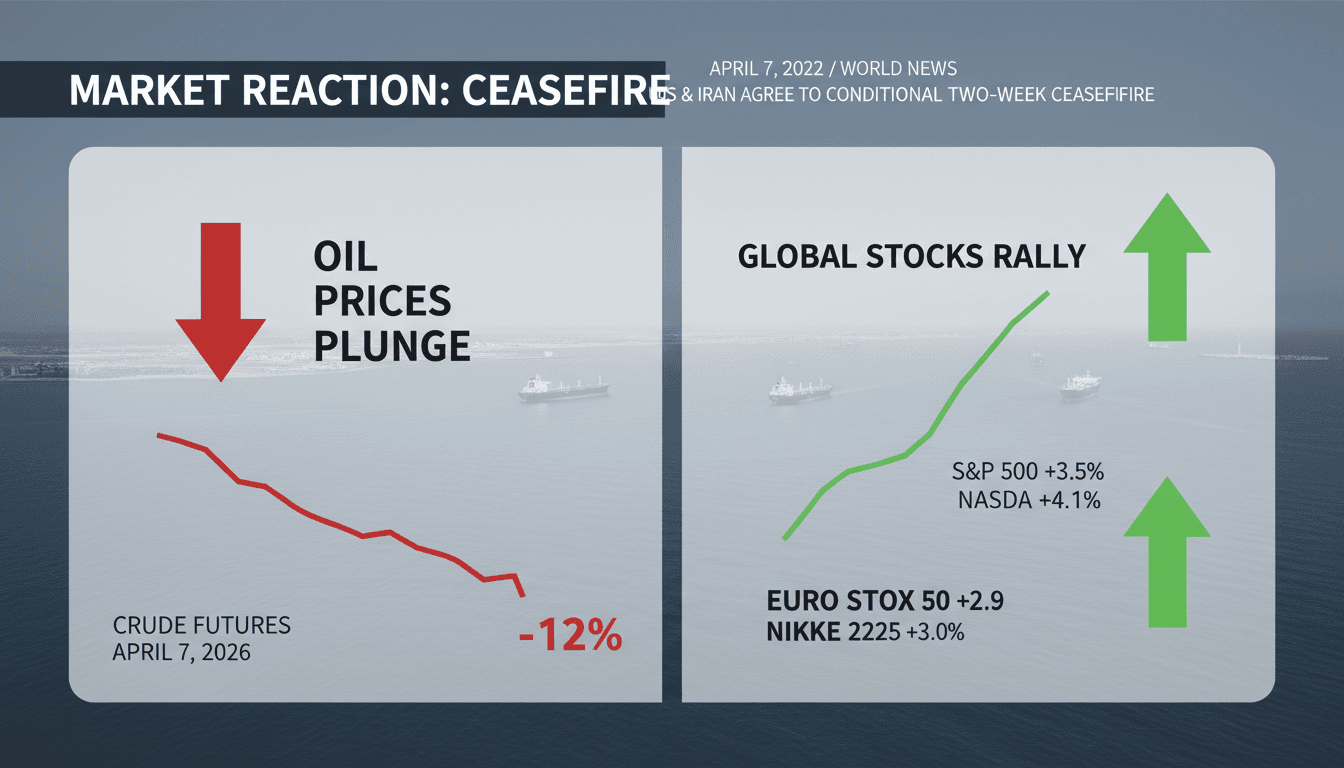
- Global oil prices plunged by 15% immediately after the announcement, signaling market relief.
The context you actually need
- The conflict began on February 28, 2026, with US-Israeli airstrikes targeting Iranian military and nuclear facilities, leading Iran to close the Strait of Hormuz.
- The Strait of Hormuz is a critical chokepoint for global oil transit, with approximately 20% of the world's oil passing through it.
- The ceasefire allows for negotiations on a comprehensive peace settlement, amid ongoing US-Israel operations against Iranian targets.
What's really happening
The ceasefire between the United States and Iran is a significant development in a conflict that has already disrupted global oil supplies and heightened geopolitical tensions. The agreement, which was brokered by Pakistan, comes after a series of escalating military actions that began on February 28, 2026, when US-Israeli airstrikes targeted Iranian military and nuclear facilities. In retaliation, Iran closed the Strait of Hormuz, a vital maritime route for oil shipments, leading to a dramatic 94.2% drop in transits and a surge in global oil prices.
The conditional ceasefire is designed to create a window for negotiations, allowing both parties to frame the outcome as a victory. President Trump characterized the ceasefire as a "total and complete victory," while Iran's Supreme National Security Council hailed it as a strategic success. This framing is crucial for both leaders, as it provides domestic political cover amid ongoing military operations and economic pressures.
The immediate impact of the ceasefire was felt in global markets, with oil prices dropping by 15% following the announcement. This decline is significant for consumers and businesses worldwide, as it signals a potential stabilization of oil prices after weeks of volatility. For Dubai and the broader UAE, the market reaction was particularly pronounced, with the Dubai stock index surging over 6%, its largest gain in over a decade. The Abu Dhabi index also rose by more than 3.5%, driven by falling oil prices and restored shipping security through the Strait of Hormuz.
The ceasefire's implications extend beyond immediate market reactions. It creates a temporary reprieve that could lead to more comprehensive negotiations regarding Iran's nuclear program and regional influence. However, the agreement is fraught with uncertainty, as ongoing US-Israel operations against Iranian targets continue, and both sides remain on high alert. The ceasefire does not include Lebanon, as noted by Israeli Prime Minister Netanyahu, indicating that tensions in the region are far from resolved.
In summary, the ceasefire is a critical moment that could reshape the geopolitical landscape in the Middle East and stabilize global oil markets. However, the situation remains fluid, and the potential for renewed conflict looms large.
Who feels it first (and how)
- Consumers: Lower oil prices may lead to reduced fuel costs, benefiting drivers and businesses reliant on transportation.
- Investors: Stock markets, particularly in oil-dependent regions, may see increased stability and growth.
- Energy Sector: Companies involved in oil production and distribution will experience immediate impacts on pricing and operational costs.
- Geopolitical Analysts: Experts will closely monitor the ceasefire's effectiveness and implications for future US-Iran relations.
What to watch next
- Negotiation Outcomes: Watch for developments in peace talks between the US and Iran, as successful negotiations could lead to a more stable geopolitical environment.
- Oil Price Trends: Monitor global oil prices in the coming weeks to assess the long-term impact of the ceasefire on market stability.
- Regional Military Movements: Keep an eye on US-Israel military operations in the region, as any escalation could jeopardize the ceasefire and disrupt oil supplies again.
The ceasefire is currently in effect, and global oil prices have dropped significantly.
Continued negotiations will occur, but tensions may remain high due to ongoing military operations.
The long-term effectiveness of the ceasefire and its impact on US-Iran relations remain uncertain.
Frequently Asked Questions
- Why it matters?
- The ceasefire directly impacts global oil supply and prices, crucial for economies heavily reliant on oil imports.
- What happened (in 30 seconds)?
- On April 7, 2026, President Trump announced a conditional two-week ceasefire with Iran, brokered by Pakistan. Iran agreed to reopen the Strait of Hormuz in exchange for a pause in US military strikes, following 40 days of escalating conflict. Global oil prices plunged by 15% immediately after the announcement, signaling market relief.
- What's really happening?
- The ceasefire between the United States and Iran is a significant development in a conflict that has already disrupted global oil supplies and heightened geopolitical tensions. The agreement, which was brokered by Pakistan, comes after a series of escalating military actions that began on February 28, 2026, when US-Israeli airstrikes targeted Iranian military and nuclear facilities. In retaliation, Iran closed the Strait of Hormuz, a vital maritime route for oil shipments, leading to a dramatic
- Who feels it first (and how)?
- Consumers: Lower oil prices may lead to reduced fuel costs, benefiting drivers and businesses reliant on transportation. Investors: Stock markets, particularly in oil-dependent regions, may see increased stability and growth. Energy Sector: Companies involved in oil production and distribution will experience immediate impacts on pricing and operational costs. Geopolitical Analysts: Experts will closely monitor the ceasefire's effectiveness and implications for future US-Iran relations.
- What to watch next?
- Negotiation Outcomes: Watch for developments in peace talks between the US and Iran, as successful negotiations could lead to a more stable geopolitical environment. Oil Price Trends: Monitor global oil prices in the coming weeks to assess the long-term impact of the ceasefire on market stability. Regional Military Movements: Keep an eye on US-Israel military operations in the region, as any escalation could jeopardize the ceasefire and disrupt oil supplies again.
English-language news from Qatar covering domestic and regional affairs.
"Gulf Times reflects Qatari perspectives on regional developments."
— A47 Editor
US President announces two-week ceasefire with Iran
US President Donald Trump announced a two-week ceasefire with Iran, contingent upon Tehran's agreement to reopen the Strait of Hormuz. This decision follows a ceasefire proposal from Pakistan and aims to de-escalate ongoing military tensions in the r...
English-language news from Qatar covering domestic and regional affairs.
"Gulf Times reflects Qatari perspectives on regional developments."
— A47 Editor
US President announces acceptance of two-week ceasefire with Iran
US President Donald Trump has announced the acceptance of a two-week ceasefire with Iran, following a proposal from Pakistan. This decision comes amid escalating military tensions and is seen as a significant step towards de-escalation in the region....
Editor-curated FT homepage stories spanning markets, business, world, and opinion.
"The Financial Times is a globally respected business publication with a centrist/center-left tone and strong markets focus."
— A47 Editor
US and Iran agree 2-week ceasefire that will open Strait of Hormuz
The United States and Iran have reached a two-week ceasefire agreement, which includes Iran's commitment to reopen the strategically significant Strait of Hormuz. This truce aims to halt military actions and facilitate negotiations amid ongoing geopo...
Comprehensive coverage of Middle Eastern and global issues.
"Al Jazeera is a prominent voice from the Global South, especially the Middle East, with an emphasis on underreported stories."
— A47 Editor
Iran war: What is happening on day 40 of US-Israeli attacks?
The United States and Iran have agreed to a provisional two-week ceasefire, announced just before a deadline set by President Donald Trump for escalating military actions. This truce allows for diplomatic negotiations and the reopening of the strateg...