
Vercel Reports Security Breach Linked to Context.ai OAuth Token Compromise
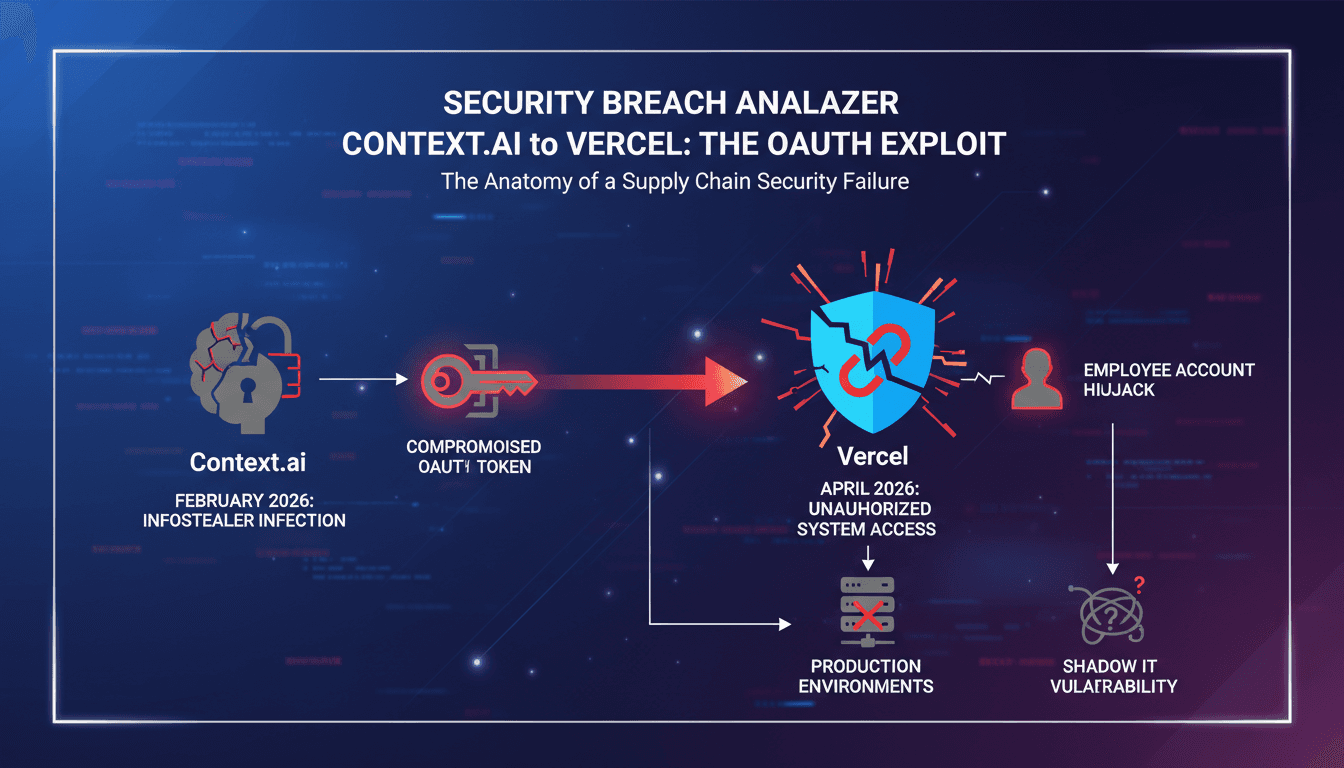
Here's what it means for you.
If you rely on third-party integrations, this incident highlights the critical need for stringent security protocols.
Why it matters
This breach exemplifies the vulnerabilities in supply chain security, particularly with the rapid adoption of unvetted AI tools.
What happened (in 30 seconds)
- Vercel disclosed a security incident on April 19, 2026, involving unauthorized access through a compromised OAuth token from Context.ai.
- Attackers exploited a February 2026 infostealer infection at Context.ai to hijack a Vercel employee's account, accessing production environments.
- Limited customer credentials were extracted, but Vercel confirmed no broader data exfiltration or service disruptions.
The context you actually need
- Rapid adoption of AI tools has led to increased risks associated with shadow IT, bypassing traditional security measures.
- Credential harvesting from compromised environments is on the rise, with a staggering 490% year-over-year increase in AI-related attacks across SaaS platforms.
- OAuth tokens granted broad permissions can create significant vulnerabilities if not managed properly, as seen in this incident.
What's really happening
The Vercel security incident is a stark reminder of the complexities and risks associated with modern software development and deployment. The breach originated from a compromised employee device at Context.ai, where Lumma Stealer malware infiltrated the system in February 2026. This malware harvested credentials and led to a breach of Context.ai's AWS environment, which was detected in March 2026.
As Context.ai engaged CrowdStrike to mitigate the breach, the attackers leveraged stolen OAuth tokens that had been granted by a Vercel employee for AI-assisted tasks. This "allow all" authorization enabled the attackers to hijack the corporate Google Workspace account, pivoting into Vercel's systems. Once inside, they accessed production environments and enumerated non-sensitive environment variables stored in plaintext, exposing limited customer credentials.
The incident underscores the systemic vulnerabilities in supply chain security, particularly as organizations increasingly adopt unvetted AI tools without proper oversight. The rapid growth of infostealer campaigns and the staggering increase in AI-related attacks—490% year-over-year—amplify the risks associated with these integrations.
Vercel's response included implementing platform changes to default new environment variables to 'sensitive' status, enhancing monitoring, and issuing credential rotation guidance. While the immediate impact was limited, the incident has prompted calls for better OAuth anomaly detection and third-party risk management.
The broader implications of this incident extend beyond Vercel and Context.ai, as it highlights the need for organizations to reassess their security protocols regarding third-party integrations. As developers and companies increasingly rely on AI tools, the potential for similar breaches looms large, necessitating a shift towards more stringent security measures and oversight.
Who feels it first (and how)
- Developers: Increased scrutiny on the use of third-party tools and the need for security audits.
- IT Security Teams: Pressure to implement stronger OAuth management and anomaly detection systems.
- Businesses using Vercel: Potential reputational damage and the need for enhanced security measures.
- AI Tool Providers: Increased demand for security assurances and audits from clients.
What to watch next
- Increased regulatory scrutiny: Expect more regulations around third-party integrations and data security as incidents like this gain attention.
- Adoption of stricter OAuth policies: Companies may implement more stringent permission settings and monitoring to prevent similar breaches.
- Growth in security solutions: A surge in demand for tools that provide better visibility and control over third-party integrations is likely.
The breach was initiated through a compromised OAuth token from Context.ai.
Organizations will enhance their security protocols and oversight for third-party integrations.
The long-term impact on Vercel's customer trust and market position remains to be seen.
Frequently Asked Questions
- Why it matters?
- This breach exemplifies the vulnerabilities in supply chain security, particularly with the rapid adoption of unvetted AI tools.
- What happened (in 30 seconds)?
- Vercel disclosed a security incident on April 19, 2026, involving unauthorized access through a compromised OAuth token from Context.ai. Attackers exploited a February 2026 infostealer infection at Context.ai to hijack a Vercel employee's account, accessing production environments. Limited customer credentials were extracted, but Vercel confirmed no broader data exfiltration or service disruptions.
- What's really happening?
- The Vercel security incident is a stark reminder of the complexities and risks associated with modern software development and deployment. The breach originated from a compromised employee device at Context.ai, where Lumma Stealer malware infiltrated the system in February 2026. This malware harvested credentials and led to a breach of Context.ai's AWS environment, which was detected in March 2026. As Context.ai engaged CrowdStrike to mitigate the breach, the attackers leveraged stolen OAuth t
- Who feels it first (and how)?
- Developers: Increased scrutiny on the use of third-party tools and the need for security audits. IT Security Teams: Pressure to implement stronger OAuth management and anomaly detection systems. Businesses using Vercel: Potential reputational damage and the need for enhanced security measures. AI Tool Providers: Increased demand for security assurances and audits from clients.
- What to watch next?
- Increased regulatory scrutiny: Expect more regulations around third-party integrations and data security as incidents like this gain attention. Adoption of stricter OAuth policies: Companies may implement more stringent permission settings and monitoring to prevent similar breaches. Growth in security solutions: A surge in demand for tools that provide better visibility and control over third-party integrations is likely.
Focuses on transformative tech, AI, gaming, and startup innovation.
"VentureBeat is respected for its in-depth reporting on AI, startups, and disruptive technologies in Silicon Valley and beyond."
— A47 Editor
Vercel breach exposes the OAuth gap most security teams cannot detect, scope or contain
Vercel confirmed a security breach that allowed unauthorized access to its internal systems, stemming from an employee's use of an AI tool linked to an infostealer. This incident exposed a previously unreviewed OAuth grant, raising significant concer...
Tech startup news, programming trends, and discussions shared by the developer community.
"Hacker News is a community-driven source highlighting influential tech discussions, startup launches, and programming insights."
— A47 Editor
The Vercel breach: OAuth attack exposes risk in platform environment variables
Vercel has confirmed a significant security breach that exposed vulnerabilities in its internal systems, primarily due to an OAuth attack linked to an employee's use of an AI tool. This incident has raised alarms regarding the security of platform en...
Startup news with frequent AI coverage.
"Covers launches, funding, and product updates in AI."
— A47 Editor
App host Vercel says it was hacked and customer data stolen
Vercel has reported a security breach that resulted in the theft of customer data, attributing the incident to a prior hack at Context AI. This breach allowed hackers to gain access to a Vercel employee's account, facilitating the data theft.
Consumer tech news, reviews, and buying guides for gadgets and electronics.
"TechRadar is known for comprehensive buying advice, hardware reviews, and consumer tech news targeted at mainstream audiences."
— A47 Editor
'We've identified a security incident': Vercel breach confirmed after hackers claim stolen data for sale online
Vercel has confirmed a security breach involving the theft of non-sensitive data, with hackers claiming to sell the stolen information online. The company has already notified affected customers about the incident.
Biting coverage of AI/ML software and vendors.
"Known for skeptical, incisive reporting on enterprise tech."
— A47 Editor
Next.js developer Vercel warns of customer credential compromise
Vercel, the developer behind the Next.js framework, has reported a significant data breach that compromised customer credentials, attributing the incident to a security failure linked to Context.ai. The breach involved unauthorized access to internal...
Real-time updates, analysis, and reports on the blockchain and cryptocurrency sectors.
"Crypto News delivers real-time updates, analysis, and reports on the blockchain and cryptocurrency sectors."
— A47 Editor
Vercel breach linked to AI tool, credentials compromised
Vercel has confirmed a limited breach that exposed some user credentials after an attacker accessed internal systems through a compromised AI tool account. This incident raises concerns about the security of sensitive information within the company's...
Covers blockchain, cryptocurrency news, project analysis, and market insights.
"Cointelegraph is a leading crypto-focused media outlet known for timely news, analysis, and educational content related to blockchain and digital assets."
— A47 Editor
Cloud hosting firm Vercel confirms ‘limited’ hack of user info
Vercel has confirmed a limited hack that compromised user information after a member of a hacking forum attempted to sell the company's data for $2 million. This breach raises significant concerns regarding the security of sensitive user credentials.
Tech startup news, programming trends, and discussions shared by the developer community.
"Hacker News is a community-driven source highlighting influential tech discussions, startup launches, and programming insights."
— A47 Editor
Vercel Says Internal Systems Hit in Breach
Vercel has reported that its internal systems were compromised in a recent security breach, raising concerns about the integrity of its operations and data management. The incident highlights vulnerabilities that may affect the company's ability to p...