
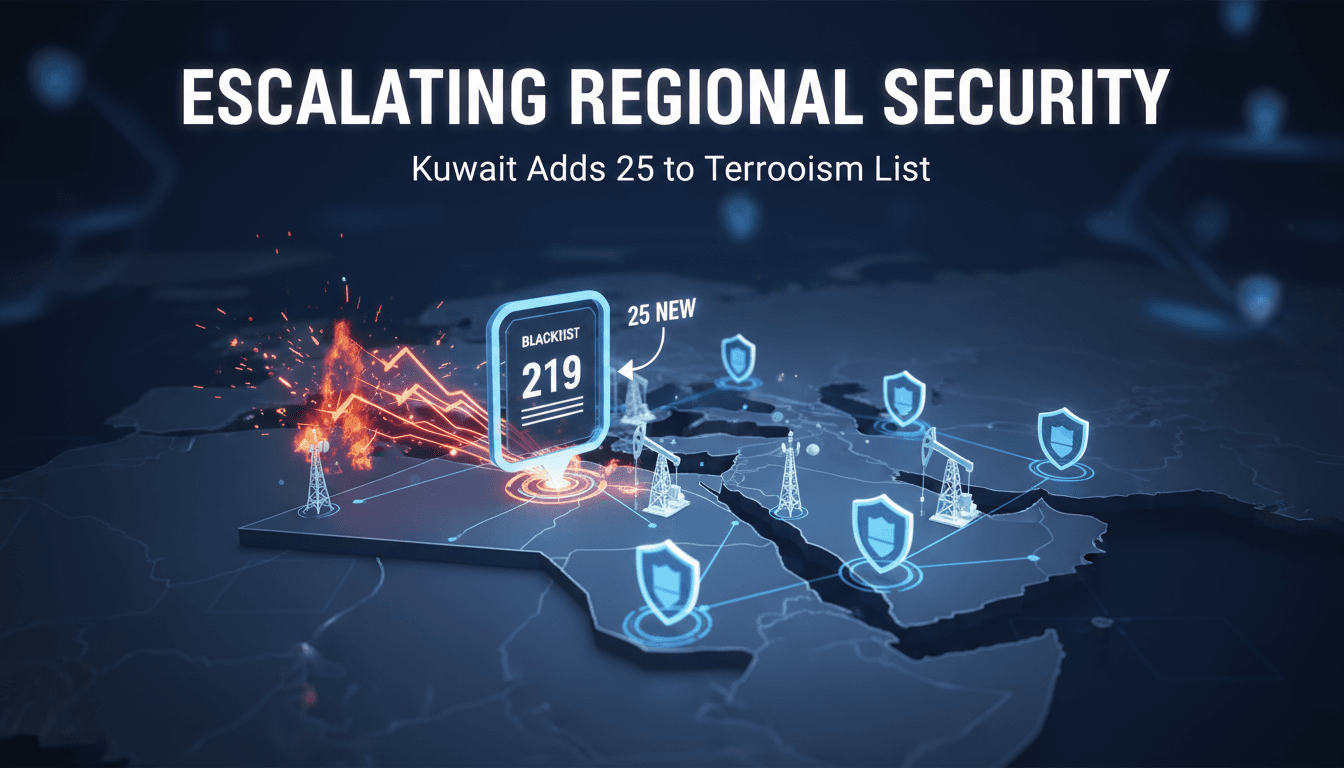
Kuwait Adds 25 Individuals to National Terrorism List Amid Regional Security Concerns
Here's what it means for you.
Increased regional security measures may affect business operations and expatriate safety in the Gulf.
Why it matters
Kuwait's actions reflect a broader regional response to escalating threats, impacting stability and security across the Gulf.
What happened (in 30 seconds)
- Kuwait added 25 individuals to its national terrorism blacklist on April 13, 2026, bringing the total to 219.
- Asset freezes and financial service bans were imposed on the newly designated individuals, with immediate enforcement required.
- The Kuwait Army's Explosive Ordnance Disposal Group conducted controlled explosions, clarifying public concerns over recent noises attributed to disposal operations.
The context you actually need
- Iran-aligned militias in Iraq have increased attacks targeting Gulf infrastructure, raising security concerns.
- Recent incidents, such as a drone strike on a Kuwaiti National Guard facility, highlight the urgency of Kuwait's counter-terrorism measures.
- Regional cooperation among Gulf states, including joint condemnations of cross-border attacks, underscores a unified approach to security threats.
What's really happening
Kuwait's designation of 25 individuals on its national terrorism list is a direct response to heightened security threats from Iranian-backed militias operating in Iraq. This move is part of a broader strategy to fortify national security and protect critical infrastructure in the Gulf region. The National Committee for Implementing UN Security Council Resolutions has taken decisive action by freezing assets and banning financial services for the newly designated individuals, which is a standard procedure aimed at disrupting the financial networks that support terrorism.
The recent uptick in drone and missile attacks on Gulf states, particularly from Iranian-aligned groups, has intensified the urgency for Kuwait to act. For instance, a drone strike on April 10, 2026, caused significant damage to a National Guard facility, although fortunately, there were no casualties. This incident, along with others, has prompted Kuwait to bolster its counter-terrorism framework and enhance its military readiness.
The Kuwait Army's Explosive Ordnance Disposal Group's operations to manage explosive remnants also highlight the ongoing risks posed by these militias. The controlled explosions that have been reported are not merely routine; they are a necessary response to ensure public safety and to mitigate the risks of unexploded ordnance from previous attacks. This proactive approach aims to reassure the public while maintaining operational security.
Moreover, Kuwait's actions resonate with the collective security concerns of the Gulf Cooperation Council (GCC) members, including Saudi Arabia and the UAE, who have also faced similar threats. The recent joint statements condemning violations of sovereignty and invoking self-defense rights under the UN Charter reflect a unified stance against external aggression. This regional solidarity is crucial, as it not only enhances security cooperation but also reassures businesses and expatriates operating in the region.
The implications of Kuwait's designations extend beyond national borders. As the Gulf states tighten their security measures, businesses may face increased scrutiny and regulatory compliance requirements. The financial sector, in particular, will need to navigate these changes carefully to avoid inadvertently engaging with designated individuals or entities.
Who feels it first (and how)
- Financial institutions: Increased compliance costs and scrutiny regarding transactions with designated individuals.
- Expatriates in the Gulf: Heightened security measures may affect personal safety and business operations.
- Local businesses: Potential disruptions in operations due to increased military activity and security protocols.
What to watch next
- Further designations: Monitor if additional individuals or entities are added to Kuwait's terrorism list, which could signal escalating threats.
- Regional military responses: Watch for changes in military readiness or joint exercises among Gulf states, indicating a shift in security posture.
- Public sentiment: Observe how these security measures affect public opinion and expatriate confidence in the Gulf region.
Kuwait has added 25 individuals to its national terrorism list, bringing the total to 219.
Increased security measures will continue across the Gulf in response to regional threats.
The long-term impact on business operations and expatriate safety in Kuwait and the broader Gulf region.
Frequently Asked Questions
- Why it matters?
- Kuwait's actions reflect a broader regional response to escalating threats, impacting stability and security across the Gulf.
- What happened (in 30 seconds)?
- Kuwait added 25 individuals to its national terrorism blacklist on April 13, 2026, bringing the total to 219. Asset freezes and financial service bans were imposed on the newly designated individuals, with immediate enforcement required. The Kuwait Army's Explosive Ordnance Disposal Group conducted controlled explosions, clarifying public concerns over recent noises attributed to disposal operations.
- What's really happening?
- Kuwait's designation of 25 individuals on its national terrorism list is a direct response to heightened security threats from Iranian-backed militias operating in Iraq. This move is part of a broader strategy to fortify national security and protect critical infrastructure in the Gulf region. The National Committee for Implementing UN Security Council Resolutions has taken decisive action by freezing assets and banning financial services for the newly designated individuals, which is a standard
- Who feels it first (and how)?
- Financial institutions: Increased compliance costs and scrutiny regarding transactions with designated individuals. Expatriates in the Gulf: Heightened security measures may affect personal safety and business operations. Local businesses: Potential disruptions in operations due to increased military activity and security protocols.
- What to watch next?
- Further designations: Monitor if additional individuals or entities are added to Kuwait's terrorism list, which could signal escalating threats. Regional military responses: Watch for changes in military readiness or joint exercises among Gulf states, indicating a shift in security posture. Public sentiment: Observe how these security measures affect public opinion and expatriate confidence in the Gulf region.
Arabic-language UAE newspaper coverage focused on domestic affairs, public institutions, business, society, and regional developments.
"Al Khaleej coverage generally reflects a mainstream UAE editorial lens with strong attention to public affairs, institutions, and regional developments."
— A47 Editor
الكويت تدرج 25 اسماً في قائمة الإرهاب.. وتفكك بقايا متفجرات
Kuwait has added 25 new names to its national anti-terrorism list, which includes 24 Kuwaiti citizens and one non-Kuwaiti individual. This action raises the total number of individuals and entities on the list to 219, reflecting ongoing efforts to co...
Pan-Arab news coverage spanning politics, business, sports, and regional affairs.
"Asharq Al-Awsat reflects a broad Arab editorial perspective with strong attention to regional geopolitics."
— A47 Editor
الكويت: إدراج 25 اسماً جديداً في قائمة الإرهاب... منهم 24 مواطناً
Kuwait has added 25 new names to its terrorism list, including 24 citizens, which entails freezing their financial assets and prohibiting financial services related to these individuals. This action reflects the government's ongoing efforts to combat...
UAE-based newspaper covering Gulf politics, society, and international developments.
"Gulf News is one of the UAE’s most prominent English-language publications."
— A47 Editor
Kuwait adds 25 names to terror list, bringing total to 219
Kuwait has added 25 names to its terror list, increasing the total to 219 individuals. This decision reflects the country's ongoing efforts to combat terrorism and enhance national security. The move is part of a broader strategy to address threats a...
A curated Gulf News feed featuring major stories across news, business, opinion, and lifestyle.
"Gulf News is a major UAE newspaper whose featured stories feed reflects a broad editorial mix shaped for a Gulf audience."
— A47 Editor
Kuwait adds 25 names to terror list, bringing total to 219
Kuwait has added 25 names to its terror list, increasing the total to 219 individuals. This decision reflects the country's ongoing efforts to combat terrorism and enhance national security. The move is part of a broader strategy to address threats a...