
Tech Transparency Project Report Reveals Apple and Google Promoted AI Nudify Apps Against Policies
Here's what it means for you.
As a user of app stores, your safety and privacy are at risk due to the promotion of harmful content.
Why it matters
This incident highlights the ongoing struggle between tech giants' policies and the reality of content moderation in digital marketplaces.
What happened (in 30 seconds)
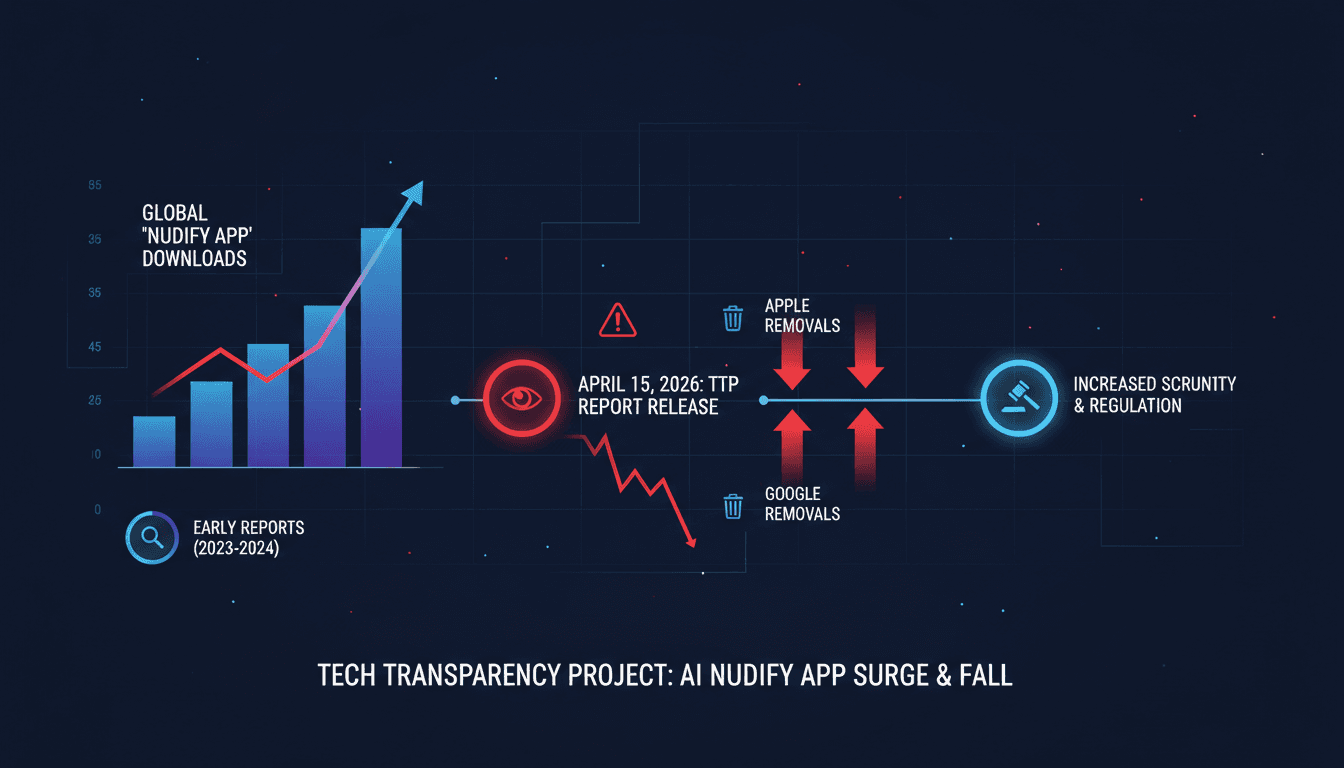
- On April 15, 2026, the Tech Transparency Project released a report revealing that Apple and Google app stores promoted 'nudify' apps, violating their own guidelines.
- The investigation identified 95 apps, with 38 capable of generating nonconsensual deepfake nude images, amid rising concerns over AI-enabled intimate imagery abuse.
- In response, Apple and Google removed dozens of apps and adjusted their search functions to limit access to these harmful applications.
The context you actually need
- Previous reports from January 2026 had already flagged 47 nudify apps in the Apple App Store and 55 in Google Play, leading to some removals but not comprehensive action.
- The rise of generative AI has intensified scrutiny over deepfake technology, with notable incidents prompting U.S. senators to call for stricter app store regulations.
- Despite removals, follow-up testing showed that many nudify apps remained accessible and were still being promoted, indicating systemic issues in content moderation.
What's really happening
The Tech Transparency Project's report sheds light on a troubling trend in the app ecosystem, where the promotion of harmful content often slips through the cracks of established policies. Apple and Google, two of the largest players in the app store market, have explicit guidelines prohibiting sexual or objectifying content. However, the investigation revealed that their algorithms inadvertently steered users toward nudify apps through search autocomplete, ads, and promotional carousels.
This situation raises questions about the effectiveness of content moderation practices in an era dominated by AI technologies. The algorithms that drive app store recommendations are designed to maximize user engagement and revenue, often at the expense of safety and ethical considerations. As a result, nudify apps, which can generate nonconsensual deepfake images, were able to thrive in an environment that should have been hostile to such content.
The cumulative downloads of identified nudify apps reached a staggering 483 million, indicating a significant user base that could be exposed to harmful content. This not only poses risks to individual privacy and consent but also reflects broader societal issues regarding the normalization of objectifying content. The tech giants' responses—removing some apps and blocking certain search terms—are reactive rather than proactive, suggesting a lack of robust mechanisms to prevent such violations from occurring in the first place.
Moreover, the ongoing scrutiny over AI deepfakes is likely to intensify, as public awareness grows and regulatory bodies consider more stringent measures. The pressure on Apple and Google to enforce their policies effectively will increase, as stakeholders demand accountability for the content available on their platforms. This could lead to a more significant overhaul of app store policies and practices, impacting how apps are developed, marketed, and moderated in the future.
Who feels it first (and how)
- App developers: Those creating content in the adult or AI space may face stricter regulations and scrutiny.
- Consumers: Users, particularly vulnerable groups, may be exposed to harmful content and privacy violations.
- Regulators: Government bodies will likely increase oversight and push for more stringent content moderation practices.
What to watch next
- Increased regulatory scrutiny: Watch for potential new regulations targeting app store content moderation practices, which could reshape the landscape for developers and users alike.
- Changes in app store policies: Monitor how Apple and Google adjust their guidelines and enforcement mechanisms in response to public pressure and scrutiny.
- Emergence of alternative platforms: Keep an eye on the rise of new app stores or platforms that prioritize user safety and ethical content, potentially disrupting the current market.
Apple and Google have removed several nudify apps and adjusted search functions.
Increased regulatory scrutiny and potential changes in app store policies will emerge in response to this controversy.
The long-term impact on user trust and app developer behavior remains uncertain.
Frequently Asked Questions
- Why it matters?
- This incident highlights the ongoing struggle between tech giants' policies and the reality of content moderation in digital marketplaces.
- What happened (in 30 seconds)?
- On April 15, 2026, the Tech Transparency Project released a report revealing that Apple and Google app stores promoted 'nudify' apps, violating their own guidelines. The investigation identified 95 apps, with 38 capable of generating nonconsensual deepfake nude images, amid rising concerns over AI-enabled intimate imagery abuse. In response, Apple and Google removed dozens of apps and adjusted their search functions to limit access to these harmful applications.
- What's really happening?
- The Tech Transparency Project's report sheds light on a troubling trend in the app ecosystem, where the promotion of harmful content often slips through the cracks of established policies. Apple and Google, two of the largest players in the app store market, have explicit guidelines prohibiting sexual or objectifying content. However, the investigation revealed that their algorithms inadvertently steered users toward nudify apps through search autocomplete, ads, and promotional carousels. This
- Who feels it first (and how)?
- App developers: Those creating content in the adult or AI space may face stricter regulations and scrutiny. Consumers: Users, particularly vulnerable groups, may be exposed to harmful content and privacy violations. Regulators: Government bodies will likely increase oversight and push for more stringent content moderation practices.
- What to watch next?
- Increased regulatory scrutiny: Watch for potential new regulations targeting app store content moderation practices, which could reshape the landscape for developers and users alike. Changes in app store policies: Monitor how Apple and Google adjust their guidelines and enforcement mechanisms in response to public pressure and scrutiny. Emergence of alternative platforms: Keep an eye on the rise of new app stores or platforms that prioritize user safety and ethical content, potentially disru
Latest tech news, product reviews, and analysis for consumers and professionals.
"CNET delivers accessible and detailed technology reporting, including trusted product reviews and how-to guides."
— A47 Editor
Apple and Google Broke Their Own Rules by Promoting 'Nudify' Apps, Report Says
A report from the Tech Transparency Project has revealed that over 100 apps available on Apple and Google's app stores are designed to create nonconsensual sexualized images, violating the companies' own policies against such content. This situation ...
Independent journalism covering technology, AI, and digital culture.
"An independent newsroom by veteran tech reporters known for critical, investigative coverage of AI and tech power."
— A47 Editor
App Stores Push Users Toward Nudify Apps, New Research Shows
Recent findings from the Tech Transparency Project indicate that app stores operated by Google and Apple not only host harmful nudify applications but also actively guide users towards them, raising serious ethical concerns.
Photography news including AI tools and ethics.
"Covers AI’s impact on imaging and creative workflows."
— A47 Editor
Apple and Google Direct Users to AI ‘Nudify’ Apps: Report
A recent investigation revealed that Apple and Google are directing users to applications that create deepfake nude images, raising significant ethical concerns regarding privacy and consent. Despite their stated policies against such content, these ...