
Israeli Airstrikes on Hezbollah in Lebanon Result in Over 300 Casualties
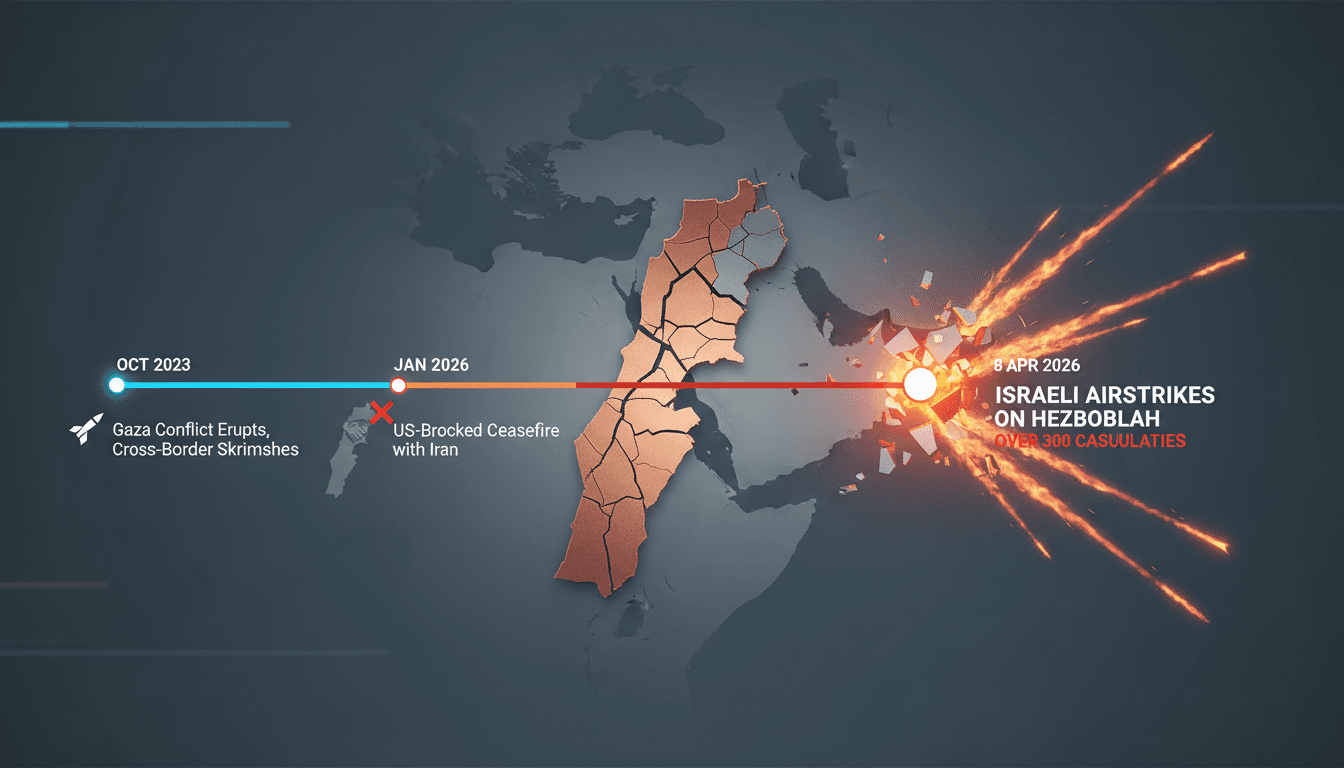
Here's what it means for you.
The escalation of conflict in Lebanon could disrupt global markets and impact expatriates with ties to the region.
Why it matters
The airstrikes exacerbate regional instability, potentially affecting oil prices and international diplomatic relations.
What happened (in 30 seconds)
- Over 100 airstrikes were executed by the Israel Defense Forces (IDF) in a 10-minute operation targeting Hezbollah infrastructure across Lebanon.
- At least 303 deaths and 1,165 injuries were reported, primarily among civilians, overwhelming local hospitals.
- International condemnation followed, with calls for ceasefire negotiations strained amid conflicting interpretations of previous agreements.
The context you actually need
- The attacks are part of the 2026 Israel–Hezbollah war, which began after Hezbollah launched rockets into Israel in response to the Iran conflict.
- A contested US-brokered ceasefire was in place, but Israel claimed it excluded Lebanon, allowing continued military operations.
- Lebanon's humanitarian situation is dire, with over 1.1 million displaced and hospitals struggling to cope with casualties.
What's really happening
On April 8, 2026, at approximately 14:00 EEST, the IDF launched Operation Eternal Darkness, deploying 50 fighter jets to execute a rapid and intense barrage of airstrikes across Lebanon. The operation targeted over 100 sites associated with Hezbollah, including command centers, missile infrastructure, and naval units. The strikes were executed without prior warning, particularly in densely populated areas during rush hour, leading to catastrophic civilian casualties.
The aftermath saw hospitals inundated with injured civilians, prompting urgent appeals for blood donations as medical facilities struggled to cope with the influx. The Lebanese civil defense reported at least 303 deaths and 1,165 injuries, with many victims being children and the elderly. The strikes also destroyed residential buildings and even hit a funeral gathering, further amplifying the tragedy.
This military action has drawn widespread international condemnation, with Lebanon's President Joseph Aoun labeling the strikes a "massacre" and Prime Minister Nawaf Salam accusing Israel of violating international law. In retaliation, Hezbollah launched rockets into northern Israel, escalating tensions further. Iran has threatened to escalate the situation, briefly closing the Strait of Hormuz, a critical maritime route for global oil shipments.
The broader implications of these airstrikes extend beyond immediate humanitarian concerns. The strikes have strained international ceasefire negotiations, particularly those brokered by the US, which had aimed to stabilize the region. The situation has led to a spike in oil prices, reflecting market anxieties over potential disruptions in supply due to the conflict.
As the situation evolves, the humanitarian crisis in Lebanon will likely worsen, with ongoing rescue operations and a rising death toll. The international community's response will be crucial in determining the next steps in this volatile situation.
Who feels it first (and how)
- Lebanese civilians: Directly affected by the airstrikes, facing casualties and displacement.
- Healthcare workers: Overwhelmed by the influx of injured individuals in hospitals.
- Expatriates in the UAE: Concerned for family members in Lebanon, with potential disruptions to travel.
- Global oil markets: Likely to experience volatility due to regional tensions affecting supply routes.
- Diplomatic entities: Engaged in ceasefire negotiations, facing pressure to address escalating violence.
What to watch next
- International diplomatic responses: Watch for statements from the UN and major powers regarding ceasefire negotiations and potential sanctions.
- Oil price fluctuations: Monitor North Sea oil prices as they react to ongoing tensions and potential supply disruptions.
- Humanitarian aid initiatives: Look for international efforts to provide relief to Lebanon, which may influence public sentiment and diplomatic relations.
The airstrikes resulted in significant civilian casualties and international condemnation.
The humanitarian crisis in Lebanon will worsen, prompting increased international aid efforts.
The long-term impact on regional stability and the effectiveness of ceasefire negotiations remains uncertain.
Frequently Asked Questions
- Why it matters?
- The airstrikes exacerbate regional instability, potentially affecting oil prices and international diplomatic relations.
- What happened (in 30 seconds)?
- Over 100 airstrikes were executed by the Israel Defense Forces (IDF) in a 10-minute operation targeting Hezbollah infrastructure across Lebanon. At least 303 deaths and 1,165 injuries were reported, primarily among civilians, overwhelming local hospitals. International condemnation followed, with calls for ceasefire negotiations strained amid conflicting interpretations of previous agreements.
- What's really happening?
- On April 8, 2026, at approximately 14:00 EEST, the IDF launched Operation Eternal Darkness, deploying 50 fighter jets to execute a rapid and intense barrage of airstrikes across Lebanon. The operation targeted over 100 sites associated with Hezbollah, including command centers, missile infrastructure, and naval units. The strikes were executed without prior warning, particularly in densely populated areas during rush hour, leading to catastrophic civilian casualties. The aftermath saw hospital
- Who feels it first (and how)?
- Lebanese civilians: Directly affected by the airstrikes, facing casualties and displacement. Healthcare workers: Overwhelmed by the influx of injured individuals in hospitals. Expatriates in the UAE: Concerned for family members in Lebanon, with potential disruptions to travel. Global oil markets: Likely to experience volatility due to regional tensions affecting supply routes. Diplomatic entities: Engaged in ceasefire negotiations, facing pressure to address escalating violence.
- What to watch next?
- International diplomatic responses: Watch for statements from the UN and major powers regarding ceasefire negotiations and potential sanctions. Oil price fluctuations: Monitor North Sea oil prices as they react to ongoing tensions and potential supply disruptions. Humanitarian aid initiatives: Look for international efforts to provide relief to Lebanon, which may influence public sentiment and diplomatic relations.
Editor-curated FT homepage stories spanning markets, business, world, and opinion.
"The Financial Times is a globally respected business publication with a centrist/center-left tone and strong markets focus."
— A47 Editor
Lebanon’s 10 minutes from hell
A series of rapid Israeli attacks in Lebanon has resulted in hundreds of casualties, marking one of the deadliest episodes in the country's history. This escalation is part of a broader military campaign against Hezbollah, with significant airstrikes...
National headlines across the United States including breaking stories and societal issues.
"NBC News is a mainstream media outlet known for comprehensive national and international news coverage with a centrist to slightly left-leaning editorial tone."
— A47 Editor
Video shows explosion from Israeli strike in Lebanon
Recent video footage has revealed a significant explosion resulting from an Israeli airstrike in Lebanon, amidst escalating military operations targeting Hezbollah. This attack is part of a broader campaign by Israel, which has intensified its milita...
International coverage of politics, culture, and current affairs.
"BBC News is widely regarded as a reputable international news organization, known for its impartial tone and public service mandate."
— A47 Editor
Lebanon thought there was a ceasefire - then Israel unleashed deadly blitz
Following a ceasefire agreement between the US and Iran, Israel launched extensive airstrikes on Lebanon, asserting that the ceasefire does not apply to the region. The military operations have resulted in hundreds of casualties and widespread panic ...