
63 Countries and EU Condemn Attacks on UNIFIL Peacekeepers in Lebanon
Here's what it means for you.
Your global operations may face increased scrutiny and pressure as international diplomatic tensions escalate.
Why it matters
This joint condemnation signals a potential shift in international relations and peacekeeping dynamics in conflict zones.
What happened (in 30 seconds)
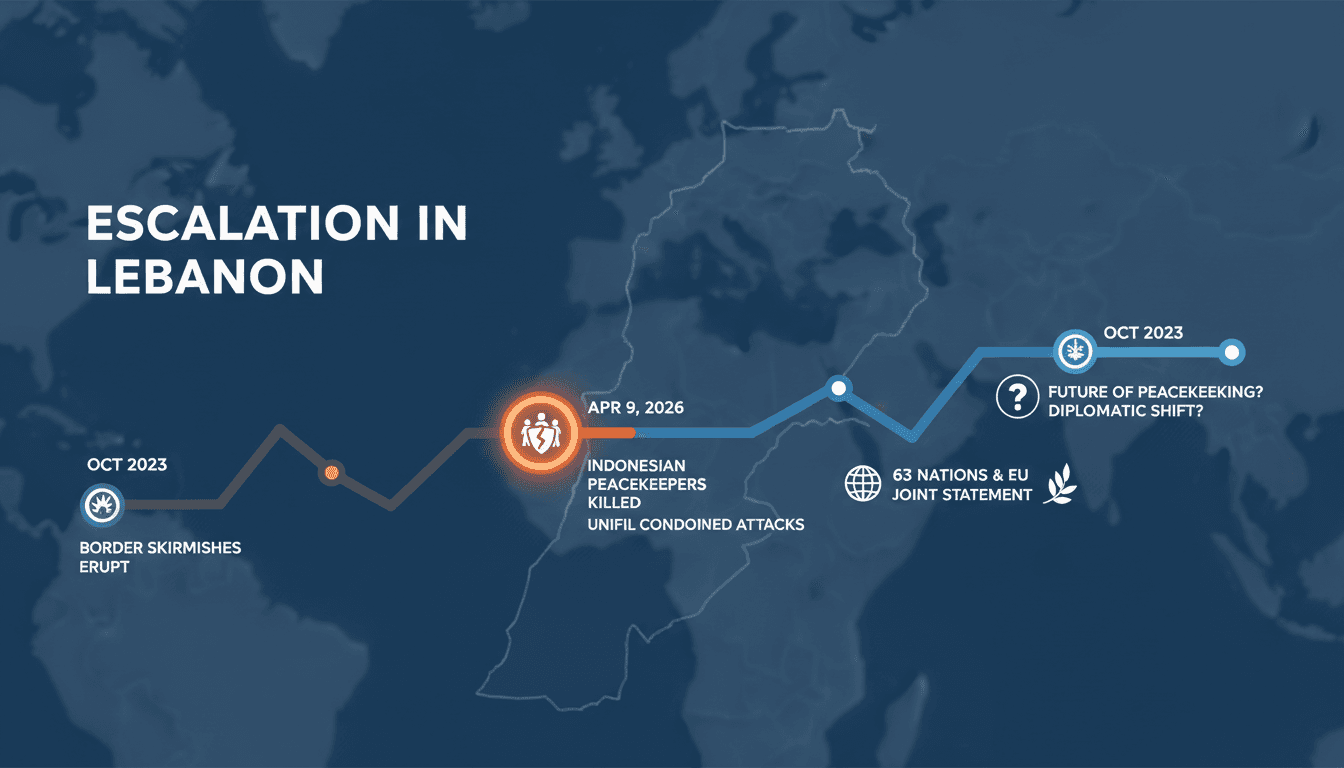
- On April 9, 2026, 63 countries and the European Union condemned attacks on UNIFIL peacekeepers in Lebanon.
- The statement followed the deaths of three Indonesian soldiers, highlighting the risks faced by peacekeepers amid escalating violence.
- UN investigations are ongoing, with calls for accountability and adherence to ceasefire agreements.
The context you actually need
- The 2026 Lebanon war began on March 2, following Hezbollah's rocket attacks on Israel, leading to significant civilian casualties and displacement.
- UNIFIL, deployed since 1978, has been increasingly endangered due to crossfire and direct attacks during this conflict escalation.
- Over 1,000,000 civilians have been displaced in Lebanon, exacerbating the humanitarian crisis and drawing international attention.
What's really happening
The recent joint statement by 63 countries and the European Union at the United Nations reflects a growing concern over the safety of UN peacekeepers in Lebanon, particularly in light of the ongoing 2026 Lebanon war. This conflict was ignited by Hezbollah's rocket attacks on Israel, which were reportedly triggered by the assassination of Iranian leaders. Israel's military response, including airstrikes and ground incursions, has resulted in over 1,200 civilian fatalities and significant infrastructure damage. Amidst this violence, UNIFIL peacekeepers have found themselves in increasingly perilous situations, facing direct attacks that could be classified as war crimes under international law.
The deaths of three Indonesian soldiers in late March, caused by Israeli and Hezbollah actions, prompted the joint statement, which emphasized the need for enhanced protections for peacekeepers and a return to negotiations. This declaration not only condemns the attacks but also highlights the broader humanitarian crisis unfolding in Lebanon, where more than one million people have been displaced. The international community's response underscores a collective commitment to uphold Lebanon's sovereignty and ensure accountability for those responsible for the violence.
The implications of this situation extend beyond Lebanon. Countries involved in the statement are likely to increase diplomatic pressure on both Israel and Hezbollah, potentially leading to a reevaluation of military and humanitarian aid in the region. The UN's ongoing investigations into the attacks on peacekeepers may also result in calls for sanctions or other measures against those found culpable. As the situation evolves, the risk of further escalation remains high, and the international community's response will be critical in shaping the future of peacekeeping operations in conflict zones.
The UAE, home to a significant Lebanese expatriate community, has expressed concerns over the regional instability caused by the conflict. While no immediate economic disruptions have been reported, the anxiety among Lebanese residents in Dubai regarding their families back home is palpable. This situation illustrates how global conflicts can have localized impacts, affecting expatriate communities and their economic activities.
Who feels it first (and how)
- UN Peacekeepers: Increased risks and scrutiny regarding their safety and operational mandates.
- Lebanese Civilians: Ongoing displacement and humanitarian challenges as violence continues.
- Expatriate Communities: Heightened anxiety and potential economic impacts for those with family ties to affected regions.
- International Diplomats: Pressure to respond to the crisis and engage in peace negotiations.
What to watch next
- UN Investigations: Ongoing inquiries into attacks on peacekeepers will determine accountability and potential sanctions.
- Diplomatic Engagements: Watch for shifts in international diplomatic efforts aimed at negotiating a ceasefire and stabilizing the region.
- Humanitarian Aid Responses: Increased international aid efforts may emerge to address the humanitarian crisis affecting displaced civilians.
The joint statement condemning attacks on peacekeepers has been issued by 63 countries and the EU.
Increased diplomatic pressure on Israel and Hezbollah to adhere to ceasefire agreements and protect civilians.
The long-term effectiveness of international responses in stabilizing the situation in Lebanon and protecting peacekeepers.
Frequently Asked Questions
- Why it matters?
- This joint condemnation signals a potential shift in international relations and peacekeeping dynamics in conflict zones.
- What happened (in 30 seconds)?
- On April 9, 2026, 63 countries and the European Union condemned attacks on UNIFIL peacekeepers in Lebanon. The statement followed the deaths of three Indonesian soldiers, highlighting the risks faced by peacekeepers amid escalating violence. UN investigations are ongoing, with calls for accountability and adherence to ceasefire agreements.
- What's really happening?
- The recent joint statement by 63 countries and the European Union at the United Nations reflects a growing concern over the safety of UN peacekeepers in Lebanon, particularly in light of the ongoing 2026 Lebanon war. This conflict was ignited by Hezbollah's rocket attacks on Israel, which were reportedly triggered by the assassination of Iranian leaders. Israel's military response, including airstrikes and ground incursions, has resulted in over 1,200 civilian fatalities and significant infrastr
- Who feels it first (and how)?
- UN Peacekeepers: Increased risks and scrutiny regarding their safety and operational mandates. Lebanese Civilians: Ongoing displacement and humanitarian challenges as violence continues. Expatriate Communities: Heightened anxiety and potential economic impacts for those with family ties to affected regions. International Diplomats: Pressure to respond to the crisis and engage in peace negotiations.
- What to watch next?
- UN Investigations: Ongoing inquiries into attacks on peacekeepers will determine accountability and potential sanctions. Diplomatic Engagements: Watch for shifts in international diplomatic efforts aimed at negotiating a ceasefire and stabilizing the region. Humanitarian Aid Responses: Increased international aid efforts may emerge to address the humanitarian crisis affecting displaced civilians.
Arabic-language UAE newspaper coverage focused on domestic affairs, public institutions, business, society, and regional developments.
"Al Khaleej coverage generally reflects a mainstream UAE editorial lens with strong attention to public affairs, institutions, and regional developments."
— A47 Editor
عشرات الدول تندد بالهجمات على قوات حفظ السلام في لبنان
A joint statement was issued by 63 countries and the European Union at the United Nations, condemning the 'unacceptable aggressive behavior' towards UN peacekeeping forces in Lebanon, following the deaths of three Indonesian soldiers. The statement h...
Regional coverage and analysis focused on politics, diplomacy, and business across the Middle East.
"Al-Monitor is known for analytical reporting on Middle East politics and policy developments."
— A47 Editor
Dozens of states condemn attacks on U.N. peacekeepers in Lebanon
Dozens of states, including 63 countries and the European Union, condemned the recent attacks on U.N. peacekeepers in Lebanon, following the deaths of three Indonesian soldiers amid escalating violence in the region. The joint statement emphasized th...