
Lafarge and Executives Convicted of Financing Terrorism in Syria
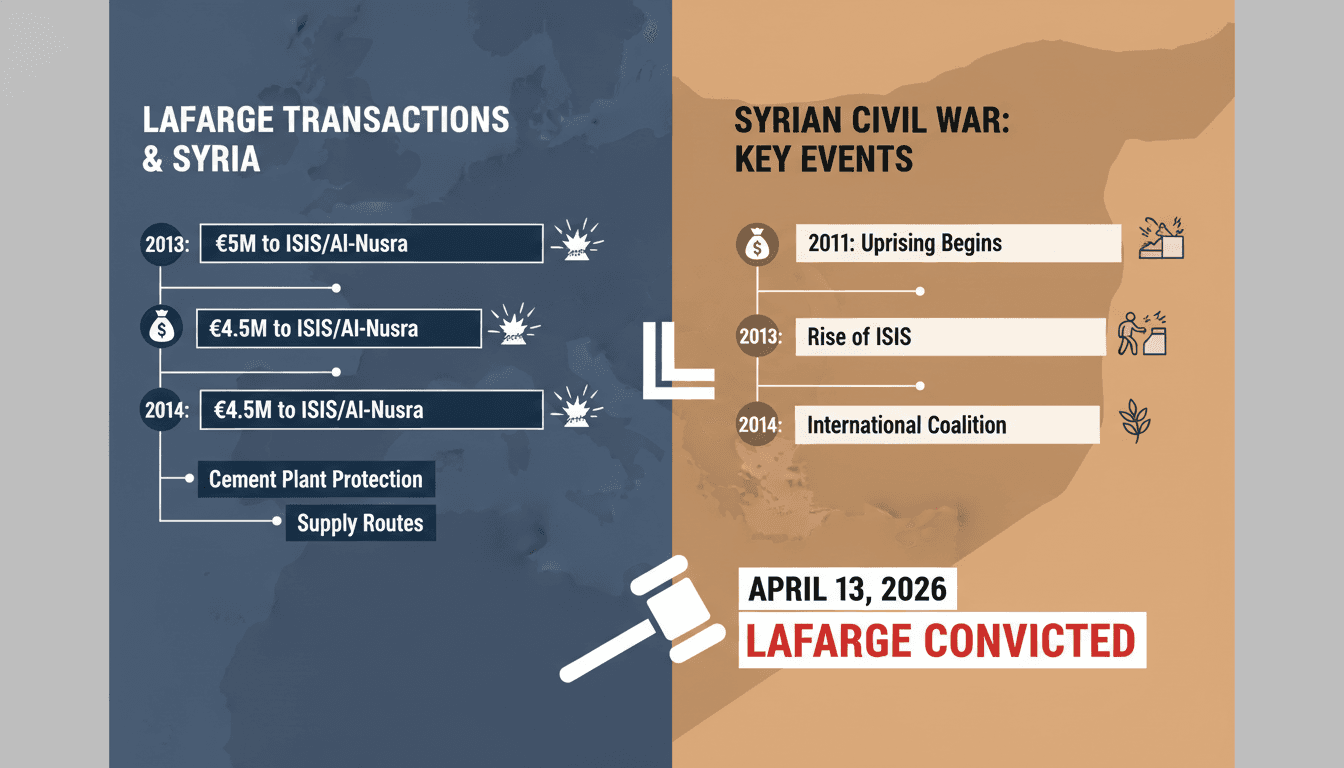
Here's what it means for you.
If you work in global supply chains or corporate governance, this ruling signals heightened scrutiny on corporate ethics and accountability.
Why it matters
This landmark ruling sets a precedent for corporate responsibility in conflict zones, impacting how companies manage operations in high-risk areas.
What happened (in 30 seconds)
- On April 13, 2026, the Paris Correctional Tribunal convicted Lafarge SA and eight former executives for financing terrorism in Syria.
- The court found that Lafarge paid approximately €5.6 million to jihadist groups, including ISIS, to maintain operations during the Syrian civil war.
- Sentences ranged from one to six years for executives, with Lafarge fined €1.125 million, and appeals are anticipated.
The context you actually need
- Lafarge built the Jalabiya cement plant in Syria in 2008, operational by 2010, amid rising conflict.
- Payments began in 2012-2013 to armed groups for security and raw materials, violating EU sanctions and UN resolutions.
- The scandal emerged in 2016, leading to investigations and charges against executives, culminating in the 2026 ruling.
What's really happening
The conviction of Lafarge and its executives marks a significant moment in corporate accountability, particularly regarding operations in conflict zones. The Paris Tribunal's ruling highlights the legal and ethical responsibilities companies face when navigating complex geopolitical landscapes. Lafarge's actions, driven by the need to sustain its operations at the Jalabiya plant, illustrate a troubling trend where profit motives can lead to complicity in terrorism.
From 2012 to 2014, Lafarge's Syrian subsidiary made direct payments to jihadist groups, totaling €5.6 million, to ensure the safety of its operations. This included payments for security, safe passage, and access to raw materials from areas controlled by these groups. The court characterized these transactions as a "genuine commercial partnership," underscoring the extent to which Lafarge prioritized operational continuity over ethical considerations.
The ruling also reflects broader systemic issues within multinational corporations operating in unstable regions. Companies often face the dilemma of balancing profitability with ethical conduct, especially when local conditions are volatile. The Lafarge case serves as a cautionary tale for businesses that may consider similar compromises in the future.
Moreover, the ruling is likely to influence regulatory frameworks and corporate governance standards globally. As governments and international bodies tighten regulations on corporate conduct in conflict zones, companies may need to reassess their risk management strategies and compliance protocols. This could lead to increased operational costs and a reevaluation of market entry strategies in high-risk areas.
The implications extend beyond Lafarge itself; they signal a shift in how corporate actions are scrutinized and the potential for legal repercussions when ethical lines are crossed. As public awareness of corporate malfeasance grows, companies may find themselves under greater pressure to demonstrate transparency and accountability in their operations.
Who feels it first (and how)
- Corporate executives in multinational firms may face increased scrutiny and pressure to ensure compliance with ethical standards.
- Legal and compliance teams will need to enhance oversight mechanisms to prevent similar violations.
- Investors may reassess their portfolios, favoring companies with strong ethical practices and governance frameworks.
- NGOs and advocacy groups will likely leverage this ruling to push for stricter regulations on corporate conduct in conflict zones.
What to watch next
- Appeals from Lafarge and executives: The outcomes could redefine corporate accountability standards and influence future cases.
- Regulatory changes: Watch for potential new laws or guidelines regarding corporate operations in conflict zones, which could reshape industry practices.
- Market reactions: Monitor how investors respond to this ruling and whether it affects stock prices or investment strategies in similar sectors.
Lafarge and its executives have been convicted and sentenced for financing terrorism.
Increased regulatory scrutiny on corporate operations in conflict zones will follow this ruling.
The long-term impact on Lafarge's parent company, Holcim, and its operations in other regions remains to be seen.
Frequently Asked Questions
- Why it matters?
- This landmark ruling sets a precedent for corporate responsibility in conflict zones, impacting how companies manage operations in high-risk areas.
- What happened (in 30 seconds)?
- On April 13, 2026, the Paris Correctional Tribunal convicted Lafarge SA and eight former executives for financing terrorism in Syria. The court found that Lafarge paid approximately €5.6 million to jihadist groups, including ISIS, to maintain operations during the Syrian civil war. Sentences ranged from one to six years for executives, with Lafarge fined €1.125 million, and appeals are anticipated.
- What's really happening?
- The conviction of Lafarge and its executives marks a significant moment in corporate accountability, particularly regarding operations in conflict zones. The Paris Tribunal's ruling highlights the legal and ethical responsibilities companies face when navigating complex geopolitical landscapes. Lafarge's actions, driven by the need to sustain its operations at the Jalabiya plant, illustrate a troubling trend where profit motives can lead to complicity in terrorism. From 2012 to 2014, Lafarge's
- Who feels it first (and how)?
- Corporate executives in multinational firms may face increased scrutiny and pressure to ensure compliance with ethical standards. Legal and compliance teams will need to enhance oversight mechanisms to prevent similar violations. Investors may reassess their portfolios, favoring companies with strong ethical practices and governance frameworks. NGOs and advocacy groups will likely leverage this ruling to push for stricter regulations on corporate conduct in conflict zones.
- What to watch next?
- Appeals from Lafarge and executives: The outcomes could redefine corporate accountability standards and influence future cases. Regulatory changes: Watch for potential new laws or guidelines regarding corporate operations in conflict zones, which could reshape industry practices. Market reactions: Monitor how investors respond to this ruling and whether it affects stock prices or investment strategies in similar sectors.
Arabic-language coverage of Saudi, regional, and international affairs.
"Al Bilad offers mainstream Saudi newspaper coverage across domestic and broader Arab topics."
— A47 Editor
ضمن حكم وصف بالتاريخي في فرنسا.. إدانة «لافارج» بتمويل جماعات متشددة في سوريا
A Paris court has convicted the French cement company Lafarge, part of the Holcim Group, for financing terrorism and violating European sanctions by paying funds to extremist groups in Syria to ensure the operation of its factory during the civil war...
Regional and international reporting focused on Middle Eastern politics, diplomacy, and economics.
"Asharq Al-Awsat is a Saudi-owned international newspaper reflecting mainstream Gulf political perspectives."
— A47 Editor
French Cement Maker Lafarge Found Guilty of Financing Extremists in Syria
A French court has found Lafarge, a major cement manufacturer, guilty of financing terrorism in Syria by paying protection money to jihadist groups, including the Islamic State, to sustain its operations during the Syrian civil war. This ruling highl...
Global news coverage with extensive reporting on Middle Eastern conflicts and geopolitics.
"Al Jazeera is a Qatar-based broadcaster known for wide regional coverage and alternative perspectives."
— A47 Editor
French cement giant Lafarge guilty of financing ISIL in Syria
Cement company Lafarge and eight of its ex-employees were found guilty of financing ISIL in a French court.
Comprehensive coverage of Middle Eastern and global issues.
"Al Jazeera is a prominent voice from the Global South, especially the Middle East, with an emphasis on underreported stories."
— A47 Editor
French cement giant Lafarge guilty of financing ISIL in Syria
Cement company Lafarge and eight of its ex-employees were found guilty of financing ISIL in a French court.
Arabic-language coverage of international news and geopolitics.
"RT Arabic is a Russian state-funded outlet often criticized for promoting Kremlin-aligned narratives."
— A47 Editor
القضاء الفرنسي يدين شركة "لافارج" بتمويل "داعش" في سوريا
A French court in Paris has convicted the cement company Lafarge for financing the terrorist organization ISIS and other extremist groups to ensure the continued operation of its factory in Syria. This ruling highlights the serious legal repercussion...
24/7 international news from a French perspective in multiple languages.
"France 24 is viewed as a globally focused outlet with balanced coverage and a European perspective."
— A47 Editor
French court jails Lafarge former CEO for funding IS in Syria
A French court has sentenced former Lafarge CEO to six years in prison and fined the cement company over $1.3 million for paying protection money to the Islamic State and other jihadist groups to keep its operations running in Syria during the civil ...
International coverage from The Guardian's global desks.
"The Guardian is known for its progressive editorial stance and in-depth analysis."
— A47 Editor
French cement maker convicted of financing terror groups to keep its Syria plant working
A French court has convicted Lafarge, a cement manufacturer, and sentenced its former CEO to six years in prison for paying nearly €5.6 million to terrorist groups, including the Islamic State, to ensure the operation of its plant in Syria during the...
Pan-Arab news coverage spanning politics, business, sports, and regional affairs.
"Asharq Al-Awsat reflects a broad Arab editorial perspective with strong attention to regional geopolitics."
— A47 Editor
القضاء الفرنسي يدين شركة «لافارج» بتهمة تمويل متطرفين في سوريا
A Paris court has convicted the French cement company Lafarge for paying funds to the Islamic State (ISIS) and other extremist groups to ensure the continued operation of its factory in Syria. This ruling highlights the serious legal repercussions fo...
UAE-based English-language newspaper covering regional politics, economics, and global affairs.
"The National reflects Emirati policy perspectives while maintaining international editorial standards."
— A47 Editor
Lafarge found guilty of financing terrorism in Syria and breaching sanctions
A French court has found Lafarge guilty of financing terrorism in Syria by paying protection money to jihadist groups, including the Islamic State, to maintain its operations during the Syrian civil war. This ruling underscores the company's controve...
European coverage of Middle East politics and security issues.
"France 24 offers international reporting with a European editorial perspective."
— A47 Editor
French cement-maker Lafarge found guilty of financing jihadists in Syria, former CEO jailed
A Paris court has found Lafarge, a French cement manufacturer now owned by Holcim, guilty of financing jihadist groups, including the Islamic State, to maintain its operations in northern Syria during the civil war. The former CEO of Lafarge has been...
Coverage of current events and conflicts in the Middle East.
"France 24 is viewed as a globally focused outlet with balanced coverage and a European perspective."
— A47 Editor
French cement-maker Lafarge found guilty of financing jihadists in Syria, former CEO jailed
A Paris court has found Lafarge, a French cement manufacturer now owned by Holcim, guilty of financing jihadist groups, including the Islamic State, to maintain its operations in northern Syria during the civil war. The former CEO of Lafarge has been...
Global markets, investing, and macroeconomics from a premier financial newsroom.
"Bloomberg is respected for in-depth financial reporting and data-driven analysis."
— A47 Editor
Holcim’s Lafarge Found Guilty Over Syria Terrorist Payments
Holcim Ltd.'s Lafarge has been found guilty by a Paris court for making payments to terrorist organizations in order to keep a cement plant operational during the civil war in Syria. This ruling highlights the company's controversial actions amid a c...