
Trump Issues Ultimatum to Iran Over Strait of Hormuz Amid Ongoing Conflict
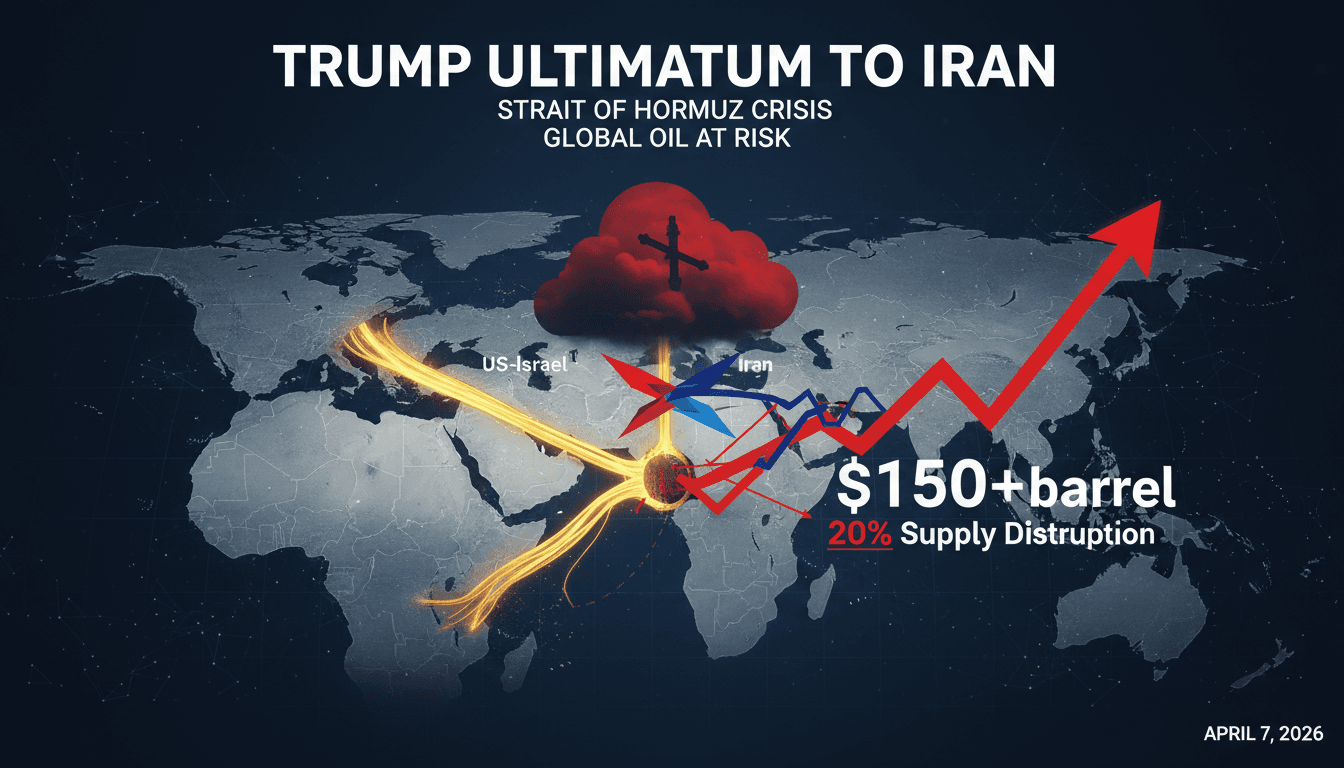
Here's what it means for you.
If you rely on global oil markets, the escalating tensions in the Persian Gulf could lead to higher prices and economic uncertainty.
Why it matters
The Strait of Hormuz is a critical chokepoint for global oil supply, with 20% of the world's oil transiting through it.
What happened (in 30 seconds)
- April 7, 2026: President Trump threatened Iran on Truth Social, stating that its civilization would face destruction unless the Strait of Hormuz was reopened.
- Ceasefire Announced: Following diplomatic interventions, Trump later announced a conditional two-week ceasefire, pending the reopening of the strait.
- Market Reaction: Oil prices surged above $100 per barrel amid fears of supply disruptions, impacting global markets.
The context you actually need
- Military Campaign: The U.S. and Israel began military operations against Iran in February 2026, leading to heightened tensions in the region.
- Strait Closure: Iran closed the Strait of Hormuz in March 2026, disrupting approximately 20% of global oil shipments and causing significant volatility in energy markets.
- Escalating Demands: Trump’s ultimatum reflects a broader strategy to compel regime change in Iran, leveraging military threats to influence diplomatic negotiations.
What's really happening
The ultimatum issued by President Trump underscores a critical moment in U.S.-Iran relations, marked by escalating military confrontations and geopolitical maneuvering. The U.S. and Israel's military campaign against Iran, which began in February 2026, was a response to perceived threats from Iran's nuclear ambitions and regional influence. This campaign prompted Iran to close the Strait of Hormuz in March, a strategic waterway that facilitates the transit of about 20% of the world's oil supply. The closure not only disrupted oil shipments but also sent shockwaves through global energy markets, leading to increased prices and economic strain.
Trump's ultimatum on April 7, threatening the destruction of Iran's civilization unless the strait was reopened, reflects a high-stakes gamble aimed at forcing Iran's compliance. The rhetoric is designed to signal U.S. resolve while also attempting to rally domestic and international support for a hardline approach against Tehran. The subsequent announcement of a conditional ceasefire indicates a recognition of the potential fallout from continued military action, particularly as oil prices surged above $100 per barrel, impacting economies worldwide.
The underlying mechanism here is one of leverage: the U.S. seeks to use military threats to compel Iran to reopen the strait and restore stability to oil markets. However, this strategy is fraught with risks, as it could lead to further escalation and retaliation from Iran, potentially destabilizing the entire region. The situation is compounded by the involvement of other regional players, including Israel, which has its own interests in curbing Iranian influence.
As the U.S. and Iran navigate this complex landscape, the implications extend beyond military engagements. The economic impact of rising oil prices affects consumers, businesses, and governments globally, leading to increased costs and potential economic slowdowns. The volatility in energy markets can also trigger broader financial instability, influencing stock markets and investment decisions.
Who feels it first (and how)
- Oil Companies: Increased prices directly affect profit margins and operational costs.
- Consumers: Higher fuel prices lead to increased costs for transportation and goods.
- Tourism Sector: Destinations reliant on tourism may see declines as travel costs rise.
- Geopolitical Analysts: Increased scrutiny on U.S.-Iran relations and potential conflict scenarios.
- Investors: Market volatility may lead to shifts in investment strategies and risk assessments.
What to watch next
- Diplomatic Developments: Watch for any new negotiations or interventions from countries like Pakistan, which may influence the ceasefire's sustainability.
- Oil Price Trends: Monitor fluctuations in oil prices as they respond to geopolitical events and market sentiment.
- Military Movements: Keep an eye on U.S. and Iranian military actions in the region, which could signal further escalation or de-escalation.
The Strait of Hormuz is vital for global oil supply, with 20% of oil transiting through it.
Continued volatility in oil prices as geopolitical tensions persist.
The long-term effectiveness of Trump's ultimatum and ceasefire in achieving lasting peace or stability in the region.
Frequently Asked Questions
- Why it matters?
- The Strait of Hormuz is a critical chokepoint for global oil supply, with 20% of the world's oil transiting through it.
- What happened (in 30 seconds)?
- April 7, 2026: President Trump threatened Iran on Truth Social, stating that its civilization would face destruction unless the Strait of Hormuz was reopened. Ceasefire Announced: Following diplomatic interventions, Trump later announced a conditional two-week ceasefire, pending the reopening of the strait. Market Reaction: Oil prices surged above $100 per barrel amid fears of supply disruptions, impacting global markets.
- What's really happening?
- The ultimatum issued by President Trump underscores a critical moment in U.S.-Iran relations, marked by escalating military confrontations and geopolitical maneuvering. The U.S. and Israel's military campaign against Iran, which began in February 2026, was a response to perceived threats from Iran's nuclear ambitions and regional influence. This campaign prompted Iran to close the Strait of Hormuz in March, a strategic waterway that facilitates the transit of about 20% of the world's oil supply.
- Who feels it first (and how)?
- Oil Companies: Increased prices directly affect profit margins and operational costs. Consumers: Higher fuel prices lead to increased costs for transportation and goods. Tourism Sector: Destinations reliant on tourism may see declines as travel costs rise. Geopolitical Analysts: Increased scrutiny on U.S.-Iran relations and potential conflict scenarios. Investors: Market volatility may lead to shifts in investment strategies and risk assessments.
- What to watch next?
- Diplomatic Developments: Watch for any new negotiations or interventions from countries like Pakistan, which may influence the ceasefire's sustainability. Oil Price Trends: Monitor fluctuations in oil prices as they respond to geopolitical events and market sentiment. Military Movements: Keep an eye on U.S. and Iranian military actions in the region, which could signal further escalation or de-escalation.
National headlines across the United States including breaking stories and societal issues.
"NBC News is a mainstream media outlet known for comprehensive national and international news coverage with a centrist to slightly left-leaning editorial tone."
— A47 Editor
Trump threatens 'whole civilization' of Iran in post
President Donald Trump has issued a stark ultimatum to Iran, threatening that 'a whole civilization will die tonight' if the Iranian government does not comply with demands to reopen the Strait of Hormuz by an 8 PM EDT deadline. This warning follows ...
UAE-based English-language newspaper covering regional politics, economics, and global affairs.
"The National reflects Emirati policy perspectives while maintaining international editorial standards."
— A47 Editor
Trump to delay bombing by two weeks if Iran immediately reopens Strait of Hormuz
U.S. President Donald Trump has announced a two-week delay in military action against Iran, contingent upon Tehran's immediate reopening of the strategically vital Strait of Hormuz. This ultimatum follows escalating tensions between the U.S. and Iran...
Capitol Hill news, legislation, and policy insight.
"The Hill specializes in U.S. politics and policy, with a focus on Capitol Hill developments and a reputation for insider reporting."
— A47 Editor
Trump on Iran: 'Whole civilization will die tonight' unless 'something revolutionarily wonderful' occurs
President Trump issued a dire warning to Iran, stating that 'a whole civilization will die tonight' unless a significant agreement is reached by his self-imposed deadline of 8 PM EDT. This ultimatum follows escalating tensions and threats of military...