
Syrian President Ahmed al-Sharaa Advances QSD Merger and Dissolution in Damascus
Here's what it means for you.
As Syria moves towards unification, regional stability may enhance economic opportunities for expatriates and businesses in Dubai.
Why it matters
This merger signals a significant shift in Syria's governance structure, impacting geopolitical dynamics and economic prospects in the region.
What happened (in 30 seconds)
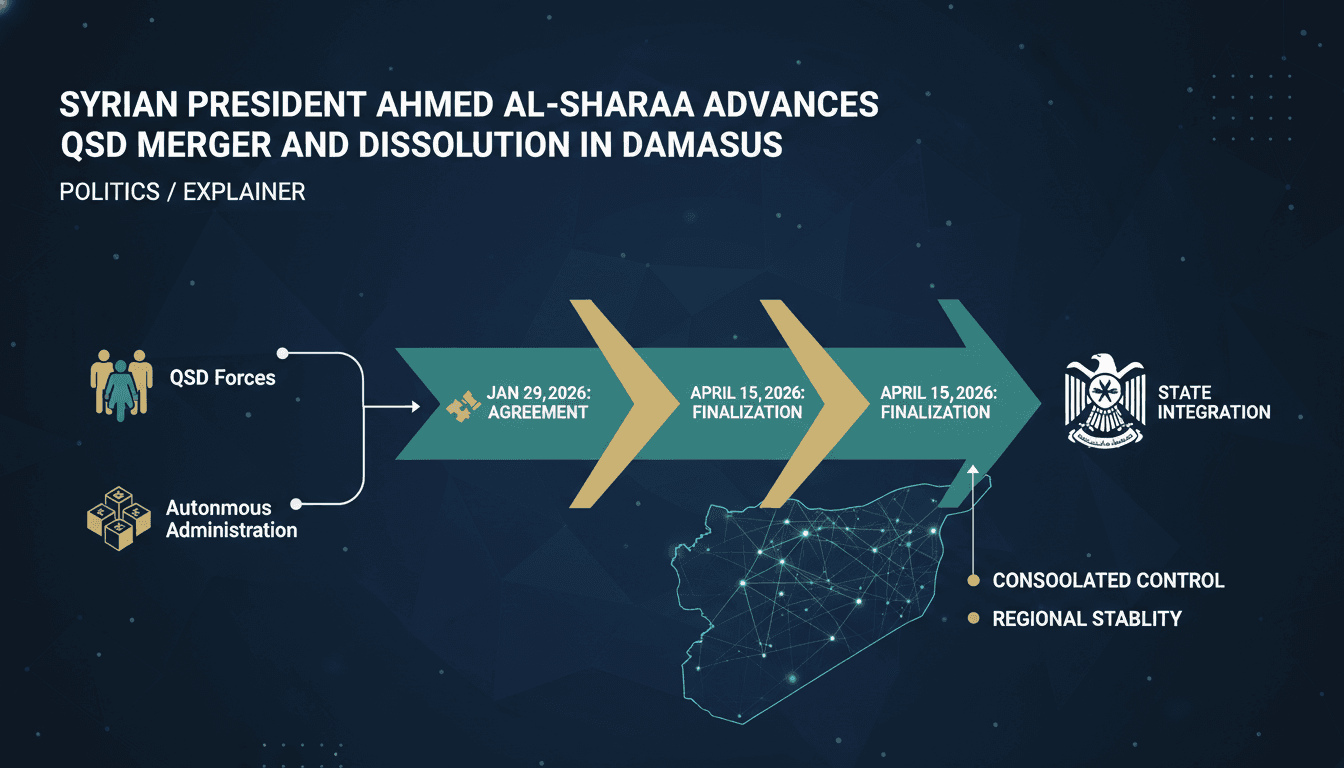
- Ahmed al-Sharaa convened with QSD leaders Mazloum Abdi and Ilham Ahmed in Damascus on April 15, 2026, to finalize the dissolution of the QSD.
- Key discussions included the integration of military and administrative structures, prisoner exchanges, and border control transitions.
- Ongoing implementation of the January 29, 2026 agreement is underway, with no new accords reached but significant progress noted.
The context you actually need
- Bashar al-Assad's ouster in December 2024 led to Ahmed al-Sharaa's presidency, focusing on national unification and stability.
- Diminishing U.S. support for the QSD and Turkish pressures against Kurdish autonomy have influenced the merger's urgency.
- Regional stability is crucial for oil-rich northeastern Syria, which has implications for international investments and local economies.
What's really happening
The meeting in Damascus on April 15, 2026, marks a pivotal moment in Syria's post-conflict landscape. Following the ousting of Bashar al-Assad, Ahmed al-Sharaa, a former leader of Hay'at Tahrir al-Sham (HTS), has prioritized national unification. The January 29, 2026 agreement aimed to fully integrate the Syrian Democratic Forces (QSD) and the Autonomous Administration into state frameworks, reflecting a broader strategy to consolidate power and stabilize the country.
The discussions between al-Sharaa, Abdi, and Ahmed focused on practical steps for this integration, including the return of displaced persons, judicial reforms in Hasakah, and the management of border crossings. The integration of the Simalka border crossing into Syrian customs on April 16 is a tangible outcome of these talks, indicating a shift towards centralized control over previously autonomous regions.
The release of nearly 1,500 prisoners from northeastern facilities as part of this agreement underscores the commitment to reconciliation and integration. This move is not merely symbolic; it aims to foster trust among communities and facilitate the return of displaced populations, which is essential for rebuilding the war-torn nation.
However, the Syrian presidential spokesman, Ahmed al-Hilali, emphasized that no new agreements were reached during these consultations, indicating that while progress is being made, the path to full integration remains complex. The focus on empowering state institutions and the dissolution of the QSD reflects a strategic pivot towards a more centralized governance model, which may face resistance from local populations accustomed to a degree of autonomy.
The geopolitical landscape is also shifting, with diminishing U.S. support for the QSD and increasing Turkish pressure against Kurdish autonomy. This context adds urgency to the merger, as regional actors seek stability in a historically volatile area. The implications of this merger extend beyond Syria, potentially influencing economic conditions in neighboring countries and affecting the Syrian expatriate community in places like Dubai.
Who feels it first (and how)
- Syrian expatriates in Dubai may see improved economic opportunities as stability increases.
- Local businesses in northeastern Syria could benefit from the integration of state structures and reduced conflict risks.
- International investors may reassess the region's potential for investment as governance stabilizes.
What to watch next
- Prisoner releases: Continued releases could indicate progress in reconciliation efforts and community trust-building.
- Border control transitions: Monitoring the integration of border crossings will reveal the effectiveness of state authority in previously autonomous regions.
- International diplomatic responses: Reactions from the U.S. and Turkey will shape the geopolitical landscape and influence future stability in Syria.
The QSD is being dissolved and integrated into state structures.
Continued prisoner releases and border control transitions will occur as part of the integration process.
The long-term impact on local governance and community relations in northeastern Syria remains uncertain.
Frequently Asked Questions
- Why it matters?
- This merger signals a significant shift in Syria's governance structure, impacting geopolitical dynamics and economic prospects in the region.
- What happened (in 30 seconds)?
- Ahmed al-Sharaa convened with QSD leaders Mazloum Abdi and Ilham Ahmed in Damascus on April 15, 2026, to finalize the dissolution of the QSD. Key discussions included the integration of military and administrative structures, prisoner exchanges, and border control transitions. Ongoing implementation of the January 29, 2026 agreement is underway, with no new accords reached but significant progress noted.
- What's really happening?
- The meeting in Damascus on April 15, 2026, marks a pivotal moment in Syria's post-conflict landscape. Following the ousting of Bashar al-Assad, Ahmed al-Sharaa, a former leader of Hay'at Tahrir al-Sham (HTS), has prioritized national unification. The January 29, 2026 agreement aimed to fully integrate the Syrian Democratic Forces (QSD) and the Autonomous Administration into state frameworks, reflecting a broader strategy to consolidate power and stabilize the country. The discussions between al
- Who feels it first (and how)?
- Syrian expatriates in Dubai may see improved economic opportunities as stability increases. Local businesses in northeastern Syria could benefit from the integration of state structures and reduced conflict risks. International investors may reassess the region's potential for investment as governance stabilizes.
- What to watch next?
- Prisoner releases: Continued releases could indicate progress in reconciliation efforts and community trust-building. Border control transitions: Monitoring the integration of border crossings will reveal the effectiveness of state authority in previously autonomous regions. International diplomatic responses: Reactions from the U.S. and Turkey will shape the geopolitical landscape and influence future stability in Syria.
Pan-Arab news coverage spanning politics, business, sports, and regional affairs.
"Asharq Al-Awsat reflects a broad Arab editorial perspective with strong attention to regional geopolitics."
— A47 Editor
الرئيس السوري يبحث مع عبدي وأحمد استكمال عملية الدمج وإعلان حل «قسد»
The Syrian president held discussions with leaders Abdi and Ahmad regarding the completion of the integration process and the announcement of the dissolution of the Syrian Democratic Forces (SDF). This meeting marks a significant step in the ongoing ...
Arabic-language coverage of political affairs and current events.
"Okaz political coverage typically follows mainstream Saudi framing on national and regional affairs."
— A47 Editor
الشرع ومظلوم يناقشان في دمشق استكمال دمج «قسد»
Syrian President Ahmad al-Shara received the commander of the Syrian Democratic Forces (SDF), Mazloum Abdi, and SDF leader Ilham Ahmed in Damascus to discuss the completion of the integration of forces and institutions into state structures, as repor...