
Trump Sets Final Deadline for Iran Nuclear Deal and Strait of Hormuz Reopening
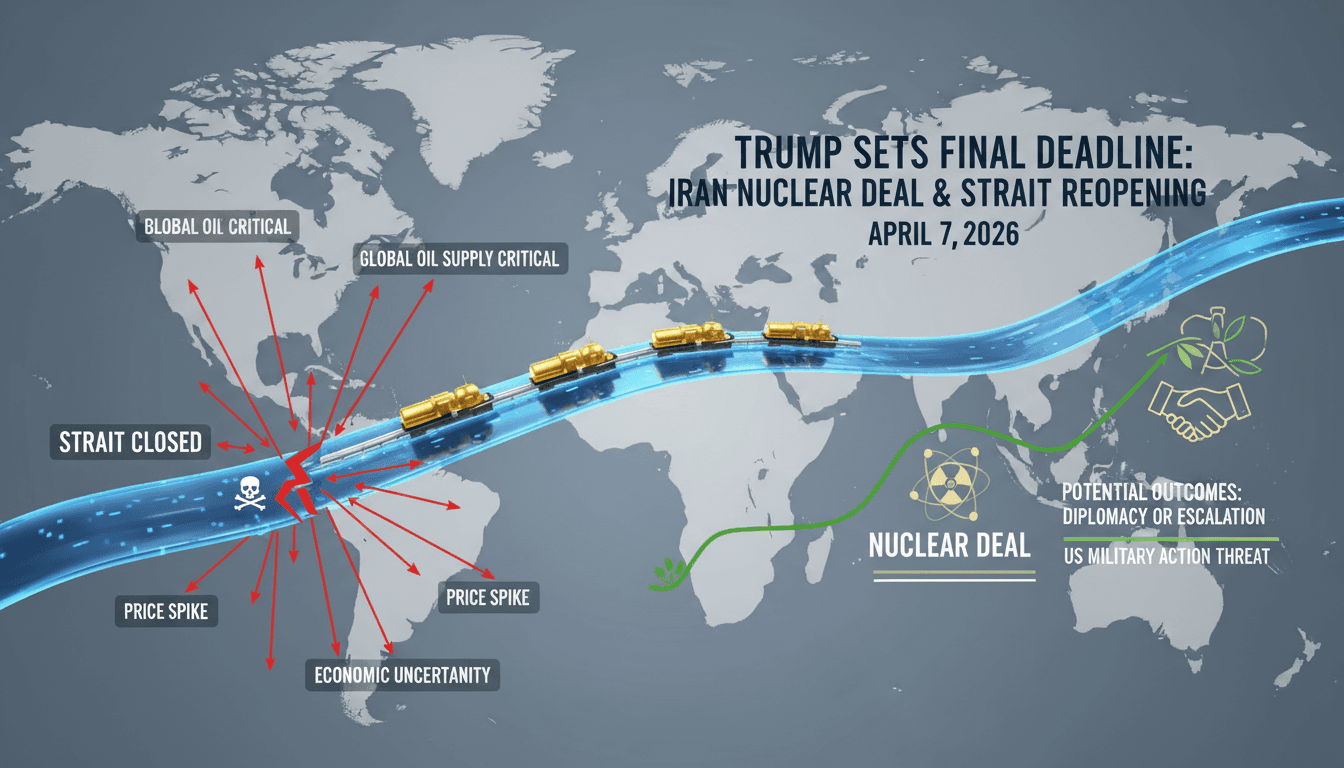
Here's what it means for you.
If you rely on global oil markets, prepare for potential price spikes and supply chain disruptions.
Why it matters
The ultimatum could destabilize oil markets, impacting prices and availability worldwide.
What happened (in 30 seconds)
- Trump issued a final deadline on April 6, 2026, demanding Iran abandon nuclear weapons and reopen the Strait of Hormuz.
- Iran's peace proposal was rejected as insufficient, leading to fears of escalated military action.
- The closure of the Strait of Hormuz has already disrupted 11.1 million barrels per day of global oil supply.
The context you actually need
- The conflict escalated after U.S. and Israeli airstrikes on February 28, 2026, targeting Iran's nuclear capabilities and leadership.
- Iran retaliated by closing the Strait of Hormuz on March 4, disrupting a critical shipping lane for global oil.
- Economic pressures are mounting, with oil prices surging and regional economies like Dubai facing acute shortages.
What's really happening
The ongoing U.S.-Iran conflict has reached a critical juncture with President Trump's ultimatum, which serves as a pivotal moment in international relations and global oil markets. The ultimatum demands that Iran forswear its nuclear ambitions and reopen the Strait of Hormuz, a vital maritime corridor through which approximately 20% of the world's oil supply flows. The closure of this strait has already resulted in a significant supply shortfall of 11.1 million barrels per day, exacerbating global oil prices and creating ripple effects across economies reliant on oil imports.
The backdrop of this ultimatum is a series of escalating military actions that began with surprise airstrikes by the U.S. and Israel on Iranian soil. These strikes targeted nuclear facilities and key military leaders, including the assassination of Supreme Leader Ali Khamenei. In response, Iran's closure of the Strait of Hormuz has not only disrupted oil shipments but has also led to panic buying in regions like Dubai, where grocery prices have spiked by 120% due to fears of shortages.
The ultimatum's timing is critical. With the deadline set for April 7, 2026, at 8:00 PM ET, the stakes are high. Trump has warned of "all hell breaking loose" if Iran does not comply, indicating that military action could escalate further. This creates a precarious situation for global markets, as investors react to the uncertainty surrounding oil supply and geopolitical stability.
The implications of this ultimatum extend beyond immediate military concerns. The UAE government has emphasized that any deal must guarantee access to the Strait of Hormuz, highlighting the region's economic interdependencies. As oil futures remain volatile—with prices for West Texas Intermediate (WTI) topping $115 per barrel—businesses and consumers alike should brace for potential price increases and supply chain disruptions.
Moreover, the Iranian government's rejection of the U.S. ceasefire proposal, coupled with its demand for a permanent end to hostilities, suggests that diplomatic solutions may remain elusive. This ongoing tension will likely keep oil markets on edge, impacting everything from consumer prices to investment strategies.
Who feels it first (and how)
- Oil consumers: Higher prices at the pump and increased costs for goods reliant on oil.
- Logistics companies: Disruptions in shipping routes could lead to delays and increased shipping costs.
- Dubai residents: Facing immediate shortages and price hikes in essential goods due to supply chain disruptions.
- Investors: Volatile oil prices may affect stock market performance, particularly in energy sectors.
What to watch next
- Iran's response: Monitor whether Iran will accept or reject the ultimatum, as this will dictate the next steps in the conflict.
- Oil price fluctuations: Watch for changes in oil futures as markets react to developments in the U.S.-Iran negotiations.
- Regional stability: Keep an eye on military movements and diplomatic efforts in the Middle East that could influence broader geopolitical dynamics.
The deadline for Iran to respond to the U.S. ultimatum is April 7, 2026, at 8:00 PM ET.
Oil prices will continue to be volatile as the situation unfolds, impacting global markets.
The long-term implications of this conflict on U.S.-Iran relations and regional stability remain uncertain.
Frequently Asked Questions
- Why it matters?
- The ultimatum could destabilize oil markets, impacting prices and availability worldwide.
- What happened (in 30 seconds)?
- Trump issued a final deadline on April 6, 2026, demanding Iran abandon nuclear weapons and reopen the Strait of Hormuz. Iran's peace proposal was rejected as insufficient, leading to fears of escalated military action. The closure of the Strait of Hormuz has already disrupted 11.1 million barrels per day of global oil supply.
- What's really happening?
- The ongoing U.S.-Iran conflict has reached a critical juncture with President Trump's ultimatum, which serves as a pivotal moment in international relations and global oil markets. The ultimatum demands that Iran forswear its nuclear ambitions and reopen the Strait of Hormuz, a vital maritime corridor through which approximately 20% of the world's oil supply flows. The closure of this strait has already resulted in a significant supply shortfall of 11.1 million barrels per day, exacerbating glob
- Who feels it first (and how)?
- Oil consumers: Higher prices at the pump and increased costs for goods reliant on oil. Logistics companies: Disruptions in shipping routes could lead to delays and increased shipping costs. Dubai residents: Facing immediate shortages and price hikes in essential goods due to supply chain disruptions. Investors: Volatile oil prices may affect stock market performance, particularly in energy sectors.
- What to watch next?
- Iran's response: Monitor whether Iran will accept or reject the ultimatum, as this will dictate the next steps in the conflict. Oil price fluctuations: Watch for changes in oil futures as markets react to developments in the U.S.-Iran negotiations. Regional stability: Keep an eye on military movements and diplomatic efforts in the Middle East that could influence broader geopolitical dynamics.
Oil, metals, and agriculture: supply/demand headlines, OPEC chatter, inventories, and price action.
"Solid tape for energy and metals traders tracking macro and micro catalysts."
— A47 Editor
Trump says Tuesday deadline to make a deal with Iran is final
President Donald Trump has announced a final deadline of 8:00 p.m. ET on Tuesday for Iran to reopen the Strait of Hormuz, a crucial maritime route for global oil shipments. This ultimatum follows heightened tensions in the region, including military ...
Regional and international reporting focused on Middle Eastern politics, diplomacy, and economics.
"Asharq Al-Awsat is a Saudi-owned international newspaper reflecting mainstream Gulf political perspectives."
— A47 Editor
Trump Says Tuesday Deadline to Make a Deal with Iran Is Final
President Donald Trump has set a final deadline for negotiations with Iran, emphasizing that a deal must be reached by Tuesday. This ultimatum follows a two-week ceasefire aimed at reducing military tensions in the region, which was facilitated by Pa...
Pan-Arab news coverage spanning politics, business, sports, and regional affairs.
"Asharq Al-Awsat reflects a broad Arab editorial perspective with strong attention to regional geopolitics."
— A47 Editor
ترمب: هناك من سرّب معلومات عن الطيار المفقود لإيران... سنصل إليه
U.S. President Donald Trump stated that he will demand the journalist who first leaked information about the rescue operation of an American pilot in Iran to reveal their source, threatening them with imprisonment. This statement highlights the ongoi...