
UK Calls for Lebanon's Inclusion in US-Iran Ceasefire Amid Ongoing Israeli Strikes
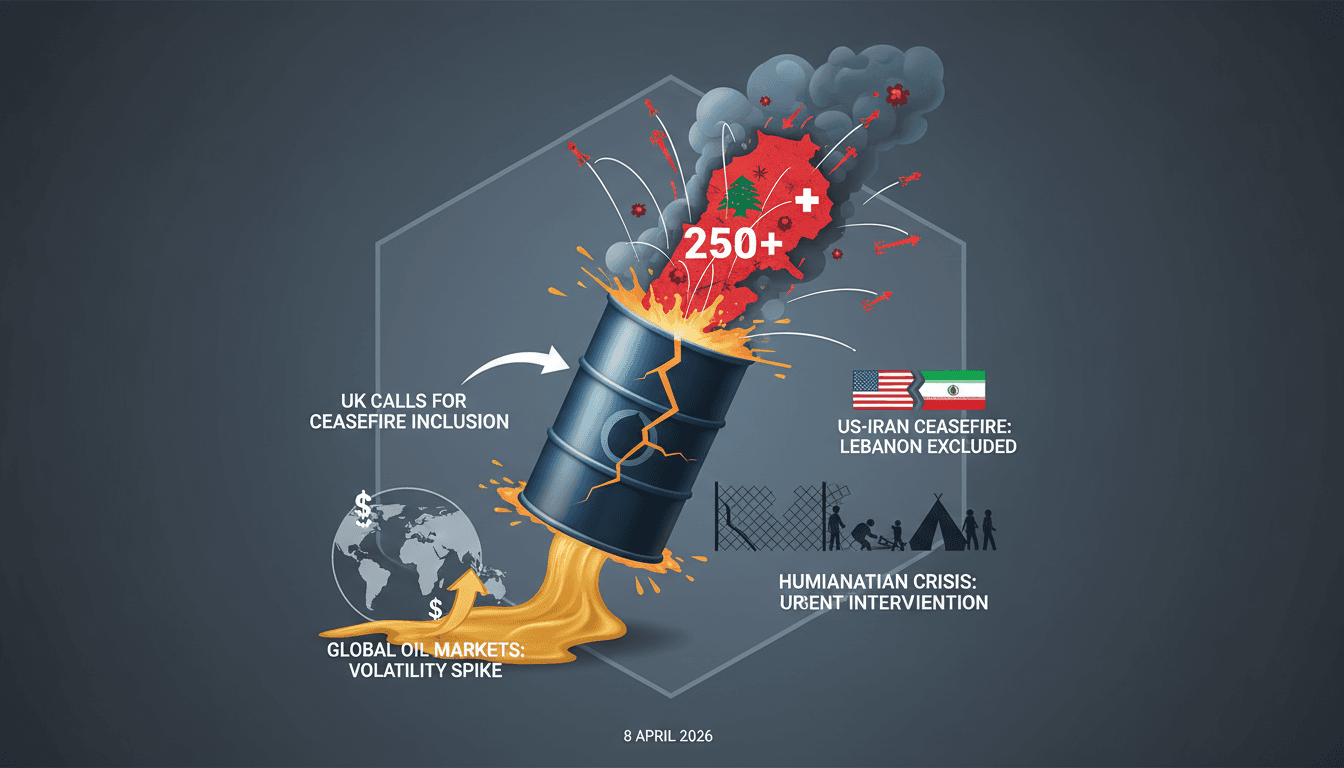
Here's what it means for you.
If you’re connected to the Middle East, especially through business or family ties, the escalation of conflict could disrupt markets and personal finances.
Why it matters
The UK's demand for Lebanon's inclusion in the ceasefire highlights the interconnectedness of geopolitical tensions and their potential impact on global markets.
What happened (in 30 seconds)
- On April 8, 2026, UK Foreign Secretary Yvette Cooper called for an urgent end to hostilities in Lebanon amid ongoing Israeli airstrikes.
- Israeli operations resulted in over 254 deaths in Lebanon, despite a newly announced ceasefire between the US and Iran.
- International responses have emerged, with multiple countries supporting the UK's call for Lebanon's inclusion in the ceasefire agreement.
The context you actually need
- Escalating tensions in early 2026 stemmed from Iran's blockade of the Strait of Hormuz, prompting military responses from the US and Israel.
- The ceasefire, mediated by Pakistan, was intended to stabilize energy markets but excluded Lebanon, where Israeli strikes intensified.
- The humanitarian fallout from the conflict is significant, with reports of massive displacement and rising casualties in Lebanon.
What's really happening
The situation in the Middle East is a complex web of historical grievances, national interests, and proxy conflicts. The recent ceasefire agreement between the US, Israel, and Iran was a strategic move aimed at de-escalating tensions primarily focused on the Strait of Hormuz, a critical maritime route for global oil shipments. However, the exclusion of Lebanon from this ceasefire has created a precarious situation where Israeli airstrikes against Hezbollah continue unabated.
The UK’s intervention, led by Foreign Secretary Yvette Cooper, underscores a growing concern among Western nations about the humanitarian implications of the conflict in Lebanon. With over 254 casualties reported in a single day of airstrikes, the urgency for a broader ceasefire is not just a matter of diplomatic niceties; it reflects a dire need to address the humanitarian crisis unfolding in the region. The UK’s stance is also a signal to other nations that the international community is watching closely and is willing to take a stand against escalating violence.
The broader implications of this conflict extend beyond immediate humanitarian concerns. The ongoing violence in Lebanon risks destabilizing the entire region, which could have ripple effects on global oil prices and international markets. The UAE, for instance, has already expressed concerns over the potential for increased volatility in oil prices, which had recently seen a 15% drop following the ceasefire announcement. Such fluctuations can impact economies far beyond the Middle East, affecting everything from energy prices to inflation rates in countries reliant on oil imports.
Moreover, the situation is exacerbated by the historical context of the Israel-Hezbollah conflict, which has seen cycles of violence and temporary ceasefires. The renewed hostilities following the 2024 ceasefire indicate a fragile peace that can easily be disrupted, leading to further military engagements. The UK's call for Lebanon's inclusion in the ceasefire is not merely a diplomatic gesture; it is a recognition of the interconnectedness of these conflicts and the urgent need for a comprehensive approach to peace in the region.
Who feels it first (and how)
- Lebanese civilians: Facing displacement and humanitarian crises due to ongoing airstrikes.
- Expatriates in Dubai: Emotional distress and potential financial impacts due to family ties in Lebanon.
- Energy markets: Investors and businesses reliant on stable oil prices may experience volatility.
What to watch next
- International diplomatic efforts: Watch for responses from other nations that may influence the ceasefire negotiations and humanitarian aid.
- Oil price fluctuations: Monitor how ongoing conflicts impact energy markets, particularly in relation to the Strait of Hormuz.
- Humanitarian reports: Keep an eye on updates regarding displacement and casualties in Lebanon, which could affect international sentiment and policy.
The UK has officially called for Lebanon's inclusion in the ceasefire.
Continued international pressure on Israel to cease operations in Lebanon.
The long-term effectiveness of the ceasefire and its potential to stabilize the region.
Frequently Asked Questions
- Why it matters?
- The UK's demand for Lebanon's inclusion in the ceasefire highlights the interconnectedness of geopolitical tensions and their potential impact on global markets.
- What happened (in 30 seconds)?
- On April 8, 2026, UK Foreign Secretary Yvette Cooper called for an urgent end to hostilities in Lebanon amid ongoing Israeli airstrikes. Israeli operations resulted in over 254 deaths in Lebanon, despite a newly announced ceasefire between the US and Iran. International responses have emerged, with multiple countries supporting the UK's call for Lebanon's inclusion in the ceasefire agreement.
- What's really happening?
- The situation in the Middle East is a complex web of historical grievances, national interests, and proxy conflicts. The recent ceasefire agreement between the US, Israel, and Iran was a strategic move aimed at de-escalating tensions primarily focused on the Strait of Hormuz, a critical maritime route for global oil shipments. However, the exclusion of Lebanon from this ceasefire has created a precarious situation where Israeli airstrikes against Hezbollah continue unabated. The UK’s interventi
- Who feels it first (and how)?
- Lebanese civilians: Facing displacement and humanitarian crises due to ongoing airstrikes. Expatriates in Dubai: Emotional distress and potential financial impacts due to family ties in Lebanon. Energy markets: Investors and businesses reliant on stable oil prices may experience volatility.
- What to watch next?
- International diplomatic efforts: Watch for responses from other nations that may influence the ceasefire negotiations and humanitarian aid. Oil price fluctuations: Monitor how ongoing conflicts impact energy markets, particularly in relation to the Strait of Hormuz. Humanitarian reports: Keep an eye on updates regarding displacement and casualties in Lebanon, which could affect international sentiment and policy.
English-language reporting on Saudi politics, policy, and society.
"Saudi Gazette reflects mainstream Saudi institutional perspectives."
— A47 Editor
UK says Lebanon must be part of ceasefire deal
The UK government, represented by Foreign Secretary Yvette Cooper, has called for the inclusion of Lebanon in a ceasefire agreement aimed at reducing hostilities in the Middle East, particularly following recent Israeli attacks that have caused signi...
International coverage from The Guardian's global desks.
"The Guardian is known for its progressive editorial stance and in-depth analysis."
— A47 Editor
Lebanon must be included in US-Iran ceasefire deal, Yvette Cooper to say
British Foreign Secretary Yvette Cooper is set to emphasize the necessity of including Lebanon in the ceasefire agreement between the US and Iran, as tensions escalate with ongoing Israeli airstrikes in Lebanon. This statement comes amid a fragile tw...
Regional coverage and analysis focused on politics, diplomacy, and business across the Middle East.
"Al-Monitor is known for analytical reporting on Middle East politics and policy developments."
— A47 Editor
Israel's pounding of Lebanon is 'deeply damaging', UK foreign minister says
British Foreign Secretary Yvette Cooper condemned Israel's recent airstrikes on Lebanon, describing them as 'deeply damaging' and calling for an end to hostilities to prevent destabilization of the region, particularly concerning the U.S.-Iran ceasef...