
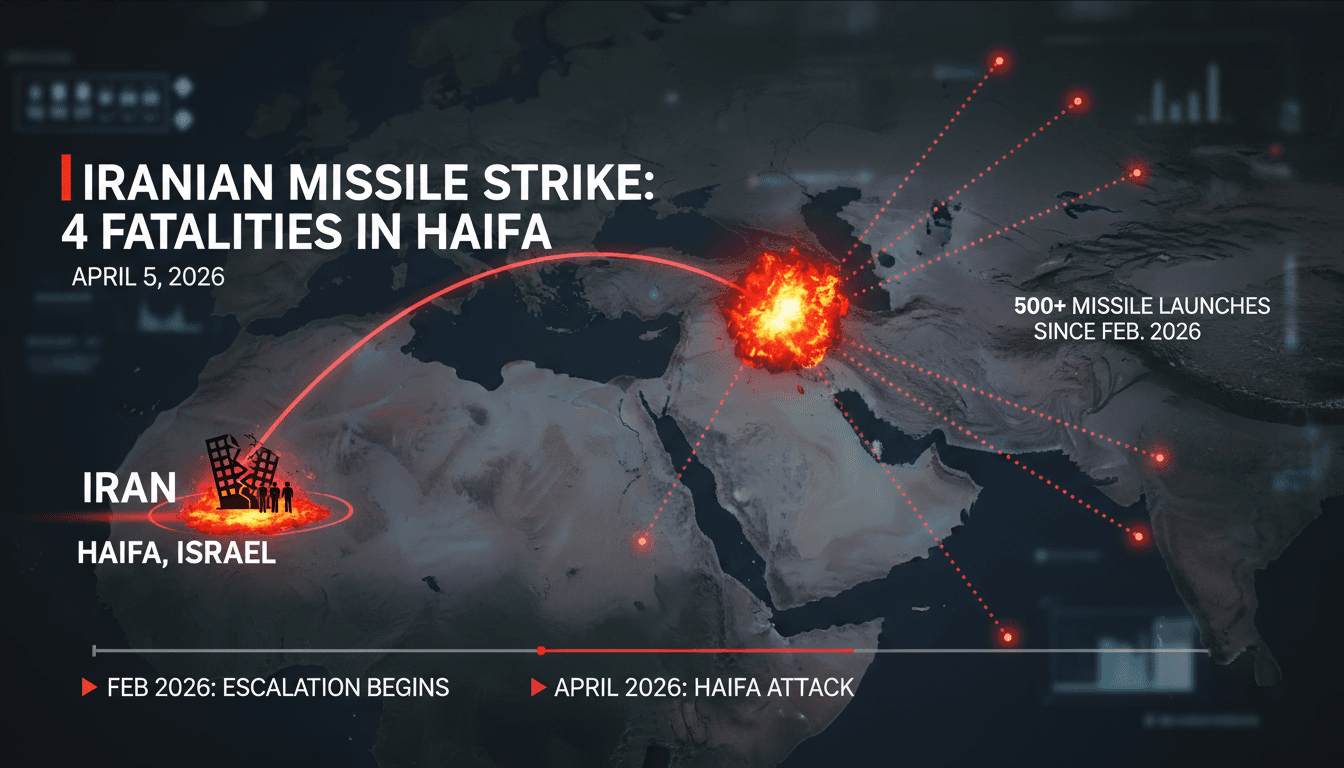
Iranian Missile Strike in Haifa Results in Four Fatalities
Here's what it means for you.
The ongoing conflict between Iran and Israel could impact regional stability and economic conditions, affecting global markets and security protocols.
Why it matters
This incident underscores the escalating military tensions in the Middle East, which can have ripple effects on international trade and security.
What happened (in 30 seconds)
- An Iranian ballistic missile struck a residential building in Haifa, Israel, on April 5, 2026, resulting in the deaths of four family members.
- Rescue operations lasted 18 hours, concluding with the recovery of the victims from the rubble, while four others sustained injuries.
- This strike is part of a broader conflict, with over 500 Iranian missiles launched at Israel since late February 2026.
The context you actually need
- The 2026 Iran-Israel war began on February 28, 2026, following US-Israeli airstrikes on Iranian military targets, prompting Iranian retaliation.
- Iran's missile capabilities have been a focal point of concern, with reports of advanced munitions, including cluster bombs, being utilized in the conflict.
- The regional response includes heightened military readiness in neighboring countries, particularly the UAE, which has faced threats from Iranian projectiles.
What's really happening
The missile strike on Haifa is a stark manifestation of the ongoing Iran-Israel conflict, which has escalated significantly since the beginning of 2026. The war was ignited by coordinated airstrikes from the US and Israel targeting Iranian missile sites and nuclear facilities, prompting Iran to respond with a barrage of missile attacks. By April 2026, over 500 missiles had been launched towards Israel, indicating a sustained and aggressive military posture from Tehran.
The missile that struck Haifa fragmented mid-air, with its warhead impacting a residential building without detonating. This incident highlights the unpredictable nature of modern warfare, where even failed detonations can lead to catastrophic outcomes. The Gershovitz family, who lost four members in this attack, serves as a tragic reminder of the human cost of geopolitical conflict.
Israeli defense systems are designed to intercept incoming threats, but the sheer volume of missiles launched by Iran has overwhelmed these systems, leading to civilian casualties. The Israeli Home Front Command and rescue teams worked tirelessly to recover the victims, demonstrating the urgency and severity of the situation. The aftermath has seen a continued state of alert in Israel, with restrictions in place due to ongoing missile threats.
The implications of this strike extend beyond immediate casualties. The regional markets have reacted with volatility, as fears of escalation lead to sell-offs and heightened security measures. The UAE, which has been targeted in previous Iranian attacks, is particularly sensitive to these developments, as they can directly affect tourism, trade, and investment in the region.
As the conflict continues, the potential for further escalation remains high. The international community is closely monitoring the situation, as any significant military action could trigger broader regional instability, affecting global oil prices and international relations.
Who feels it first (and how)
- Israeli civilians: Directly impacted by missile strikes, leading to loss of life and property.
- Emergency services: Overwhelmed with rescue operations and ongoing threats, increasing operational demands.
- Regional investors: Facing market volatility and uncertainty, affecting investment decisions and economic stability.
- UAE residents: Experiencing heightened security measures and potential travel disruptions due to regional tensions.
What to watch next
- Military responses from Israel: Any retaliatory actions could escalate the conflict further, impacting regional stability.
- International diplomatic efforts: Watch for negotiations or interventions aimed at de-escalating tensions, which could influence market confidence.
- Civilian safety measures: Increased security protocols in Israel and neighboring countries may affect travel and trade.
Four members of the Gershovitz family were killed in the missile strike.
Increased military readiness and potential retaliatory strikes from Israel in response to ongoing threats.
The long-term impact on regional markets and international relations as the conflict evolves.
Frequently Asked Questions
- Why it matters?
- This incident underscores the escalating military tensions in the Middle East, which can have ripple effects on international trade and security.
- What happened (in 30 seconds)?
- An Iranian ballistic missile struck a residential building in Haifa, Israel, on April 5, 2026, resulting in the deaths of four family members. Rescue operations lasted 18 hours, concluding with the recovery of the victims from the rubble, while four others sustained injuries. This strike is part of a broader conflict, with over 500 Iranian missiles launched at Israel since late February 2026.
- What's really happening?
- The missile strike on Haifa is a stark manifestation of the ongoing Iran-Israel conflict, which has escalated significantly since the beginning of 2026. The war was ignited by coordinated airstrikes from the US and Israel targeting Iranian missile sites and nuclear facilities, prompting Iran to respond with a barrage of missile attacks. By April 2026, over 500 missiles had been launched towards Israel, indicating a sustained and aggressive military posture from Tehran. The missile that struck H
- Who feels it first (and how)?
- Israeli civilians: Directly impacted by missile strikes, leading to loss of life and property. Emergency services: Overwhelmed with rescue operations and ongoing threats, increasing operational demands. Regional investors: Facing market volatility and uncertainty, affecting investment decisions and economic stability. UAE residents: Experiencing heightened security measures and potential travel disruptions due to regional tensions.
- What to watch next?
- Military responses from Israel: Any retaliatory actions could escalate the conflict further, impacting regional stability. International diplomatic efforts: Watch for negotiations or interventions aimed at de-escalating tensions, which could influence market confidence. Civilian safety measures: Increased security protocols in Israel and neighboring countries may affect travel and trade.
Arabic-language UAE newspaper coverage focused on domestic affairs, public institutions, business, society, and regional developments.
"Al Khaleej coverage generally reflects a mainstream UAE editorial lens with strong attention to public affairs, institutions, and regional developments."
— A47 Editor
انتشال 4 جثث من تحت أنقاض مبنى دمره صاروخ إيراني في حيفا
Israeli emergency services announced the recovery of four bodies from the rubble of a residential building in Haifa that was struck by an Iranian missile on Sunday. The incident highlights the ongoing tensions and violence in the region, particularly...
Pan-Arab news coverage spanning politics, business, sports, and regional affairs.
"Asharq Al-Awsat reflects a broad Arab editorial perspective with strong attention to regional geopolitics."
— A47 Editor
انتشال جثث 4 إسرائيليين من تحت أنقاض مبنى استهدفه صاروخ إيراني
Israeli emergency services reported the recovery of four bodies from the rubble of a building in Haifa that was struck by an Iranian missile, following an incident on Sunday. This attack resulted in the deaths of two individuals, highlighting the ong...
Pan-Arab political news and analysis.
"Al-Quds Al-Arabi is a London-based Arabic newspaper known for political coverage."
— A47 Editor
انتشال قتيلين من تحت حطام مبنى في حيفا دمره صاروخ إيراني
In Haifa, northern Israel, two bodies were recovered from the rubble of a building destroyed by a missile launched from Iran, as reported by the Israeli Fire and Rescue Service. The recovery efforts took place overnight and into the early morning hou...