
Anthropic Launches Claude Code Auto Mode for Enhanced AI Coding Safety
Here's what it means for you.
If you work in software development, the new Auto Mode feature could streamline your coding process while enhancing safety.
Why it matters
The introduction of Auto Mode reflects a significant shift towards safer, more efficient AI coding practices in the tech industry.
What happened (in 30 seconds)
- Anthropic released Auto Mode for its Claude Code AI on March 25, 2026, automating permission approvals.
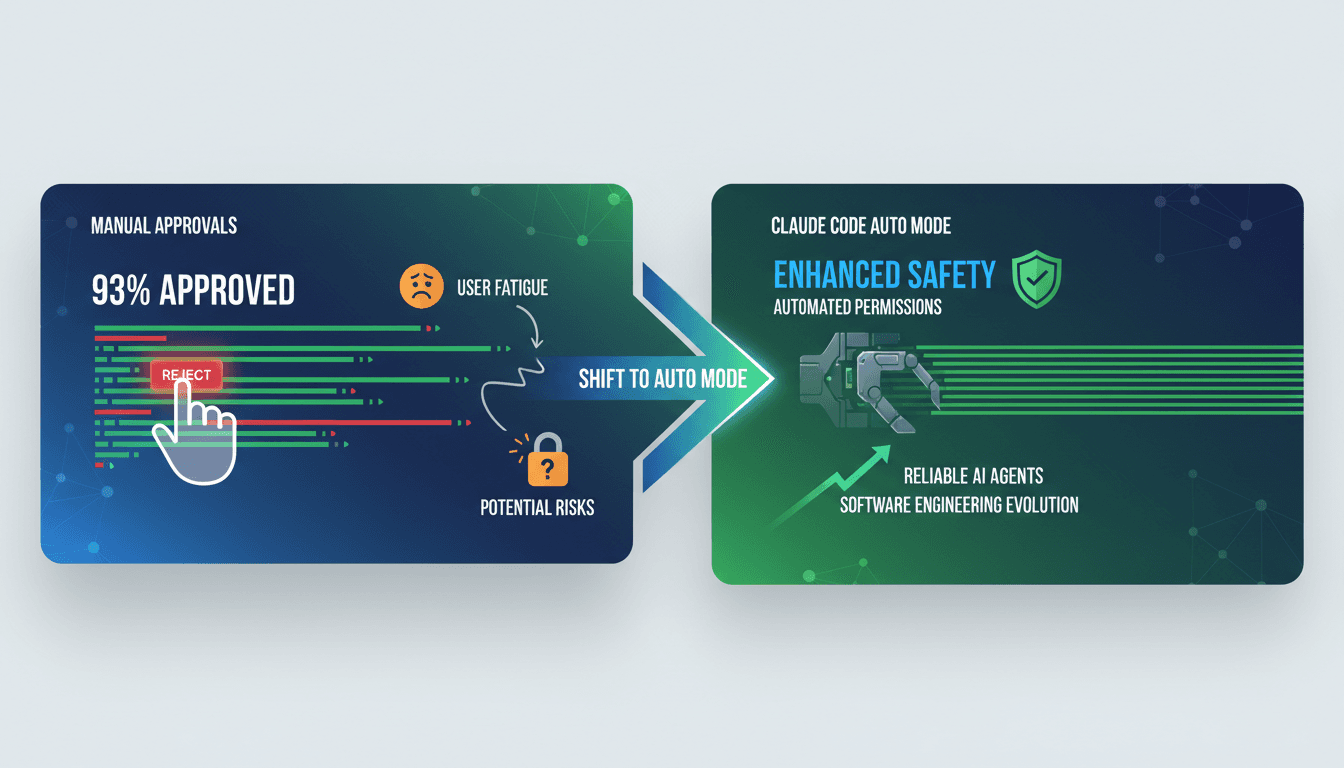
- The feature aims to reduce user fatigue from manual approvals, which previously stood at 93%.
- Auto Mode enhances safety by implementing tiered permissions and customizable policies to prevent risky actions.
The context you actually need
- Claude Code is part of a growing trend of agentic AI tools designed for software engineering, competing with others like Cursor and Devin.
- Prior versions required explicit user permissions for actions, leading to high approval rates and user fatigue, which sometimes resulted in unsafe workarounds.
- Auto Mode leverages advancements in AI classifiers to evaluate tool calls against customizable policies, aiming to balance autonomy with safety.
What's really happening
On March 25, 2026, Anthropic unveiled Auto Mode, a feature designed to enhance the functionality of its AI coding agent, Claude Code. This release is a response to the increasing demand for more reliable AI tools in software development, particularly as user fatigue from manual permission approvals reached a staggering 93%. The previous model required explicit user consent for actions such as file modifications and shell commands, which not only slowed down workflows but also led to risky practices like using the '--dangerously-skip-permissions' flag.
The architecture of Auto Mode employs a dual-layer system that includes prompt-injection probes and transcript classifiers. These components work together to evaluate tool calls against customizable policies, allowing for a more nuanced approach to permission management. This system aims to minimize the risk of false approvals while still providing developers with the autonomy they need to work efficiently. Internal data from Anthropic indicates a 0.4% false positive rate and a 17% false negative rate on overeager actions, showcasing the feature's potential effectiveness.
The rollout of Auto Mode replaces unsafe bypass options with a deny-and-continue logic, which is designed to prevent actions that could lead to significant coding errors or data loss. This shift represents a critical move towards prioritizing safety in AI-assisted coding, addressing both internal incidents and user feedback that highlighted the need for improved permission management.
Media coverage from outlets like The Verge and ZDNet has focused on the safety enhancements that Auto Mode brings, emphasizing its role in preventing potential "AI coding disasters." Developers have expressed relief at the elimination of the need to "babysit" permission prompts, indicating a positive reception within the tech community. However, despite the enthusiasm, Anthropic has encouraged users to report errors for continuous improvement, acknowledging that residual risks remain.
As the tech landscape evolves, the introduction of Auto Mode could redefine the role of AI in software development, shifting focus from syntax-based tasks to intent management. This transition may lead to a new paradigm in coding practices, where AI tools are not merely assistants but integral partners in the development process.
Who feels it first (and how)
- Software Developers: Experience reduced interruptions and improved workflow efficiency.
- Tech Companies: Benefit from enhanced safety and reliability in coding processes.
- AI Researchers: Gain insights into user interactions with AI tools, informing future developments.
What to watch next
- Adoption Rates: Monitor how quickly teams integrate Auto Mode into their workflows, as this will indicate its acceptance in the industry.
- User Feedback: Pay attention to ongoing user experiences and reported issues, which will shape future iterations of the feature.
- Competitor Responses: Watch for how rival AI coding tools adapt or enhance their offerings in response to Auto Mode's release.
Auto Mode is available as a research preview on Team, Enterprise, and API plans.
The feature will lead to a shift in coding practices, emphasizing safety and efficiency.
The long-term impact on job roles within software development remains to be seen.
Frequently Asked Questions
- Why it matters?
- The introduction of Auto Mode reflects a significant shift towards safer, more efficient AI coding practices in the tech industry.
- What happened (in 30 seconds)?
- Anthropic released Auto Mode for its Claude Code AI on March 25, 2026, automating permission approvals. The feature aims to reduce user fatigue from manual approvals, which previously stood at 93%. Auto Mode enhances safety by implementing tiered permissions and customizable policies to prevent risky actions.
- What's really happening?
- On March 25, 2026, Anthropic unveiled Auto Mode, a feature designed to enhance the functionality of its AI coding agent, Claude Code. This release is a response to the increasing demand for more reliable AI tools in software development, particularly as user fatigue from manual permission approvals reached a staggering 93%. The previous model required explicit user consent for actions such as file modifications and shell commands, which not only slowed down workflows but also led to risky practi
- Who feels it first (and how)?
- Software Developers: Experience reduced interruptions and improved workflow efficiency. Tech Companies: Benefit from enhanced safety and reliability in coding processes. AI Researchers: Gain insights into user interactions with AI tools, informing future developments.
- What to watch next?
- Adoption Rates: Monitor how quickly teams integrate Auto Mode into their workflows, as this will indicate its acceptance in the industry. User Feedback: Pay attention to ongoing user experiences and reported issues, which will shape future iterations of the feature. Competitor Responses: Watch for how rival AI coding tools adapt or enhance their offerings in response to Auto Mode's release.
Curated insights and thought leadership in enterprise technology.
"Ciente.io delivers curated insights, thought leadership, and trends in B2B tech and innovation."
— A47 Editor
Is Claude Code’s “Auto-Mode” the End of the Scripted Engineer in AI?
Anthropic has introduced a new feature called 'Auto-mode' for its Claude Code tool, which allows the AI to autonomously manage permissions and perform tasks without requiring extensive user input. This marks a significant shift in how programming is ...
Consumer tech news, reviews, and buying guides for gadgets and electronics.
"TechRadar is known for comprehensive buying advice, hardware reviews, and consumer tech news targeted at mainstream audiences."
— A47 Editor
Anthropic gives Claude Code new 'auto mode' which lets it choose its own permissions
Anthropic has introduced a new 'auto mode' for its Claude Code tool, allowing the AI to autonomously select its own permissions, which enhances user experience by bypassing repetitive permission prompts. This feature aims to speed up interactions whi...
Industry news and analysis for the global AI community.
"A business-first look at AI adoption, policy, and ecosystem trends."
— A47 Editor
Anthropic Auto Mode Means No More Babysitting Claude
Anthropic has launched a new auto mode for its AI tool, Claude, which allows it to operate with reduced human oversight, potentially saving time for users. This feature is designed to enhance efficiency by enabling Claude to execute tasks autonomousl...
Consumer technology news with AI coverage.
"Gadget and tech site reporting on AI in products."
— A47 Editor
Anthropic releases safer Claude Code 'auto mode' to avoid mass file deletions and other AI snafus
Anthropic has introduced a new feature called 'auto mode' for its Claude Code tool, which allows the AI to perform actions autonomously while maintaining safety protocols. This mode balances between requiring user approval for every action and a more...
Covers consumer technology, electronics, gadgets, and product reviews.
"Engadget is a trusted source for gadget reviews and consumer tech news, known for its hands-on analysis and industry coverage."
— A47 Editor
Anthropic releases safer Claude Code 'auto mode' to avoid mass file deletions and other AI snafus
Anthropic has introduced a new feature called 'auto mode' for its Claude Code tool, which allows the AI to perform actions autonomously while maintaining safety protocols. This mode balances between requiring user approval for every action and a more...
Daily AI news: models, tools, and policy.
"Independent outlet tracking the fast pace of AI."
— A47 Editor
Claude Code's new Auto Mode tries to balance safety and speed
Anthropic has launched a new Auto Mode for Claude Code, allowing developers to automate tasks while maintaining safety protocols. This feature addresses the challenge of requiring manual approval for every action or disabling safety checks entirely, ...