
CFTC Chairman Testifies AI Tools Offset 25% Staff Cuts Amid Crypto Oversight Expansion
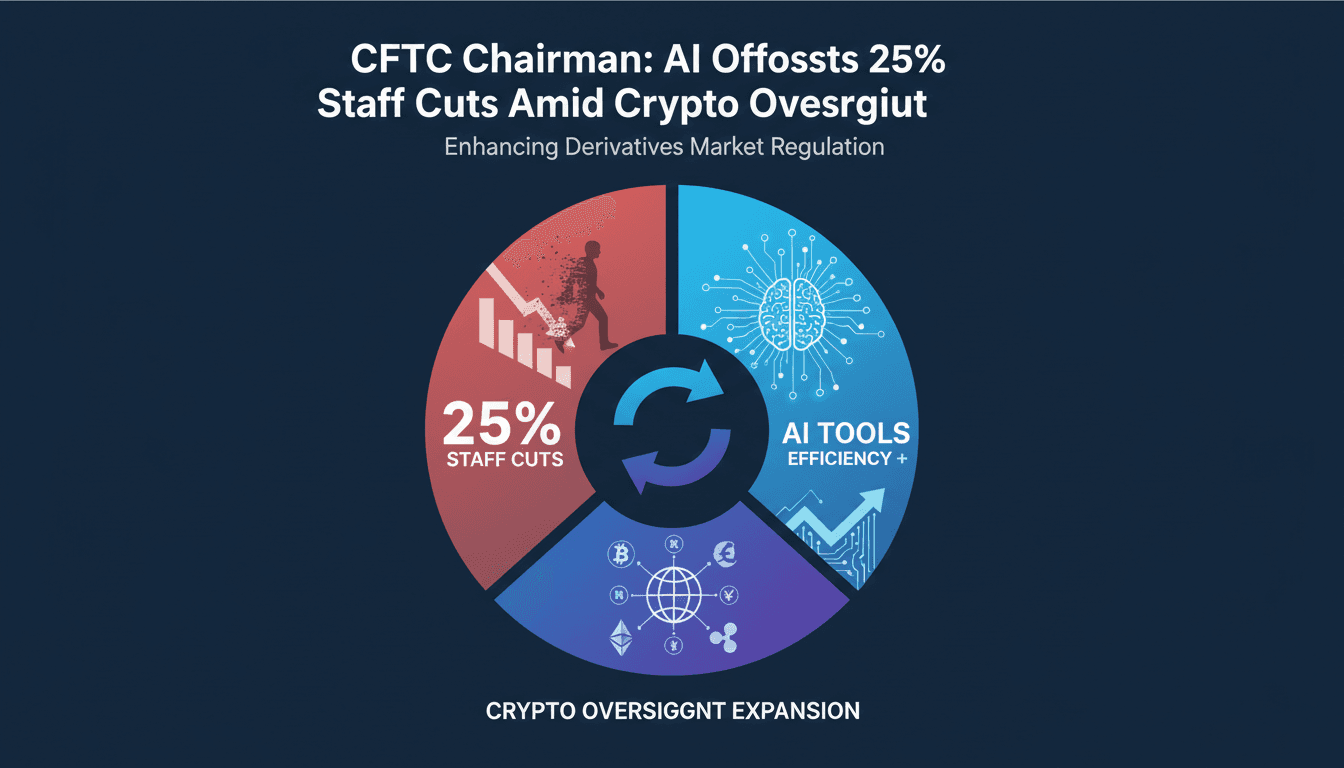
Here's what it means for you.
If you’re involved in crypto or derivatives markets, the CFTC's enhanced efficiency through AI could impact regulatory oversight and compliance costs.
Why it matters
The integration of AI tools at the CFTC signals a shift in regulatory capabilities amid workforce reductions, affecting how markets are monitored.
What happened (in 30 seconds)
- CFTC Chairman Michael S. Selig testified that AI tools are compensating for a 25% reduction in staff at the agency.
- The hearing focused on the CFTC's ability to oversee expanding derivatives markets, including crypto assets.
- Selig emphasized that tools like Microsoft Copilot enhance operational efficiency despite staffing challenges.
The context you actually need
- Staffing levels at the CFTC have declined from 708 employees in 2024 to approximately 556 by 2025, with further reductions expected.
- AI adoption was previously explored by former chairs, but Selig's administration has accelerated its implementation amid expanded regulatory mandates.
- Lawmakers expressed concerns about the adequacy of staffing and enforcement capabilities in light of the growing complexity of markets.
What's really happening
The CFTC, established to regulate derivatives markets, has faced significant staffing challenges following the 2024 election and subsequent federal workforce optimization initiatives. As the agency's employee count dwindled from 708 in fiscal year 2024 to around 556 by 2025, the need for effective oversight became increasingly critical, particularly with the rise of crypto assets and prediction markets.
In response, Chairman Michael S. Selig has turned to artificial intelligence tools, such as Microsoft's Copilot, to enhance the agency's operational capabilities. During his testimony before the U.S. House Agriculture Committee on April 16, 2026, Selig highlighted that these AI tools are not merely supplementary; they are essential in compensating for the 25% reduction in staff. By integrating AI into workflows, the CFTC can conduct surveillance and investigations more efficiently, allowing the agency to maintain its regulatory responsibilities despite a leaner workforce.
The implications of this shift are profound. As the CFTC expands its oversight to include more complex and rapidly evolving markets, the reliance on AI tools could redefine how regulatory bodies operate. This technological integration may lead to faster decision-making processes, improved data analysis, and enhanced fraud detection capabilities. However, it also raises questions about the adequacy of human oversight and the potential for over-reliance on technology in critical regulatory functions.
Moreover, the hearing revealed a tension between lawmakers' concerns about the adequacy of staffing and the CFTC's commitment to leveraging technology. Lawmakers like Rep. Jim Costa expressed skepticism about the ethical implications of certain prediction markets, while Ranking Member Angie Craig pointed out enforcement shortages. These discussions underscore the balancing act the CFTC must perform: ensuring robust oversight while adapting to technological advancements.
As the CFTC continues to navigate these challenges, the agency's approach could serve as a model for other regulatory bodies facing similar staffing and oversight dilemmas. The successful integration of AI tools may not only enhance the CFTC's capabilities but also influence global regulatory practices, particularly in markets that are increasingly interconnected.
Who feels it first (and how)
- Regulators: Increased reliance on AI may streamline operations but raises concerns about oversight.
- Crypto and derivatives traders: Enhanced regulatory scrutiny could lead to higher compliance costs.
- Tech firms: Companies providing AI solutions may see increased demand from regulatory agencies.
What to watch next
- Staffing announcements from the CFTC: Monitoring any changes in hiring practices will indicate how the agency balances human resources with AI capabilities.
- Legislative responses to AI integration: Watch for new regulations or guidelines that may emerge as lawmakers assess the implications of AI in regulatory frameworks.
- Market reactions to CFTC oversight: Observing how traders and firms adapt to the evolving regulatory landscape will provide insights into the effectiveness of AI tools.
The CFTC has implemented AI tools to compensate for staff reductions.
Increased regulatory scrutiny in crypto and derivatives markets as AI enhances oversight capabilities.
The long-term impact of AI on regulatory effectiveness and ethical considerations in market oversight.
Frequently Asked Questions
- Why it matters?
- The integration of AI tools at the CFTC signals a shift in regulatory capabilities amid workforce reductions, affecting how markets are monitored.
- What happened (in 30 seconds)?
- CFTC Chairman Michael S. Selig testified that AI tools are compensating for a 25% reduction in staff at the agency. The hearing focused on the CFTC's ability to oversee expanding derivatives markets, including crypto assets. Selig emphasized that tools like Microsoft Copilot enhance operational efficiency despite staffing challenges.
- What's really happening?
- The CFTC, established to regulate derivatives markets, has faced significant staffing challenges following the 2024 election and subsequent federal workforce optimization initiatives. As the agency's employee count dwindled from 708 in fiscal year 2024 to around 556 by 2025, the need for effective oversight became increasingly critical, particularly with the rise of crypto assets and prediction markets. In response, Chairman Michael S. Selig has turned to artificial intelligence tools, such as
- Who feels it first (and how)?
- Regulators: Increased reliance on AI may streamline operations but raises concerns about oversight. Crypto and derivatives traders: Enhanced regulatory scrutiny could lead to higher compliance costs. Tech firms: Companies providing AI solutions may see increased demand from regulatory agencies.
- What to watch next?
- Staffing announcements from the CFTC: Monitoring any changes in hiring practices will indicate how the agency balances human resources with AI capabilities. Legislative responses to AI integration: Watch for new regulations or guidelines that may emerge as lawmakers assess the implications of AI in regulatory frameworks. Market reactions to CFTC oversight: Observing how traders and firms adapt to the evolving regulatory landscape will provide insights into the effectiveness of AI tools.
Real-time updates, analysis, and reports on the blockchain and cryptocurrency sectors.
"Crypto News delivers real-time updates, analysis, and reports on the blockchain and cryptocurrency sectors."
— A47 Editor
CFTC Chairman Says AI Is Compensating for 25% Staff Cuts at Crypto Regulator
CFTC Chairman Mike Selig announced that artificial intelligence (AI) tools, particularly Microsoft’s Copilot, are compensating for a 25% reduction in staff at the Commodity Futures Trading Commission (CFTC). This development was shared during a heari...
Research, news, and analysis on blockchain startups, DeFi, and regulations.
"Crypto Briefing provides research, news, and analysis on blockchain startups, DeFi, and crypto regulations with investor-focused coverage."
— A47 Editor
CFTC turns to AI amid 21.5% staffing cuts, impacting crypto oversight
The Commodity Futures Trading Commission (CFTC) has announced a shift towards artificial intelligence (AI) to enhance regulatory oversight following a 21.5% reduction in staffing. This move aims to maintain effective monitoring of the cryptocurrency ...
Covers Bitcoin plus altcoin news, market updates, and educational resources.
"Bitcoin.com provides news, market data, and guides focused on Bitcoin and the wider crypto industry."
— A47 Editor
CFTC Uses Microsoft AI Tools to Surveil Crypto and Prediction Markets, Chairman Tells Congress
The Commodity Futures Trading Commission (CFTC) has announced its use of Microsoft AI tools to enhance surveillance of cryptocurrency and prediction markets, as stated by Chairman Michael Selig during a congressional hearing. This initiative aims to ...
Covers blockchain, cryptocurrency news, project analysis, and market insights.
"CoinDesk is a well-established cryptocurrency and blockchain news provider, offering comprehensive insights, market data, and industry research."
— A47 Editor
U.S. CFTC's Selig says AI has helped make up for staffing cuts at key crypto watchdog
U.S. Commodity Futures Trading Commission (CFTC) Chairman Mike Selig has announced that artificial intelligence (AI) has been instrumental in compensating for staffing reductions at the agency, which is now tasked with overseeing an expanding array o...