
Kuwait Condemns Iranian Drone Attacks on Critical Infrastructure
Here's what it means for you.
Increased geopolitical tensions in the Gulf could impact energy prices and economic stability in your region.
Why it matters
The drone attacks signify escalating hostilities that threaten energy infrastructure and regional security, affecting global markets.
What happened (in 30 seconds)
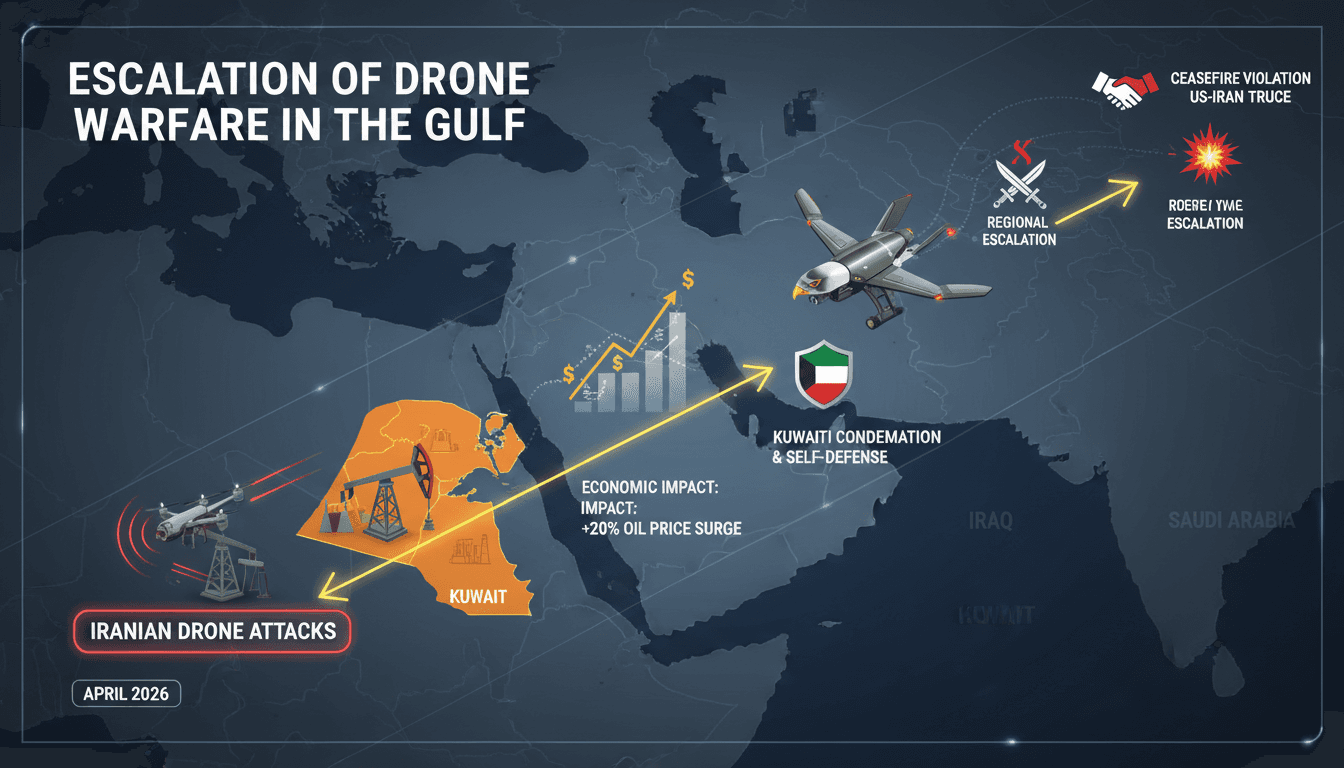
- On April 9, 2026, Iran and its proxies launched drone strikes targeting vital facilities in Kuwait, including oil installations and power stations.
- Kuwaiti air defenses intercepted most drones, resulting in limited damage and reaffirming Kuwait's right to self-defense under international law.
- The Kuwaiti Ministry of Foreign Affairs condemned the attacks, urging an immediate halt in hostilities, despite a recent US-Iran ceasefire.
The context you actually need
- The attacks occurred amid the ongoing 2026 Iran-US war, which has seen Iran retaliating against Gulf states hosting US forces since February 2026.
- A conditional ceasefire was announced just a day before the attacks, highlighting the fragile nature of diplomatic efforts in the region.
- UN Security Council Resolution 2817 condemned Iran's actions and demanded a cessation of hostilities, underscoring international concerns about regional stability.
What's really happening
The drone attacks on Kuwait represent a significant escalation in the ongoing conflict between Iran and the United States, with Iran's proxies increasingly targeting Gulf states. This incident is not isolated; it is part of a broader pattern of hostilities that have intensified since February 2026, when Iran began retaliatory strikes against nations hosting US military personnel. The timing of the attacks, just one day after a conditional ceasefire was announced, suggests a calculated move by Iran to assert its influence and challenge the legitimacy of US presence in the region.
Kuwait's response, which included intercepting a large number of drones—dozens reported—demonstrates its commitment to protecting its sovereignty and critical infrastructure. The limited damage reported indicates that while the attacks were serious, Kuwait's defenses were effective. However, the psychological impact on the population and the potential for future attacks remains a concern.
The broader implications of these attacks extend beyond Kuwait. The Gulf Cooperation Council (GCC) states, including Saudi Arabia and the UAE, are likely to heighten their military readiness in response to perceived threats from Iran. This could lead to an arms race in the region, as countries invest more in defense capabilities to counteract drone warfare and other asymmetric threats.
Moreover, the attacks have immediate economic implications. Oil prices have already begun to rise due to fears of supply disruptions, affecting consumers and businesses alike. The volatility in energy markets can lead to increased fuel costs for residents in the UAE and beyond, impacting daily life and economic stability.
As tensions escalate, the potential for miscalculation increases, which could lead to broader military confrontations. The international community, particularly the United States and its allies, will be closely monitoring the situation, as any significant escalation could draw in more countries and lead to a larger conflict.
Who feels it first (and how)
- Energy sector professionals: Increased oil prices can directly impact their operations and profitability.
- Consumers in the Gulf: Rising fuel costs will affect transportation and living expenses.
- Government officials: Heightened security measures may lead to increased military spending and potential shifts in foreign policy.
- Investors: Market volatility could affect investment strategies, particularly in energy and defense sectors.
What to watch next
- Iran's military response: Monitor any further drone attacks or retaliatory measures from Iran, as this will indicate the level of escalation in the conflict.
- US military posture: Changes in US troop deployments or military readiness in the region could signal a shift in strategy or response to Iranian aggression.
- Oil price fluctuations: Watch for significant changes in oil prices, as they will impact economic conditions and consumer behavior in the Gulf and beyond.
Kuwait's right to self-defense under international law and the immediate economic impact of rising oil prices.
Increased military readiness among GCC states and potential for further drone attacks from Iran or its proxies.
The long-term effects on US-Iran relations and the overall stability of the Gulf region.
Frequently Asked Questions
- Why it matters?
- The drone attacks signify escalating hostilities that threaten energy infrastructure and regional security, affecting global markets.
- What happened (in 30 seconds)?
- On April 9, 2026, Iran and its proxies launched drone strikes targeting vital facilities in Kuwait, including oil installations and power stations. Kuwaiti air defenses intercepted most drones, resulting in limited damage and reaffirming Kuwait's right to self-defense under international law. The Kuwaiti Ministry of Foreign Affairs condemned the attacks, urging an immediate halt in hostilities, despite a recent US-Iran ceasefire.
- What's really happening?
- The drone attacks on Kuwait represent a significant escalation in the ongoing conflict between Iran and the United States, with Iran's proxies increasingly targeting Gulf states. This incident is not isolated; it is part of a broader pattern of hostilities that have intensified since February 2026, when Iran began retaliatory strikes against nations hosting US military personnel. The timing of the attacks, just one day after a conditional ceasefire was announced, suggests a calculated move by Ir
- Who feels it first (and how)?
- Energy sector professionals: Increased oil prices can directly impact their operations and profitability. Consumers in the Gulf: Rising fuel costs will affect transportation and living expenses. Government officials: Heightened security measures may lead to increased military spending and potential shifts in foreign policy. Investors: Market volatility could affect investment strategies, particularly in energy and defense sectors.
- What to watch next?
- Iran's military response: Monitor any further drone attacks or retaliatory measures from Iran, as this will indicate the level of escalation in the conflict. US military posture: Changes in US troop deployments or military readiness in the region could signal a shift in strategy or response to Iranian aggression. Oil price fluctuations: Watch for significant changes in oil prices, as they will impact economic conditions and consumer behavior in the Gulf and beyond.
Arabic-language political and world news coverage for UAE readers.
"Emarat Al Youm world coverage usually presents international developments through a UAE and Arab audience lens."
— A47 Editor
الكويت تدين وتستنكر الاعتداءات الآثمة التي شنتها إيران ووكلاؤها بمسيرات على منشآت حيوية الكويت تدين وتستنكر الاعتداءات الآثمة التي شنتها إيران ووكلاؤها بمسيرات على منشآت حيوية
The Kuwaiti Ministry of Foreign Affairs has strongly condemned and denounced the recent attacks carried out by Iran and its proxies using drones against vital facilities in Kuwait. This statement reflects Kuwait's position on regional security and it...
Arabic-language UAE newspaper coverage focused on domestic affairs, public institutions, business, society, and regional developments.
"Al Khaleej coverage generally reflects a mainstream UAE editorial lens with strong attention to public affairs, institutions, and regional developments."
— A47 Editor
الكويت تدين اعتداءات إيران ووكلائها الآثمة على منشآتها الحيوية
The State of Kuwait has strongly condemned the unlawful attacks carried out by the Islamic Republic of Iran and its affiliates, including factions, militias, and armed groups loyal to it. This condemnation highlights the ongoing tensions in the regio...