
Russia and China veto Bahraini UN resolution on Strait of Hormuz navigation
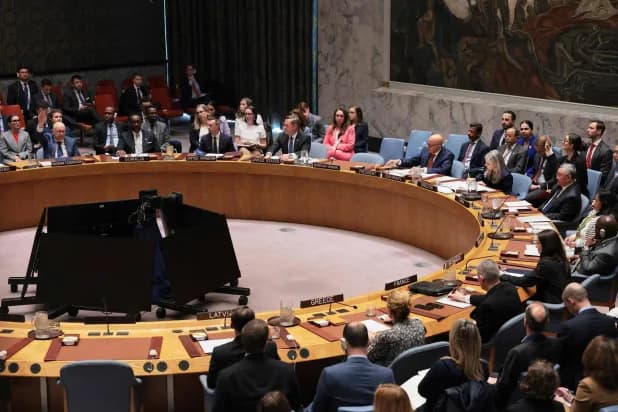
Here's what it means for you.
If you rely on global oil markets, the veto could lead to higher prices and supply chain disruptions.
Why it matters
The Strait of Hormuz is a critical chokepoint for global oil trade, with 20% of the world's seaborne oil passing through.
What happened (in 30 seconds)
- On April 7, 2026, Russia and China vetoed a Bahraini draft resolution at the UN Security Council aimed at securing navigation through the Strait of Hormuz.
- The resolution, supported by Gulf Cooperation Council states, called for Iran to cease attacks on commercial vessels amid an ongoing crisis.
- The veto leaves the strait's navigation restricted, impacting global oil supply and prices.
The context you actually need
- The veto occurred during the 2026 Strait of Hormuz crisis, which began after U.S.-Israeli airstrikes on Iranian targets, leading to Iran's military responses.
- Iran's actions have reduced traffic through the strait by over 70%, with significant implications for global oil supply.
- Previous UN efforts to address the crisis faced divisions, particularly regarding the authorization of defensive military actions.
What's really happening
The veto by Russia and China reflects a complex interplay of geopolitical interests and regional security dynamics. The Bahraini draft resolution was a response to a severe escalation in tensions following U.S.-Israeli airstrikes that targeted Iranian nuclear sites, resulting in the death of Supreme Leader Ali Khamenei. In retaliation, Iran launched missile strikes against U.S. bases and Gulf states, subsequently imposing restrictions on the Strait of Hormuz, a vital maritime corridor for oil shipments.
The draft resolution sought to establish a framework for international navigation rights and security, urging Iran to cease its aggressive actions against commercial vessels. However, Russia and China opposed the resolution, citing concerns over potential escalation and the need to address the underlying causes of the conflict. Their veto underscores a broader strategy to maintain influence in the region and support Iran as a counterbalance to U.S. interests.
The implications of this veto are significant. With the Strait of Hormuz being responsible for the transit of approximately 20 million barrels of oil per day, any disruption can lead to immediate spikes in global oil prices. Following the veto, oil prices rose amid uncertainty, as the deadline set by U.S. President Trump for Iran to reopen the strait expired. The geopolitical landscape is further complicated by the fact that both Russia and China have vested interests in maintaining stability in the region while also supporting Iran's position.
This situation highlights the limitations of international diplomacy in addressing regional conflicts, particularly when major powers have divergent interests. The veto not only stymies immediate efforts to secure navigation rights but also reflects a broader trend of increasing polarization within the UN Security Council, where geopolitical alliances dictate responses to crises.
Who feels it first (and how)
- Oil producers: Countries reliant on oil exports will face financial strain due to rising prices.
- Shipping companies: Increased insurance costs and rerouting will affect operational budgets.
- Consumers: Higher energy costs will impact household budgets and inflation rates.
- UAE businesses: Companies in Dubai may experience supply chain disruptions and increased operational costs.
What to watch next
- Oil price fluctuations: Monitor how global oil prices respond to ongoing tensions and supply disruptions.
- Iran's military actions: Watch for any escalation in Iran's military posture or further restrictions on the Strait of Hormuz.
- International diplomatic efforts: Observe any new initiatives from the U.S. or GCC states to address the crisis and secure navigation rights.
The veto has immediate implications for oil prices and shipping routes.
Continued tensions in the region may lead to further military confrontations or diplomatic efforts.
The long-term impact on global oil supply and geopolitical alliances remains uncertain.
Frequently Asked Questions
- Why it matters?
- The Strait of Hormuz is a critical chokepoint for global oil trade, with 20% of the world's seaborne oil passing through.
- What happened (in 30 seconds)?
- On April 7, 2026, Russia and China vetoed a Bahraini draft resolution at the UN Security Council aimed at securing navigation through the Strait of Hormuz. The resolution, supported by Gulf Cooperation Council states, called for Iran to cease attacks on commercial vessels amid an ongoing crisis. The veto leaves the strait's navigation restricted, impacting global oil supply and prices.
- What's really happening?
- The veto by Russia and China reflects a complex interplay of geopolitical interests and regional security dynamics. The Bahraini draft resolution was a response to a severe escalation in tensions following U.S.-Israeli airstrikes that targeted Iranian nuclear sites, resulting in the death of Supreme Leader Ali Khamenei. In retaliation, Iran launched missile strikes against U.S. bases and Gulf states, subsequently imposing restrictions on the Strait of Hormuz, a vital maritime corridor for oil sh
- Who feels it first (and how)?
- Oil producers: Countries reliant on oil exports will face financial strain due to rising prices. Shipping companies: Increased insurance costs and rerouting will affect operational budgets. Consumers: Higher energy costs will impact household budgets and inflation rates. UAE businesses: Companies in Dubai may experience supply chain disruptions and increased operational costs.
- What to watch next?
- Oil price fluctuations: Monitor how global oil prices respond to ongoing tensions and supply disruptions. Iran's military actions: Watch for any escalation in Iran's military posture or further restrictions on the Strait of Hormuz. International diplomatic efforts: Observe any new initiatives from the U.S. or GCC states to address the crisis and secure navigation rights.
Global news coverage with extensive reporting on Middle Eastern conflicts and geopolitics.
"Al Jazeera is a Qatar-based broadcaster known for wide regional coverage and alternative perspectives."
— A47 Editor
Russia and China block UN resolution on Strait of Hormuz
Russia and China have vetoed a United Nations Security Council resolution aimed at addressing the ongoing tensions in the Strait of Hormuz, where 11 out of 15 members supported the proposal, which had already been modified to avoid vetoes. This decis...
Comprehensive coverage of Middle Eastern and global issues.
"Al Jazeera is a prominent voice from the Global South, especially the Middle East, with an emphasis on underreported stories."
— A47 Editor
Russia and China block UN resolution on Strait of Hormuz
Russia and China have vetoed a United Nations Security Council resolution aimed at addressing the ongoing tensions in the Strait of Hormuz, where 11 out of 15 members supported the proposal, which had already been modified to avoid vetoes. This decis...
News from the United States including domestic politics, society, and culture.
"Global News is a mainstream Canadian media outlet generally considered to have a centrist editorial stance, covering news with a focus on factual reporting and national interest."
— A47 Editor
Russia, China veto UN Security Council measure to reopen Strait of Hormuz
Russia and China vetoed a U.N. Security Council resolution aimed at reopening the Strait of Hormuz, a vital maritime route for global oil shipments, after the proposal was modified to remove authorization for military action. This decision reflects o...
International coverage of politics, security, and social issues.
"Global News is a mainstream Canadian outlet with a centrist editorial stance, focusing on factual reporting."
— A47 Editor
Russia, China veto UN Security Council measure to reopen Strait of Hormuz
Russia and China vetoed a U.N. Security Council resolution aimed at reopening the Strait of Hormuz, a vital maritime route for global oil shipments, after the proposal was modified to remove authorization for military action. This decision reflects o...
Regional coverage and analysis focused on politics, diplomacy, and business across the Middle East.
"Al-Monitor is known for analytical reporting on Middle East politics and policy developments."
— A47 Editor
Russia, China veto UN resolution on reopening Strait of Hormuz
On April 7, 2026, Russia and China vetoed a United Nations Security Council resolution aimed at reopening the Strait of Hormuz, a vital maritime route for global oil shipments. The resolution, proposed by Bahrain and supported by the United States, r...
Capitol Hill news, legislation, and policy insight.
"The Hill specializes in U.S. politics and policy, with a focus on Capitol Hill developments and a reputation for insider reporting."
— A47 Editor
China, Russia sink UN vote on Strait of Hormuz; 10 countries join US in support
A resolution led by Bahrain to reopen the Strait of Hormuz was rejected at the United Nations due to opposition from Russia and China, despite efforts to modify its provisions to gain their support. This vote highlights the geopolitical tensions surr...
Conservative-leaning coverage of current events.
"Fox News is a highly influential conservative news outlet known for right-leaning political commentary and coverage."
— A47 Editor
Russia, China veto UN resolution aimed at reopening Strait of Hormuz, hours before Trump deadline
Russia and China vetoed a U.N. resolution aimed at reopening the Strait of Hormuz just hours before President Donald Trump's deadline for Iran to cease threats against this critical waterway. This decision underscores the geopolitical tensions surrou...
Pan-Arab news coverage spanning politics, business, sports, and regional affairs.
"Asharq Al-Awsat reflects a broad Arab editorial perspective with strong attention to regional geopolitics."
— A47 Editor
روسيا والصين تجهضان بـ«الفيتو» مشروع «هرمز» في مجلس الأمن
The United Nations Security Council faced a significant setback as both Russia and China exercised their veto power to block a resolution concerning freedom of navigation in the Strait of Hormuz, highlighting the ongoing geopolitical tensions in the ...
Regional and international reporting focused on Middle Eastern politics, diplomacy, and economics.
"Asharq Al-Awsat is a Saudi-owned international newspaper reflecting mainstream Gulf political perspectives."
— A47 Editor
Russia and China Veto Watered-Down UN Resolution Aimed at Reopening the Strait of Hormuz
On April 7, 2026, Russia and China vetoed a United Nations Security Council resolution that aimed to reopen the Strait of Hormuz, a crucial maritime route for global oil shipments. The resolution, proposed by Bahrain and supported by the United State...
Arabic-language coverage of political affairs and current events.
"Okaz political coverage typically follows mainstream Saudi framing on national and regional affairs."
— A47 Editor
فيتو روسي صيني يُحبط مشروع قرار لفتح «هرمز»
A Russian-Chinese veto has blocked a Bahraini proposal in the UN Security Council aimed at reopening the Strait of Hormuz. Bahraini Foreign Minister Abdulatif Al-Zayani expressed regret over the rejection, emphasizing the need for the international c...
Arabic-language digital news outlet covering UAE, regional, and international developments with broad general-news coverage.
"Al Ain News coverage typically blends UAE-focused reporting with wider Arab regional and international news."
— A47 Editor
البحرين: عدم تحرك مجلس الأمن لفتح مضيق هرمز ستكون له تبعات خطيرة
Bahraini Foreign Minister Abdulatif Al Zayani stated on Tuesday that the lack of action by the Security Council to open the Strait of Hormuz could have serious repercussions for the world and humanity. This statement underscores the critical importan...
European coverage of Middle East politics and security issues.
"France 24 offers international reporting with a European editorial perspective."
— A47 Editor
Middle East war live: Trump agrees to suspend attack on Iran for two weeks
Russia and China have vetoed a UN resolution aimed at reopening the strategic Strait of Hormuz, a critical maritime route for global oil shipments, amid escalating tensions in the Middle East. This decision reflects the ongoing geopolitical complexit...
Coverage of current events and conflicts in the Middle East.
"France 24 is viewed as a globally focused outlet with balanced coverage and a European perspective."
— A47 Editor
Trump agrees to suspend attack on Iran for two weeks
U.S. President Donald Trump has agreed to suspend military action against Iran for two weeks, following mediation efforts by Pakistani leaders. This ceasefire allows for the reopening of the strategically significant Strait of Hormuz, which has been ...