
Lebanon Seeks Inclusion in US-Iran Ceasefire Amid Ongoing Israeli Strikes
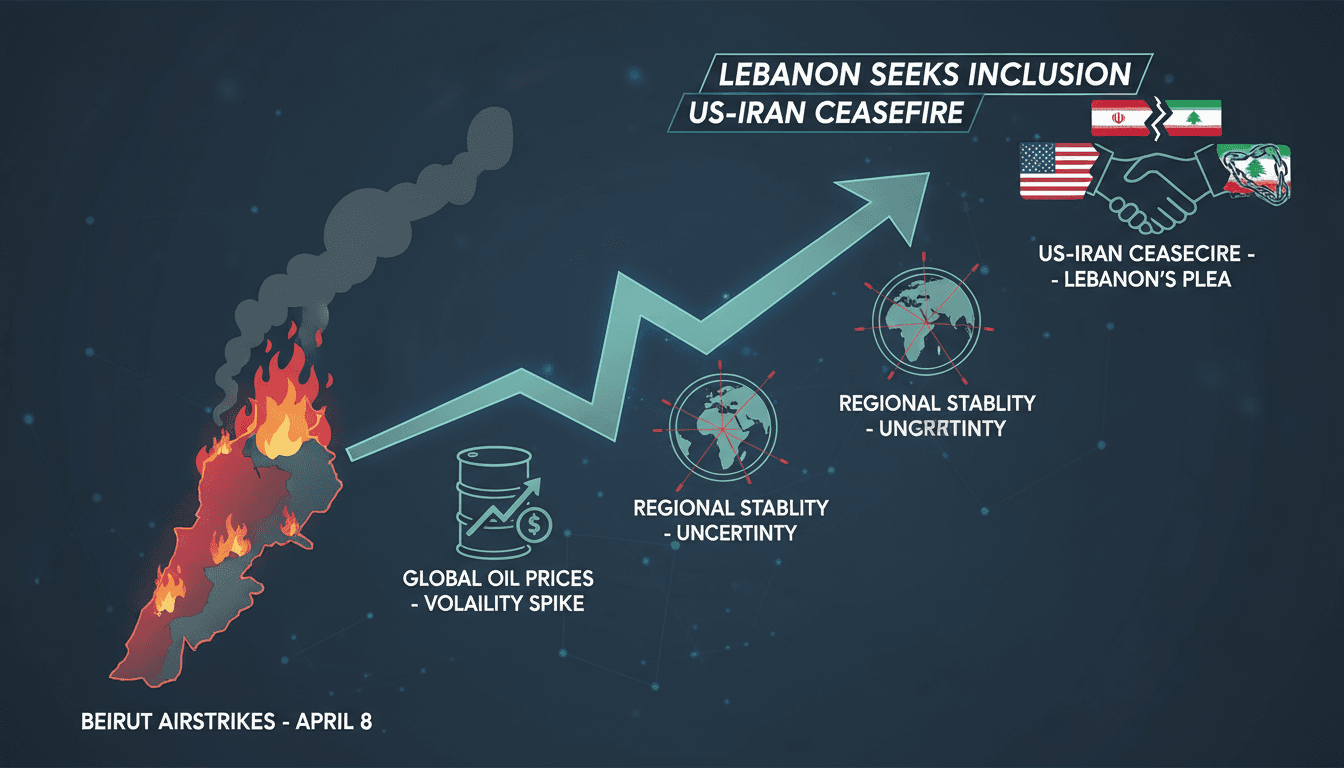
Here's what it means for you.
Rising oil prices and regional instability could impact your cost of living and business operations in Dubai.
Why it matters
The ongoing conflict and ceasefire negotiations directly affect global oil markets and regional security dynamics.
What happened (in 30 seconds)
- On April 8, 2026, a US-Iran ceasefire mediated by Pakistan was announced, aiming to halt hostilities in the region.
- Hours later, Israeli airstrikes on Lebanon resulted in 203 to 254 fatalities, marking a significant escalation in the conflict.
- On April 9, 2026, Lebanese Prime Minister Nawaf Salam requested confirmation from Pakistani Prime Minister Shehbaz Sharif regarding Lebanon's inclusion in the ceasefire agreement.
The context you actually need
- The 2026 Iran war has seen direct confrontations involving the US, Israel, and Iran, with proxy conflicts including Hezbollah in Lebanon.
- Israeli airstrikes on April 8 targeted over 100 sites in Lebanon, exacerbating tensions despite the announced ceasefire.
- International responses have included calls for the ceasefire to extend to Lebanon, highlighting the conflict's broader implications for regional stability.
What's really happening
The recent escalation in Lebanon is a direct consequence of the fragile ceasefire established between the US and Iran. While the ceasefire was intended to facilitate peace talks and halt hostilities, the rapid Israeli airstrikes on April 8 reveal the complexities and limitations of such agreements. The strikes, which resulted in a death toll ranging from 203 to 254 individuals, underscore a critical gap in the ceasefire's coverage, particularly regarding the Israel-Hezbollah conflict.
Lebanese Prime Minister Nawaf Salam's urgent call to Pakistani Prime Minister Shehbaz Sharif reflects a desperate attempt to ensure Lebanon's inclusion in the ceasefire. This request highlights the precarious position Lebanon finds itself in, caught between larger geopolitical forces. The Israeli government, under Prime Minister Netanyahu, has maintained that the ceasefire does not apply to Lebanon, indicating a willingness to continue military operations against Hezbollah. This stance not only escalates the conflict but also threatens to destabilize the region further.
The aftermath of the airstrikes has seen a national day of mourning declared in Lebanon, while Hezbollah's retaliatory rocket fire towards Israel signals a potential escalation into broader hostilities. The international community's response, including calls from the EU, France, and the UK for a ceasefire extension, illustrates the urgency of the situation. However, the US and Israel's firm stance on excluding Lebanon from the ceasefire complicates any diplomatic resolution.
The implications of this conflict extend beyond immediate casualties. The ongoing violence and instability are likely to disrupt trade routes, particularly in the Strait of Hormuz, a vital passage for global oil shipments. This disruption could lead to increased oil prices, which have already surpassed $100 per barrel, impacting economies reliant on oil imports, including the UAE. As oil prices rise, consumers in Dubai may face higher living costs, affecting everything from transportation to household energy expenses.
In summary, the current situation in Lebanon is a microcosm of broader geopolitical tensions, with the potential for significant economic repercussions felt globally, particularly in oil-dependent regions.
Who feels it first (and how)
- Consumers in Dubai: Higher oil prices lead to increased costs for energy and imported goods.
- Businesses reliant on oil: Companies may face rising operational costs, impacting profit margins.
- Lebanese citizens: Directly affected by violence and instability, leading to humanitarian crises.
- Regional governments: Increased pressure to respond to escalations, affecting diplomatic relations and stability.
What to watch next
- Oil price fluctuations: Watch for changes in oil prices as the conflict evolves, impacting global markets and local economies.
- Diplomatic negotiations: Monitor any developments in ceasefire talks and their potential to include Lebanon, which could alter the conflict dynamics.
- Hezbollah's military response: Keep an eye on Hezbollah's actions following the airstrikes, as further retaliation could escalate tensions significantly.
The US-Iran ceasefire does not currently include Lebanon, and Israeli military operations are ongoing.
Increased oil prices will affect economies reliant on oil imports, particularly in the Gulf region.
The long-term implications of the conflict on regional stability and international diplomatic efforts remain uncertain.
Frequently Asked Questions
- Why it matters?
- The ongoing conflict and ceasefire negotiations directly affect global oil markets and regional security dynamics.
- What happened (in 30 seconds)?
- On April 8, 2026, a US-Iran ceasefire mediated by Pakistan was announced, aiming to halt hostilities in the region. Hours later, Israeli airstrikes on Lebanon resulted in 203 to 254 fatalities, marking a significant escalation in the conflict. On April 9, 2026, Lebanese Prime Minister Nawaf Salam requested confirmation from Pakistani Prime Minister Shehbaz Sharif regarding Lebanon's inclusion in the ceasefire agreement.
- What's really happening?
- The recent escalation in Lebanon is a direct consequence of the fragile ceasefire established between the US and Iran. While the ceasefire was intended to facilitate peace talks and halt hostilities, the rapid Israeli airstrikes on April 8 reveal the complexities and limitations of such agreements. The strikes, which resulted in a death toll ranging from 203 to 254 individuals, underscore a critical gap in the ceasefire's coverage, particularly regarding the Israel-Hezbollah conflict. Lebanese
- Who feels it first (and how)?
- Consumers in Dubai: Higher oil prices lead to increased costs for energy and imported goods. Businesses reliant on oil: Companies may face rising operational costs, impacting profit margins. Lebanese citizens: Directly affected by violence and instability, leading to humanitarian crises. Regional governments: Increased pressure to respond to escalations, affecting diplomatic relations and stability.
- What to watch next?
- Oil price fluctuations: Watch for changes in oil prices as the conflict evolves, impacting global markets and local economies. Diplomatic negotiations: Monitor any developments in ceasefire talks and their potential to include Lebanon, which could alter the conflict dynamics. Hezbollah's military response: Keep an eye on Hezbollah's actions following the airstrikes, as further retaliation could escalate tensions significantly.
Regional and international reporting focused on Middle Eastern politics, diplomacy, and economics.
"Asharq Al-Awsat is a Saudi-owned international newspaper reflecting mainstream Gulf political perspectives."
— A47 Editor
Nawaf Salam Asks Pakistani Counterpart to Ensure Lebanon Included in Ceasefire Deal
Lebanese Prime Minister Nawaf Salam has urged his Pakistani counterpart to ensure that Lebanon is included in any ceasefire agreement being negotiated, particularly in light of ongoing military tensions in the region. This request follows a recent ce...
Arabic-language UAE newspaper coverage focused on domestic affairs, public institutions, business, society, and regional developments.
"Al Khaleej coverage generally reflects a mainstream UAE editorial lens with strong attention to public affairs, institutions, and regional developments."
— A47 Editor
باكستان تدين الهجوم على لبنان.. وتتلقى طلباً لشموله بالتهدئة
On Thursday, Lebanese Prime Minister Nawaf Salam requested confirmation from Pakistani Prime Minister Shehbaz Sharif that Lebanon would be included in the ongoing ceasefire efforts following recent attacks in the region. This request underscores the ...