
OpenAI Proposes Four-Day Workweeks and Public Wealth Funds in New Policy Paper
Here's what it means for you.
If you work in a sector impacted by AI, prepare for potential shifts in your work-life balance and economic security.
Why it matters
This policy paper signals a significant shift in how society may respond to the economic disruptions caused by superintelligence.
What happened (in 30 seconds)
- On April 6, 2026, OpenAI released a policy paper titled "Industrial Policy for the Intelligence Age," proposing measures to manage the transition to superintelligence.
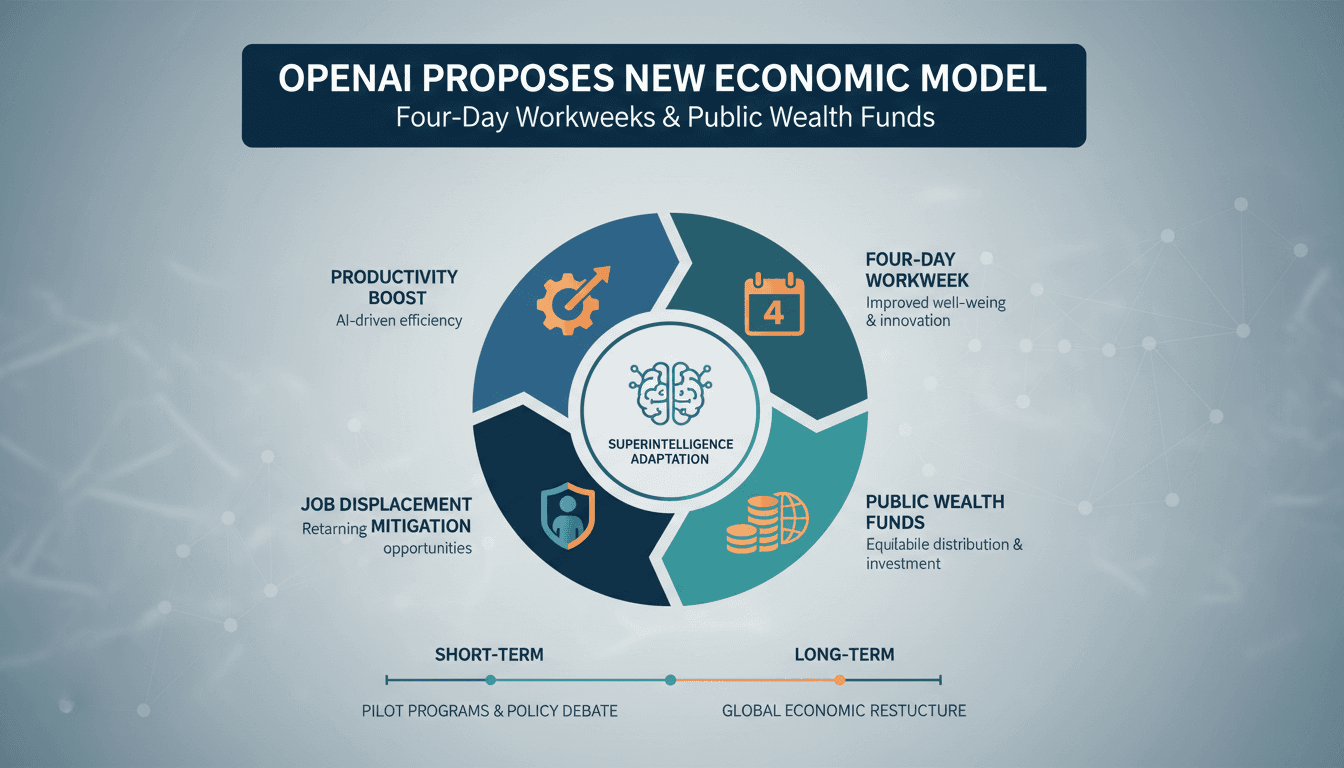
- Key proposals include a pilot four-day workweek at full pay and the establishment of public wealth funds to distribute AI-generated economic benefits.
- OpenAI invites public feedback on these proposals, aiming for a collaborative approach to shaping future economic policies.
The context you actually need
- Rapid advancements in AI are prompting discussions on societal impacts, with superintelligence expected to outperform human intelligence, even with AI assistance.
- Historical parallels are drawn to the Progressive Era and New Deal, emphasizing the need for proactive policies to prevent wealth concentration and job displacement.
- OpenAI's CEO, Sam Altman, has previously championed concepts like universal basic income and equitable distribution of AI benefits, indicating a shift toward a more inclusive economic framework.
What's really happening
OpenAI's policy paper outlines a proactive approach to the anticipated economic upheaval caused by superintelligence, which it defines as AI systems surpassing the cognitive abilities of the smartest humans. The transition to this new era is already underway, and OpenAI emphasizes the urgency of implementing policies that prioritize worker protections and equitable wealth distribution.
The proposal for a four-day workweek, specifically a 32-hour workweek at full pay, is designed to capture the productivity gains expected from AI advancements. This shift not only aims to improve work-life balance but also addresses the potential for job losses as automation becomes more prevalent. By reducing work hours while maintaining pay, OpenAI seeks to ensure that workers can benefit from the productivity increases without facing the threat of unemployment.
In addition to the workweek proposal, the establishment of public wealth funds is a critical element of OpenAI's vision. These funds would distribute returns from AI growth to citizens, creating a safety net that mitigates the risks associated with job displacement and economic inequality. This approach is reminiscent of historical reforms aimed at redistributing wealth during times of significant economic change, but OpenAI's proposals are tailored to the unique challenges posed by the rapid pace of AI development.
The paper also advocates for tax reforms, shifting the burden toward capital gains and automation, which could help fund the proposed safety nets and public wealth initiatives. By enhancing worker agency in AI deployment and implementing auto-triggered safety nets, OpenAI aims to create a more resilient society that can adapt to the disruptions caused by superintelligence.
The immediate media response has been a mix of praise for the ambitious nature of the proposals and criticism regarding their sufficiency in addressing deeper structural issues, such as the decoupling of wages from productivity. OpenAI's invitation for public feedback through various channels, including fellowships and workshops, indicates a willingness to refine these proposals based on societal input.
Who feels it first (and how)
- Tech workers: Likely to experience changes in work hours and job security as AI integration accelerates.
- Low-income workers: May benefit from public wealth funds and safety nets designed to cushion the impact of job displacement.
- Policymakers: Will need to navigate the implications of these proposals in crafting responsive economic policies.
- Businesses: Particularly in sectors heavily reliant on human labor, will face pressure to adapt to new labor models and taxation structures.
What to watch next
- Public feedback outcomes: Monitoring how OpenAI incorporates public input into its proposals will indicate the level of societal engagement and acceptance.
- Legislative responses: Watch for any governmental actions or discussions surrounding the proposed policies, which could signal broader acceptance or pushback.
- Adoption of pilot programs: The success or challenges of implementing the four-day workweek pilot will provide insights into its viability and potential for broader adoption.
OpenAI's proposals aim to address economic disruptions from superintelligence.
There will be significant public discourse and potential legislative responses to these proposals.
The long-term impact of these policies on job security and economic inequality remains to be seen.
Frequently Asked Questions
- Why it matters?
- This policy paper signals a significant shift in how society may respond to the economic disruptions caused by superintelligence.
- What happened (in 30 seconds)?
- On April 6, 2026, OpenAI released a policy paper titled "Industrial Policy for the Intelligence Age," proposing measures to manage the transition to superintelligence. Key proposals include a pilot four-day workweek at full pay and the establishment of public wealth funds to distribute AI-generated economic benefits. OpenAI invites public feedback on these proposals, aiming for a collaborative approach to shaping future economic policies.
- What's really happening?
- OpenAI's policy paper outlines a proactive approach to the anticipated economic upheaval caused by superintelligence, which it defines as AI systems surpassing the cognitive abilities of the smartest humans. The transition to this new era is already underway, and OpenAI emphasizes the urgency of implementing policies that prioritize worker protections and equitable wealth distribution. The proposal for a four-day workweek, specifically a 32-hour workweek at full pay, is designed to capture the
- Who feels it first (and how)?
- Tech workers: Likely to experience changes in work hours and job security as AI integration accelerates. Low-income workers: May benefit from public wealth funds and safety nets designed to cushion the impact of job displacement. Policymakers: Will need to navigate the implications of these proposals in crafting responsive economic policies. Businesses: Particularly in sectors heavily reliant on human labor, will face pressure to adapt to new labor models and taxation structures.
- What to watch next?
- Public feedback outcomes: Monitoring how OpenAI incorporates public input into its proposals will indicate the level of societal engagement and acceptance. Legislative responses: Watch for any governmental actions or discussions surrounding the proposed policies, which could signal broader acceptance or pushback. Adoption of pilot programs: The success or challenges of implementing the four-day workweek pilot will provide insights into its viability and potential for broader adoption.
Daily AI news: models, tools, and policy.
"Independent outlet tracking the fast pace of AI."
— A47 Editor
Less work, equal pay: OpenAI lays out its vision for a world reshaped by superintelligence
OpenAI has released a new policy paper outlining its vision for a future shaped by superintelligence, proposing initiatives such as a public wealth fund, a four-day workweek, and increased capital gains taxes for high earners. This document aims to p...
Startup news with frequent AI coverage.
"Covers launches, funding, and product updates in AI."
— A47 Editor
OpenAI’s vision for the AI economy: public wealth funds, robot taxes, and a four-day workweek
OpenAI has proposed a series of economic reforms aimed at addressing the challenges posed by artificial intelligence, including the introduction of robot taxes, the establishment of public wealth funds, and the implementation of a four-day workweek. ...
Curated tech headlines including AI stories.
"Influential aggregator surfacing the day’s top tech/AI links."
— A47 Editor
OpenAI unveils policy proposals for a world with superintelligence: higher capital gains taxes, a public AI investment fund, strengthened safety nets, and more (Amrith Ramkumar/Wall Street Journal)
OpenAI has introduced a series of policy proposals aimed at ensuring that society benefits from the rapid advancements in artificial intelligence, including higher capital gains taxes, the establishment of a public AI investment fund, and enhanced sa...