
Shell plc Lowers Q1 2026 Gas Production Forecast Due to Middle East Conflict Disruptions
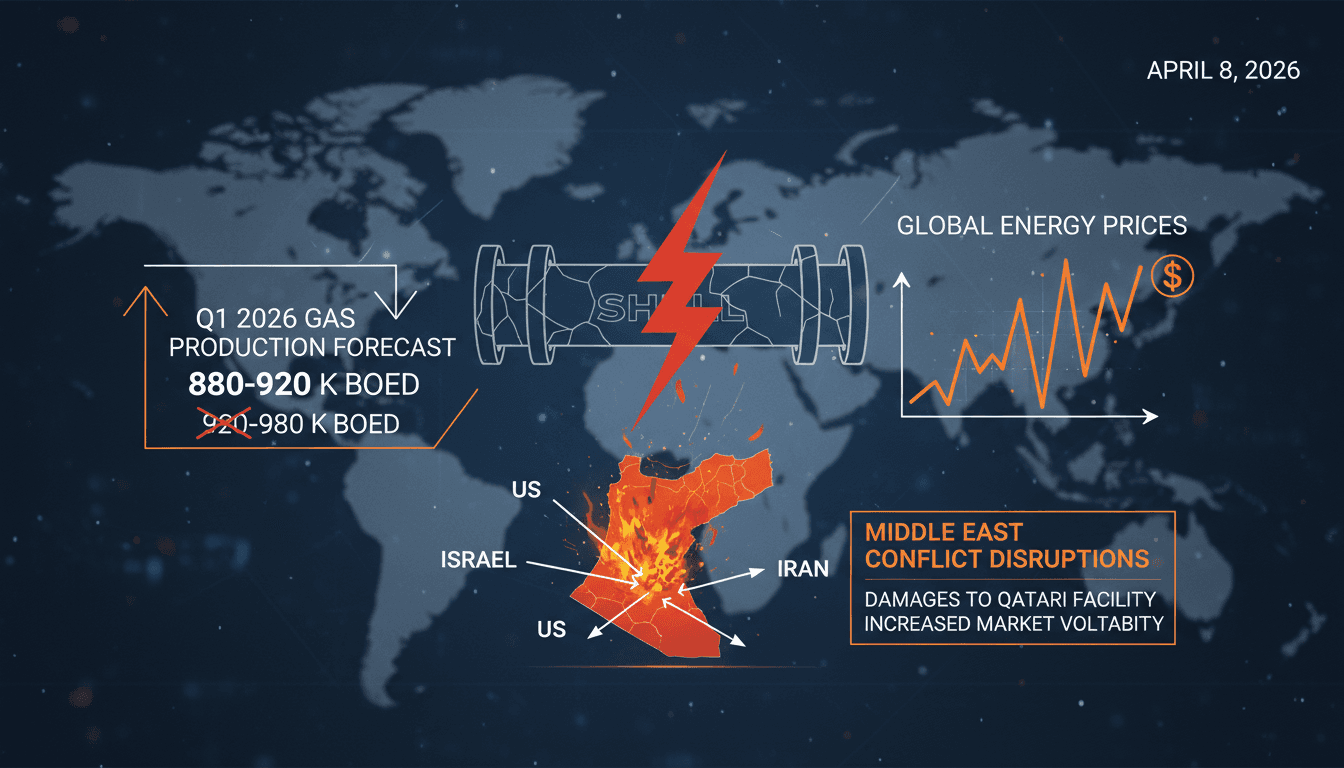
Here's what it means for you.
If you’re in the energy sector or rely on gas for your operations, this production cut could impact pricing and availability.
Why it matters
The reduction in Shell's gas production guidance signals significant disruptions in global energy supply chains, which could lead to increased prices and volatility.
What happened (in 30 seconds)
- Shell plc lowered its Q1 2026 integrated gas production forecast to 880,000–920,000 boed due to conflict-related disruptions in the Middle East.
- Iranian attacks on the Pearl GTL facility in Qatar halted production and highlighted vulnerabilities in regional energy infrastructure.
- Higher oil trading results partially offset losses, with analysts raising net income estimates for Shell despite the production hit.
The context you actually need
- Middle East tensions escalated in late February 2026, following U.S.-Israeli military strikes on Iran, leading to retaliatory actions that disrupted energy supplies.
- The Strait of Hormuz, a critical chokepoint for global oil transport, was closed by Iran, exacerbating supply chain issues and driving up commodity prices.
- Brent crude prices surged to near $120 per barrel, resulting in extreme volatility and significant working capital outflows for energy companies.
What's really happening
The recent conflict in the Middle East has created a precarious environment for energy production and distribution. Shell's downward revision of its integrated gas production guidance reflects not only the immediate impacts of Iranian attacks but also the broader geopolitical instability in the region. The Pearl GTL facility in Qatar, a key asset for Shell, sustained damage from missile strikes, halting production at one of its trains. This facility is crucial for converting natural gas into liquid fuels, and its operational downtime represents a significant loss in output.
The closure of the Strait of Hormuz by Iran has further complicated matters. This strait is vital for the transit of oil and gas from the Gulf States to global markets. With Iran targeting Gulf energy infrastructure, the risk of further disruptions remains high. The resulting uncertainty has led to extreme price volatility in the energy markets, with Brent crude prices spiking and affecting global supply chains.
Despite these challenges, Shell reported significantly higher trading results in its chemicals and products segment, indicating that while production is down, trading operations have benefitted from the volatility. Analysts have responded positively to Shell's financial resilience, raising net income estimates based on trading windfalls. However, the company anticipates a net debt increase of $3–4 billion due to the working capital outflow of $10–15 billion caused by price swings.
This situation underscores the interconnectedness of geopolitical events and energy markets. As tensions persist, companies like Shell must navigate not only production challenges but also the financial implications of fluctuating commodity prices. The ongoing conflict could lead to further adjustments in production forecasts and pricing strategies, impacting consumers and businesses reliant on stable energy supplies.
Who feels it first (and how)
- Energy companies: They face production cuts and increased operational costs.
- Consumers: Higher energy prices may affect household budgets and transportation costs.
- Businesses: Industries reliant on gas and oil may experience increased operational costs and supply chain disruptions.
- Investors: Market volatility could impact stock prices and investment strategies in the energy sector.
- Regional economies: Countries in the Gulf region may see economic strains due to disrupted energy exports.
What to watch next
- Production updates from Shell: Monitoring future guidance will provide insights into the ongoing impact of the conflict on global energy supply.
- Geopolitical developments: Any escalation or de-escalation in Middle East tensions will directly affect energy markets and pricing.
- Commodity price trends: Watch for fluctuations in Brent crude and natural gas prices, as they will indicate market reactions to supply chain disruptions.
Shell has revised its production guidance downward due to the conflict.
Continued volatility in energy prices as geopolitical tensions persist.
The long-term impacts on global energy supply chains and pricing strategies.
Frequently Asked Questions
- Why it matters?
- The reduction in Shell's gas production guidance signals significant disruptions in global energy supply chains, which could lead to increased prices and volatility.
- What happened (in 30 seconds)?
- Shell plc lowered its Q1 2026 integrated gas production forecast to 880,000–920,000 boed due to conflict-related disruptions in the Middle East. Iranian attacks on the Pearl GTL facility in Qatar halted production and highlighted vulnerabilities in regional energy infrastructure. Higher oil trading results partially offset losses, with analysts raising net income estimates for Shell despite the production hit.
- What's really happening?
- The recent conflict in the Middle East has created a precarious environment for energy production and distribution. Shell's downward revision of its integrated gas production guidance reflects not only the immediate impacts of Iranian attacks but also the broader geopolitical instability in the region. The Pearl GTL facility in Qatar, a key asset for Shell, sustained damage from missile strikes, halting production at one of its trains. This facility is crucial for converting natural gas into liq
- Who feels it first (and how)?
- Energy companies: They face production cuts and increased operational costs. Consumers: Higher energy prices may affect household budgets and transportation costs. Businesses: Industries reliant on gas and oil may experience increased operational costs and supply chain disruptions. Investors: Market volatility could impact stock prices and investment strategies in the energy sector. Regional economies: Countries in the Gulf region may see economic strains due to disrupted energy exports.
- What to watch next?
- Production updates from Shell: Monitoring future guidance will provide insights into the ongoing impact of the conflict on global energy supply. Geopolitical developments: Any escalation or de-escalation in Middle East tensions will directly affect energy markets and pricing. Commodity price trends: Watch for fluctuations in Brent crude and natural gas prices, as they will indicate market reactions to supply chain disruptions.
UK and international business news, economics, and corporate coverage.
"The Guardian’s business section covers finance and markets with a progressive editorial tone."
— A47 Editor
Shell oil trading profits soar amid Iran war but Qatar strikes hit gas output
Shell is poised to report significantly higher profits from its oil trading operations in the first quarter of 2026, driven by market volatility stemming from the ongoing conflict in Iran. The company's renewable energy division is also expected to s...
Market-moving headlines impacting equities, bonds, and related risk assets.
"Real-time catalysts and volatility drivers across indices and sectors."
— A47 Editor
Shell flags lower gas output, capital outflow amid Iran conflict but sees oil trading boost
Shell has reported a decrease in gas output and capital outflow due to the ongoing conflict in Iran, while experiencing a boost in oil trading profits. The geopolitical tensions have disrupted supply chains and impacted production levels, particularl...
Markets desk coverage, trading insights, and investor updates.
"WSJ’s markets reporting provides in-depth analysis and context for investors."
— A47 Editor
Shell Sees Hit to Gas Production, Boost From Trading Amid Middle East War
Shell has reported a decline in gas production due to lost volumes from Qatar amid ongoing conflicts in the Middle East, while anticipating a boost in oil trading operations compared to the previous quarter.
U.S. business news, corporate developments, and economy.
"The Wall Street Journal is respected for deep financial and economic reporting with a center-right editorial perspective."
— A47 Editor
Shell Sees Hit to Gas Production, Boost From Trading Amid Middle East War
Shell has reported a decline in gas production due to lost volumes from Qatar amid ongoing conflicts in the Middle East, while anticipating a boost in oil trading operations compared to the previous quarter.
Top international stories selected by The Guardian editors.
"The Guardian is known for its progressive editorial stance and in-depth analysis."
— A47 Editor
Shell oil trading profits soar amid Iran war but Qatar strikes hit gas output
Shell is poised to report significantly higher profits from its commodity trading desks in the first quarter of 2026, driven by market volatility stemming from the ongoing conflict in Iran. The company's earnings are expected to range between $200 mi...
Global markets, investing, and macroeconomics from a premier financial newsroom.
"Bloomberg is respected for in-depth financial reporting and data-driven analysis."
— A47 Editor
Shell Says Oil Trade Profit Surged as Iran War Caused Chaos
Shell Plc reported a significant increase in profits from its oil trading operations during the first quarter, despite facing challenges in its Middle Eastern assets due to the ongoing conflict in Iran.