
Hui Ka Yan Found Guilty of Fraud in Shenzhen Amid Evergrande Debt Crisis
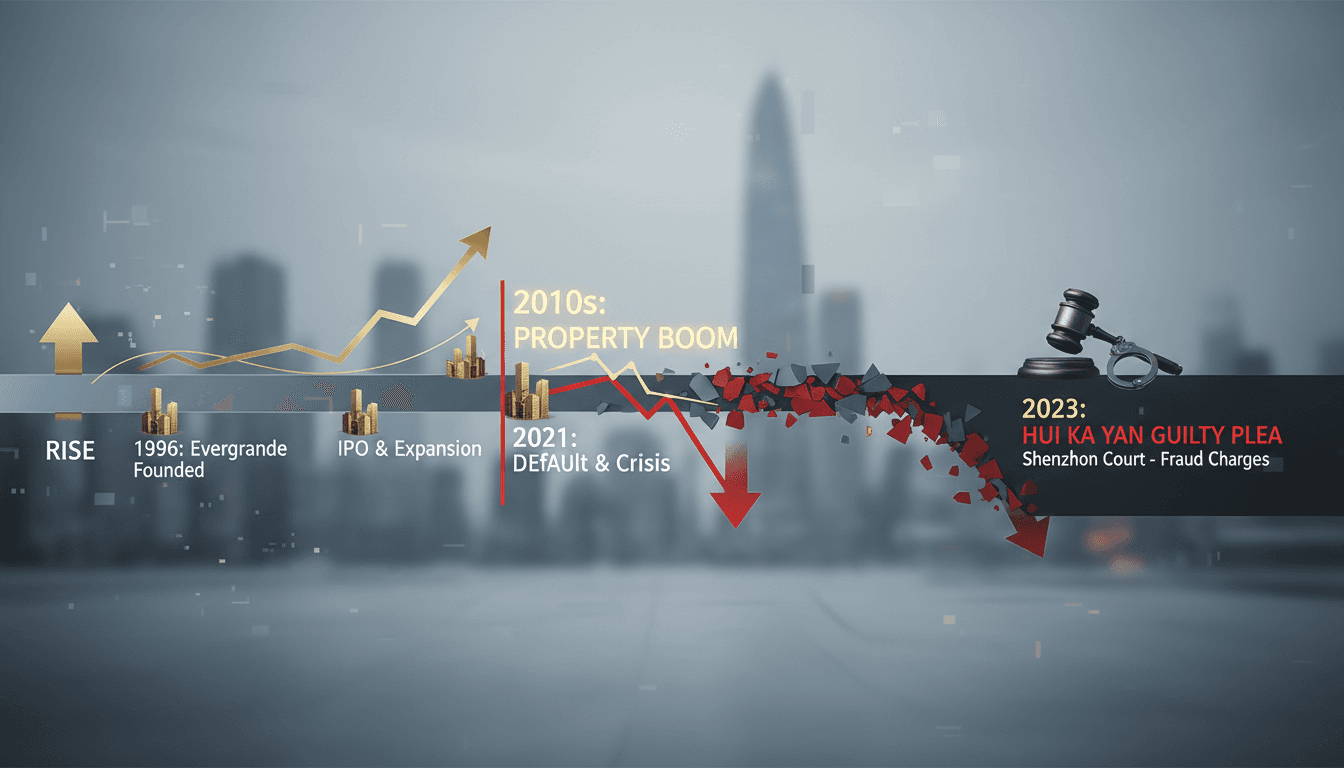
Here's what it means for you.
The fallout from Hui Ka Yan's guilty plea could ripple through global markets, affecting investor confidence in real estate sectors worldwide.
Why it matters
This case highlights the fragility of China's property market, which has significant implications for global economic stability.
What happened (in 30 seconds)
- Hui Ka Yan pleaded guilty to eight counts of fraud, including fundraising fraud and bribery, during a trial in Shenzhen on April 13–14, 2026.
- China Evergrande Group, once the largest residential developer in China, defaulted on approximately $300 billion in liabilities in 2021, triggering a nationwide property slump.
- Verdicts are pending, with analysts predicting severe penalties, potentially including life imprisonment, due to the scale of the fraud and its social impact.
The context you actually need
- Evergrande's rapid expansion: Founded in 1996, Evergrande grew aggressively through debt-financed projects, becoming a major player in China's housing market.
- Regulatory environment: The introduction of the "three red lines" policy aimed to curb excessive borrowing among property developers, contributing to Evergrande's liquidity crisis.
- Investor unrest: The company's default led to widespread protests from investors over unpaid wealth management products and unfinished homes, reflecting broader discontent in the property sector.
What's really happening
Hui Ka Yan's guilty plea is a pivotal moment in the ongoing saga of China Evergrande Group, a company that once epitomized the rapid growth of China's real estate sector. The company's aggressive expansion strategy, fueled by debt, allowed it to become the largest residential developer in China by sales volume. However, this growth came at a cost, leading to a staggering $300 billion in liabilities when it defaulted in late 2021.
The trial and Hui's subsequent guilty plea underscore the severe consequences of financial mismanagement and regulatory failures in the property sector. The charges against him, which include fundraising fraud and bribery, reflect a broader crackdown on corruption and illegal practices within the industry. This is particularly significant given the Chinese government's recent efforts to stabilize the economy and restore investor confidence in the property market.
The implications of Hui's actions extend beyond his personal accountability. The fallout from Evergrande's collapse has triggered a nationwide property slump, affecting countless investors and homeowners. As the court deliberates on Hui's fate, analysts are closely watching the potential for life imprisonment, which would send a strong message about the seriousness of financial crimes in China.
Moreover, the ongoing liquidation process for Evergrande's assets has been slow, with only a fraction of the claims being recovered. As of August 2025, the company had managed to recover just $255 million against $45 billion in claims, highlighting the dire situation for creditors and investors alike. The public anger stemming from these losses may subside following the court's ruling, but the long-term effects on the property market and investor sentiment remain uncertain.
In the broader context, Hui's guilty plea serves as a cautionary tale for other developers and investors in China and beyond. The regulatory environment is tightening, and the repercussions of financial misconduct are becoming increasingly severe. This could lead to a more cautious approach among investors and developers, potentially stifling growth in the sector.
Who feels it first (and how)
- Investors: Those who invested in Evergrande's wealth management products face significant losses and uncertainty about recovery.
- Homebuyers: Individuals who purchased homes from Evergrande may remain in limbo, waiting for project completions that may never occur.
- Real estate developers: Other developers in China may face increased scrutiny and tighter regulations, impacting their operations and financing options.
- Chinese economy: The broader economic impact could affect sectors reliant on real estate, leading to slower growth and potential job losses.
What to watch next
- Court verdicts: The outcomes of Hui's trial will be critical in shaping public sentiment and investor confidence in the property sector.
- Regulatory changes: Watch for potential new regulations aimed at stabilizing the property market and preventing similar crises in the future.
- Market recovery indicators: Keep an eye on recovery rates for Evergrande's assets and the overall health of the Chinese property market as it attempts to rebound from this crisis.
Hui Ka Yan pleaded guilty to multiple fraud charges.
Severe penalties, including potential life imprisonment, are expected due to the scale of the fraud.
The long-term impact on the Chinese property market and investor confidence remains uncertain.
Frequently Asked Questions
- Why it matters?
- This case highlights the fragility of China's property market, which has significant implications for global economic stability.
- What happened (in 30 seconds)?
- Hui Ka Yan pleaded guilty to eight counts of fraud, including fundraising fraud and bribery, during a trial in Shenzhen on April 13–14, 2026. China Evergrande Group, once the largest residential developer in China, defaulted on approximately $300 billion in liabilities in 2021, triggering a nationwide property slump. Verdicts are pending, with analysts predicting severe penalties, potentially including life imprisonment, due to the scale of the fraud and its social impact.
- What's really happening?
- Hui Ka Yan's guilty plea is a pivotal moment in the ongoing saga of China Evergrande Group, a company that once epitomized the rapid growth of China's real estate sector. The company's aggressive expansion strategy, fueled by debt, allowed it to become the largest residential developer in China by sales volume. However, this growth came at a cost, leading to a staggering $300 billion in liabilities when it defaulted in late 2021. The trial and Hui's subsequent guilty plea underscore the severe
- Who feels it first (and how)?
- Investors: Those who invested in Evergrande's wealth management products face significant losses and uncertainty about recovery. Homebuyers: Individuals who purchased homes from Evergrande may remain in limbo, waiting for project completions that may never occur. Real estate developers: Other developers in China may face increased scrutiny and tighter regulations, impacting their operations and financing options. Chinese economy: The broader economic impact could affect sectors reliant on
- What to watch next?
- Court verdicts: The outcomes of Hui's trial will be critical in shaping public sentiment and investor confidence in the property sector. Regulatory changes: Watch for potential new regulations aimed at stabilizing the property market and preventing similar crises in the future. Market recovery indicators: Keep an eye on recovery rates for Evergrande's assets and the overall health of the Chinese property market as it attempts to rebound from this crisis.
Macro commentary, policy analysis, growth/inflation themes, and global outlooks.
"Contextual macro coverage that complements day-to-day market headlines."
— A47 Editor
China Evergrande founder pleads guilty to fraud in Shenzhen court
The founder of China Evergrande, a major property developer, has pleaded guilty to fraud in a Shenzhen court, marking a significant legal setback for the company and its leadership. This plea follows a series of financial troubles that have plagued E...
Pan-Arab news coverage spanning politics, business, sports, and regional affairs.
"Asharq Al-Awsat reflects a broad Arab editorial perspective with strong attention to regional geopolitics."
— A47 Editor
مؤسس «إيفرغراند» الصينية يُقرُّ بالذنب في قضية احتيال
The founder of the Chinese Evergrande Group, the world's most indebted real estate developer, has pleaded guilty to charges including the misuse of funds and fraud in fundraising activities. This admission marks a significant development in the ongoi...
Macro commentary, policy analysis, growth/inflation themes, and global outlooks.
"Contextual macro coverage that complements day-to-day market headlines."
— A47 Editor
China Evergrande’s billionaire boss falls from circles of power to fraud plea
The billionaire head of China Evergrande has recently faced a significant fall from grace, culminating in a plea related to fraud charges. This development marks a dramatic shift for a figure once at the helm of one of the largest property developers...
Global political, business, and cultural coverage from WSJ international desks.
"The Wall Street Journal offers extensive international reporting with a reputation for financial insight and a center-right editorial stance."
— A47 Editor
Founder of Fallen Chinese Property Giant Evergrande Pleads Guilty to Fraud
Hui Ka Yan, the founder of China Evergrande, has pleaded guilty to fundraising fraud and other charges during trial proceedings in Shenzhen, marking a significant moment for the once-prominent property developer whose financial collapse has contribut...
UK and international business news, economics, and corporate coverage.
"The Guardian’s business section covers finance and markets with a progressive editorial tone."
— A47 Editor
China Evergrande’s billionaire boss pleads guilty to fraud
Hui Ka Yan, the founder of China Evergrande, has pleaded guilty to fundraising fraud and other charges during trial proceedings in Shenzhen, expressing remorse for his actions following the collapse of the world's most indebted property developer.
International coverage from The Guardian's global desks.
"The Guardian is known for its progressive editorial stance and in-depth analysis."
— A47 Editor
China Evergrande’s billionaire boss pleads guilty to fraud
Hui Ka Yan, the founder of China Evergrande, has pleaded guilty to fundraising fraud and other charges during trial proceedings in Shenzhen, expressing remorse for his actions following the collapse of the world's most indebted property developer.
Corporate news, economic trends, and markets with UK and global scope.
"BBC News is widely regarded as reputable and impartial, with a public service mandate."
— A47 Editor
Founder of China's Evergrande pleads guilty to fraud
The founder of Evergrande, once China's largest real estate firm with a market valuation exceeding $50 billion, has pleaded guilty to fraud. This development marks a significant moment for the company, which has faced severe financial difficulties in...