
US and Iran Agree to Two-Week Ceasefire Amid Ongoing Middle East Conflict
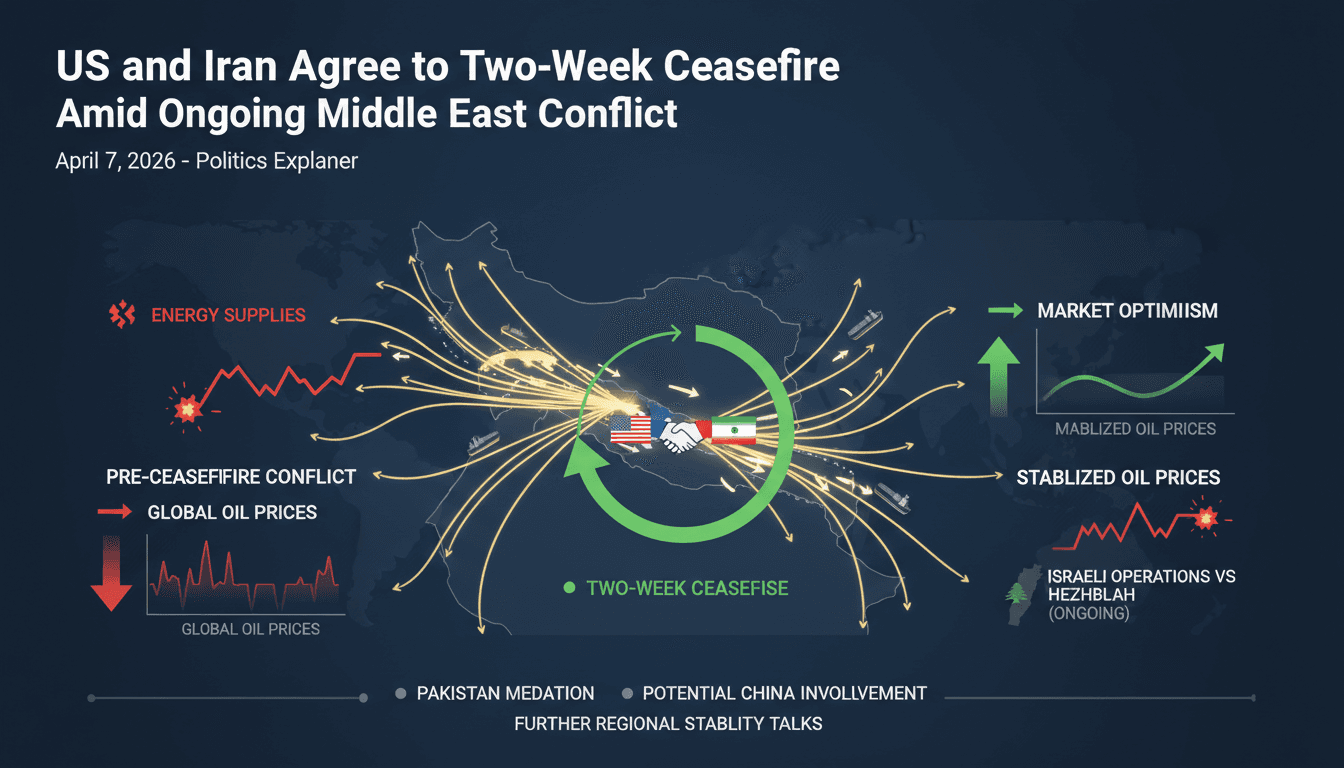
Here's what it means for you.
The recent ceasefire between the US and Iran could stabilize energy prices and impact global markets, affecting your investments and cost of living.
Why it matters
This ceasefire is pivotal in shaping energy supply chains and geopolitical stability in the Middle East, directly influencing global markets.
What happened (in 30 seconds)
- US President Donald Trump and Iran agreed to a two-week ceasefire on April 7, 2026, facilitated by Pakistan, with Iran reopening the Strait of Hormuz.
- European natural gas prices fell by 20% and oil prices declined, while Asian stock markets surged in response to the truce.
- Israel continues operations against Hezbollah in Lebanon, indicating ongoing regional tensions despite the ceasefire.
The context you actually need
- The conflict escalated on February 28, 2026, when the US and Israel launched strikes on Iranian infrastructure, leading to Iranian retaliation and a broader regional crisis.
- The Strait of Hormuz is a critical chokepoint for global oil and gas supplies, making its reopening essential for stabilizing energy markets.
- Negotiations involving multiple nations, including Pakistan and China, highlight the complex web of international diplomacy necessary to address Middle Eastern conflicts.
What's really happening
The two-week ceasefire between the US and Iran marks a significant de-escalation in a conflict that has seen rising tensions since February 2026. The war began with coordinated US-Israeli strikes targeting Iranian nuclear and military capabilities, which resulted in the deaths of high-profile Iranian leaders, including Supreme Leader Ali Khamenei. In retaliation, Iran launched missile and drone attacks on US bases and allied Gulf states, effectively closing the Strait of Hormuz, a vital artery for global energy supplies. This closure disrupted oil and gas flows, causing prices to spike and creating a ripple effect across global markets.
The ceasefire agreement, facilitated by Pakistan with possible Chinese involvement, represents a tactical pause rather than a permanent resolution. Iran's commitment to reopen the Strait of Hormuz and halt attacks on the US and its allies aims to alleviate immediate pressures and avoid a US deadline for escalated military action. However, Israel's exclusion of its operations against Hezbollah in Lebanon suggests that the region remains volatile, with ongoing military engagements likely to continue.
Market responses to the ceasefire were swift and significant. European natural gas prices plummeted by 20% at the start of trading, reflecting reduced fears of supply disruptions. Oil prices also declined, while Asian stock markets experienced gains, indicating investor relief and optimism regarding the potential for stability in the region. The US dollar weakened against major currencies, further illustrating the shifting dynamics in global finance.
In the aftermath, US officials celebrated the ceasefire as a diplomatic success, attributing it to military pressure and strategic negotiations. The UK government, under Prime Minister Keir Starmer, is seeking to reinforce the deal through diplomatic engagement in the Gulf. Meanwhile, ongoing explosions in Bahrain and continued Israeli operations against Hezbollah underscore that while a ceasefire has been agreed upon, the broader conflict is far from resolved.
Who feels it first (and how)
- Energy consumers: Lower gas prices may lead to reduced costs for consumers and businesses reliant on energy.
- Investors in global markets: Stock market fluctuations will affect portfolios, particularly in energy and technology sectors.
- Residents of the Middle East: Ongoing conflicts and military operations will continue to impact daily life and security in affected regions.
What to watch next
- Further negotiations in Pakistan: Scheduled talks on April 11, 2026, could either solidify the ceasefire or reveal deeper divisions.
- Market reactions to energy prices: Continued monitoring of oil and gas prices will indicate the effectiveness of the ceasefire on global supply chains.
- Israeli military actions in Lebanon: Any escalation or de-escalation in Israeli operations against Hezbollah will impact regional stability and international responses.
A two-week ceasefire is currently in effect between the US and Iran.
Market volatility will continue as investors react to developments in the Middle East.
The long-term implications of the ceasefire on regional stability and future negotiations remain uncertain.
Frequently Asked Questions
- Why it matters?
- This ceasefire is pivotal in shaping energy supply chains and geopolitical stability in the Middle East, directly influencing global markets.
- What happened (in 30 seconds)?
- US President Donald Trump and Iran agreed to a two-week ceasefire on April 7, 2026, facilitated by Pakistan, with Iran reopening the Strait of Hormuz. European natural gas prices fell by 20% and oil prices declined, while Asian stock markets surged in response to the truce. Israel continues operations against Hezbollah in Lebanon, indicating ongoing regional tensions despite the ceasefire.
- What's really happening?
- The two-week ceasefire between the US and Iran marks a significant de-escalation in a conflict that has seen rising tensions since February 2026. The war began with coordinated US-Israeli strikes targeting Iranian nuclear and military capabilities, which resulted in the deaths of high-profile Iranian leaders, including Supreme Leader Ali Khamenei. In retaliation, Iran launched missile and drone attacks on US bases and allied Gulf states, effectively closing the Strait of Hormuz, a vital artery f
- Who feels it first (and how)?
- Energy consumers: Lower gas prices may lead to reduced costs for consumers and businesses reliant on energy. Investors in global markets: Stock market fluctuations will affect portfolios, particularly in energy and technology sectors. Residents of the Middle East: Ongoing conflicts and military operations will continue to impact daily life and security in affected regions.
- What to watch next?
- Further negotiations in Pakistan: Scheduled talks on April 11, 2026, could either solidify the ceasefire or reveal deeper divisions. Market reactions to energy prices: Continued monitoring of oil and gas prices will indicate the effectiveness of the ceasefire on global supply chains. Israeli military actions in Lebanon: Any escalation or de-escalation in Israeli operations against Hezbollah will impact regional stability and international responses.
Regional coverage and analysis focused on politics, diplomacy, and business across the Middle East.
"Al-Monitor is known for analytical reporting on Middle East politics and policy developments."
— A47 Editor
War in the Middle East: latest developments
Israel has intensified its military operations in southern Lebanon, launching renewed airstrikes and warning residents of Tyre to evacuate. This escalation follows a two-week ceasefire agreement between the United States and Iran, which Israel claims...
Regional and international reporting focused on Middle Eastern politics, diplomacy, and economics.
"Asharq Al-Awsat is a Saudi-owned international newspaper reflecting mainstream Gulf political perspectives."
— A47 Editor
Israel Military Says ‘Battle’ in Lebanon Continues, Ceasefire Does Not Apply
The Israeli military has stated that the ongoing conflict in Lebanon continues, asserting that a ceasefire does not apply to their operations against Hezbollah. This declaration comes amid escalating military actions and tensions in the region, parti...