
Israel Issues Warning of Strikes on Iran's Railway Network Amid Escalating Conflict
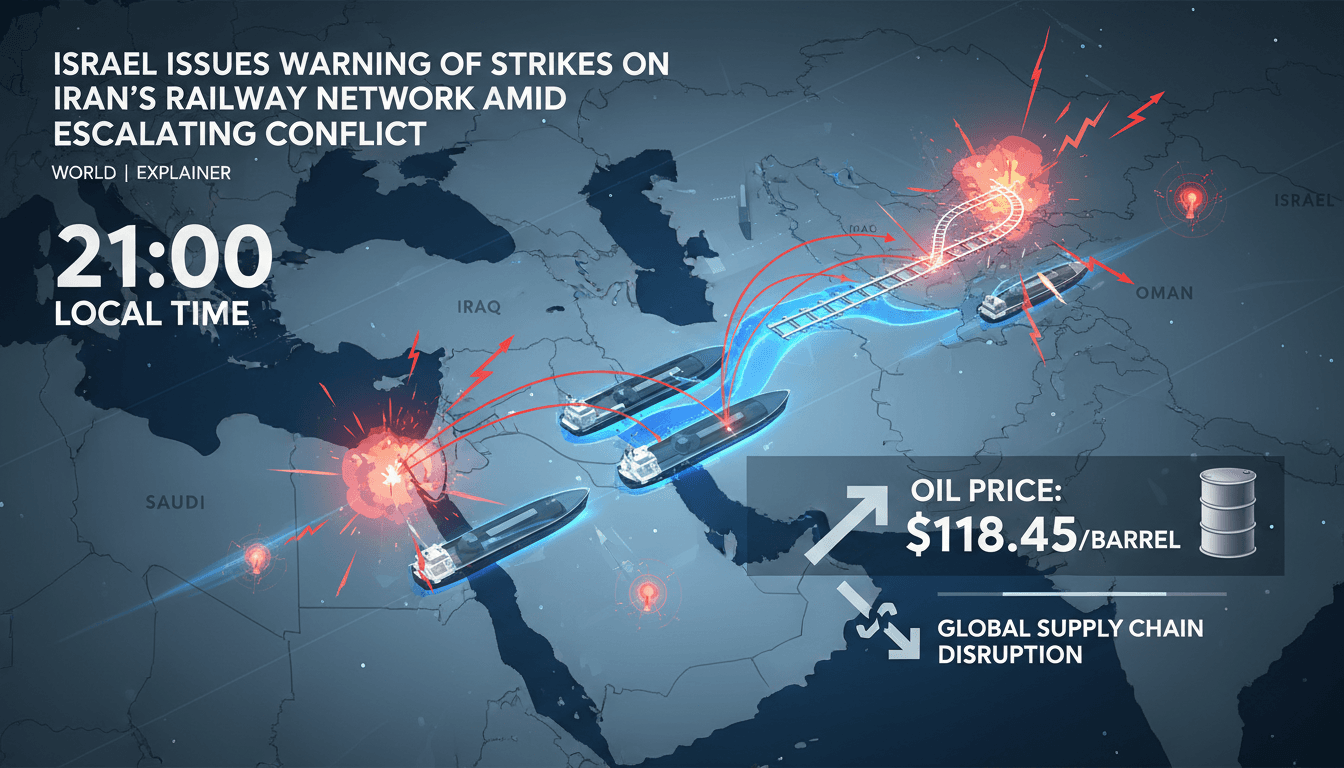
Here's what it means for you.
Rising oil prices and potential supply disruptions could impact your daily commute and overall cost of living.
Why it matters
This military escalation threatens global oil supply routes, which could lead to increased prices and economic instability.
What happened (in 30 seconds)
- Israel issued a warning on April 7, 2026, threatening strikes on Iran's railway network amid ongoing military conflict.
- US President Donald Trump set a deadline for Iran to reopen the Strait of Hormuz, dismissing concerns over potential war crimes.
- The conflict has escalated over six weeks, with US-Israeli airstrikes prompting Iranian missile retaliation and a blockade of a crucial shipping route.
The context you actually need
- The conflict began on February 28, 2026, with US-Israeli airstrikes targeting Iranian military and nuclear assets, escalating tensions in the region.
- Iran's response has included missile strikes on Israel and Gulf states, alongside a blockade of the Strait of Hormuz, a vital passage for global oil trade.
- Geopolitical tensions are fueled by Iran's nuclear ambitions and its support for proxy militias, complicating the regional security landscape.
What's really happening
The current escalation in the Iran–US–Israel conflict is rooted in a complex interplay of military actions, geopolitical rivalries, and economic stakes. Since late February 2026, the US and Israel have conducted sustained airstrikes targeting Iranian Revolutionary Guards Corps (IRGC) assets, nuclear sites, and critical infrastructure, including petrochemical facilities. This military strategy aims to weaken Iran's capabilities and deter its influence in the region.
In response, Iran has employed a multi-faceted approach, launching ballistic missiles at Israel and Gulf states while closing the Strait of Hormuz, a strategic chokepoint for global oil transportation. The closure of this waterway, which handles approximately 20% of the world's oil trade, has significant implications for global energy markets. As fears of supply disruptions mount, oil prices have surged, with West Texas Intermediate crude oil exceeding $115 per barrel.
The situation is further complicated by the involvement of regional players like Saudi Arabia, which has closed the King Fahd Causeway to Bahrain amid threats from Iranian missile launches. The UN Security Council is preparing to address the crisis, but diplomatic solutions remain elusive as Iran has rejected ceasefire proposals, demanding more substantial concessions.
The ongoing conflict is not just a military confrontation; it is also a battle for economic dominance and regional influence. The stakes are high, as the outcomes will shape the geopolitical landscape and impact global markets. As tensions escalate, the potential for miscalculation or unintended consequences increases, raising the risk of broader conflict.
Who feels it first (and how)
- Consumers: Higher fuel prices will increase transportation costs, affecting daily commuting and goods prices.
- Businesses: Companies reliant on oil and gas may face rising operational costs, impacting profitability.
- Investors: Volatility in oil markets could lead to fluctuating stock prices, particularly in energy sectors.
- Residents in Dubai: Flight disruptions and increased fuel prices may affect travel plans and living costs.
What to watch next
- Oil price trends: Monitor fluctuations in crude oil prices as they directly impact global economic stability and consumer costs.
- Diplomatic negotiations: Watch for any shifts in ceasefire proposals or mediation efforts, which could alter the conflict's trajectory.
- Military developments: Keep an eye on further military actions or retaliations, particularly involving the Strait of Hormuz, as they could escalate tensions.
Oil prices are rising due to fears of supply disruptions from the Strait of Hormuz closure.
Continued military actions and retaliations will exacerbate tensions in the region.
The potential for a broader conflict involving additional regional players remains uncertain.
Frequently Asked Questions
- Why it matters?
- This military escalation threatens global oil supply routes, which could lead to increased prices and economic instability.
- What happened (in 30 seconds)?
- Israel issued a warning on April 7, 2026, threatening strikes on Iran's railway network amid ongoing military conflict. US President Donald Trump set a deadline for Iran to reopen the Strait of Hormuz, dismissing concerns over potential war crimes. The conflict has escalated over six weeks, with US-Israeli airstrikes prompting Iranian missile retaliation and a blockade of a crucial shipping route.
- What's really happening?
- The current escalation in the Iran–US–Israel conflict is rooted in a complex interplay of military actions, geopolitical rivalries, and economic stakes. Since late February 2026, the US and Israel have conducted sustained airstrikes targeting Iranian Revolutionary Guards Corps (IRGC) assets, nuclear sites, and critical infrastructure, including petrochemical facilities. This military strategy aims to weaken Iran's capabilities and deter its influence in the region. In response, Iran has employ
- Who feels it first (and how)?
- Consumers: Higher fuel prices will increase transportation costs, affecting daily commuting and goods prices. Businesses: Companies reliant on oil and gas may face rising operational costs, impacting profitability. Investors: Volatility in oil markets could lead to fluctuating stock prices, particularly in energy sectors. Residents in Dubai: Flight disruptions and increased fuel prices may affect travel plans and living costs.
- What to watch next?
- Oil price trends: Monitor fluctuations in crude oil prices as they directly impact global economic stability and consumer costs. Diplomatic negotiations: Watch for any shifts in ceasefire proposals or mediation efforts, which could alter the conflict's trajectory. Military developments: Keep an eye on further military actions or retaliations, particularly involving the Strait of Hormuz, as they could escalate tensions.
International coverage from The Guardian's global desks.
"The Guardian is known for its progressive editorial stance and in-depth analysis."
— A47 Editor
Middle East crisis live: Iran war ceasefire doesn’t include Lebanon, says Israel; Trump says uranium will be ‘taken care of’
A provisional ceasefire has been agreed upon between the U.S. and Iran, allowing for the reopening of the Strait of Hormuz for two weeks, despite Israel's assertion that the ceasefire does not extend to Lebanon. This agreement follows escalating tens...
Arabic-language UAE newspaper coverage focused on domestic affairs, public institutions, business, society, and regional developments.
"Al Khaleej coverage generally reflects a mainstream UAE editorial lens with strong attention to public affairs, institutions, and regional developments."
— A47 Editor
الجيش الإسرائيلي للإيرانيين: حياتكم في خطر..لا تستخدموا القطارات
The Israeli army issued an urgent warning to all Iranians on Tuesday, just hours before a deadline set by the U.S. president, advising them against using trains due to potential dangers. This warning reflects escalating tensions in the region and hig...