
UAE, Kuwait, and Bahrain Intercept Iranian Attacks Following US-Iran Ceasefire Announcement
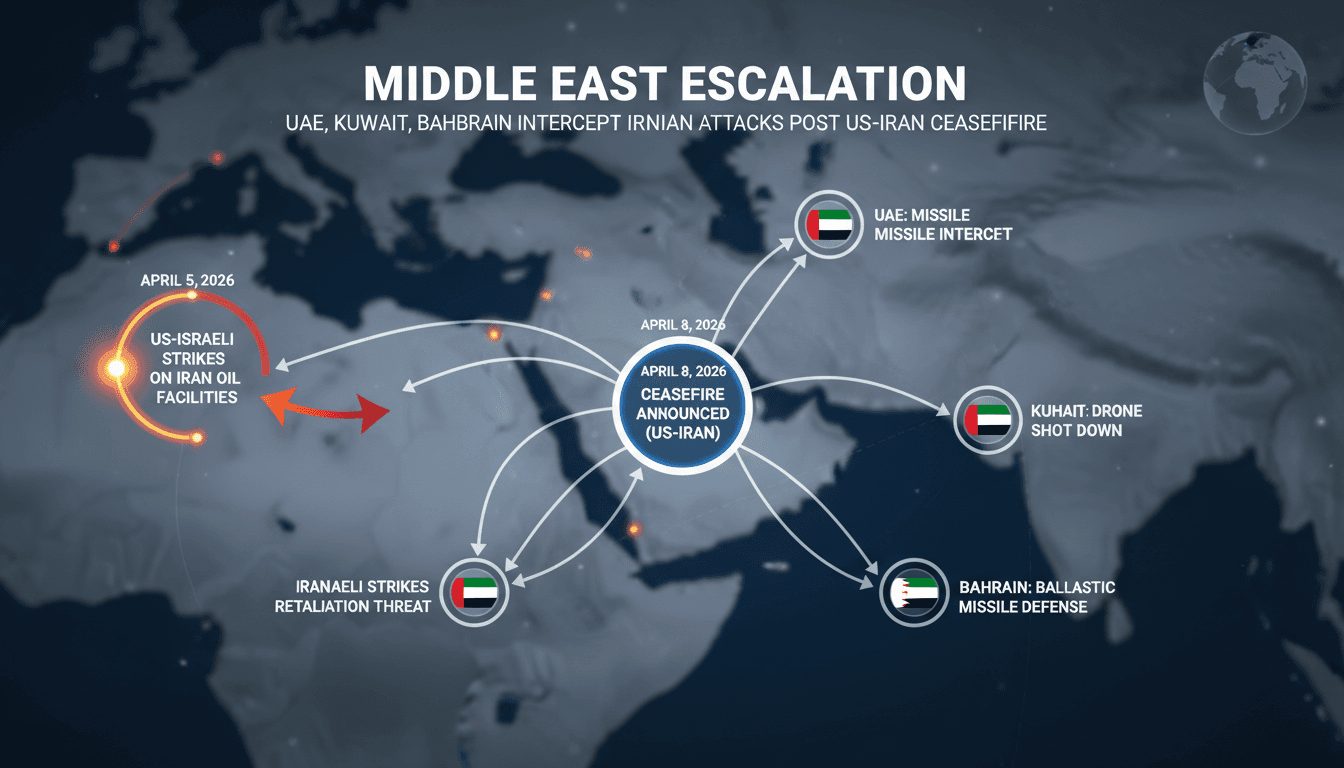
Here's what it means for you.
If you work in energy, finance, or international relations, the recent escalation in the Gulf could directly impact market stability and operational safety.
Why it matters
The ongoing conflict and missile attacks threaten energy supply chains and geopolitical stability in a region critical to global oil markets.
What happened (in 30 seconds)
- On April 8, 2026, Iran launched missile and drone attacks on the UAE, Kuwait, and Bahrain, despite a newly announced US-Iran ceasefire.
- Kuwait intercepted 28 drones targeting key infrastructure, while UAE and Bahrain engaged in defensive operations, resulting in minor injuries and infrastructure damage.
- Market reactions included a drop in Brent crude prices by 13-15%, reflecting investor concerns over regional stability.
The context you actually need
- Escalating tensions began with US and Israeli airstrikes on Iran starting February 28, 2026, leading to Iranian retaliatory strikes on Gulf energy facilities.
- The ceasefire, announced just hours before the attacks, was intended to facilitate negotiations but failed to prevent Iranian retaliation.
- Regional air defenses were activated, showcasing the vulnerability of Gulf states to drone and missile threats, which could disrupt energy supplies and economic stability.
What's really happening
The recent missile and drone attacks by Iran represent a significant escalation in a conflict that has been brewing since late February 2026. Following US and Israeli airstrikes on Iranian facilities, Iran has adopted a strategy of retaliatory strikes aimed at Gulf states, particularly targeting their energy infrastructure. This is not merely a reaction to military actions; it is a calculated move to assert Iran's influence in the region and demonstrate its military capabilities.
The timing of the attacks, occurring just hours after a US-Iran ceasefire was announced, underscores Iran's defiance and willingness to escalate tensions despite diplomatic overtures. The Iranian government framed these actions as necessary retaliation against what it perceives as aggression from the US and its allies. This creates a complex scenario where diplomatic efforts are undermined by military actions, leading to a cycle of retaliation that could spiral out of control.
The implications for Gulf states are profound. The interception of 28 drones by Kuwait and the activation of air defenses across the UAE and Bahrain highlight the persistent threat posed by Iranian military capabilities. These incidents not only cause immediate physical damage but also instill a sense of insecurity among residents and investors in the region. The damage to infrastructure, such as the temporary suspension of operations at the Habshan gas complex, can have long-term economic repercussions, affecting energy prices and supply chains.
Moreover, the market's reaction—Brent crude prices dropping significantly—reflects investor anxiety regarding the stability of oil supplies from the Gulf. Given that this region is a critical artery for global oil transport, any disruption can have cascading effects on energy prices worldwide. The potential for further military engagement raises concerns about the reliability of energy supplies, which can lead to increased volatility in global markets.
As diplomatic talks are scheduled in Islamabad, the ability of regional leaders to navigate this crisis will be crucial. The hope is that these discussions can lead to a de-escalation of hostilities, but the recent attacks suggest that achieving lasting peace will be a challenging endeavor.
Who feels it first (and how)
- Energy sector professionals: Increased operational risks and potential disruptions to supply chains.
- Investors and financial analysts: Heightened volatility in oil markets affecting investment strategies.
- Residents in the Gulf: Heightened security concerns and potential impacts on daily life due to military actions.
- Government officials: Pressure to respond to public safety and economic stability concerns.
What to watch next
- Diplomatic negotiations in Islamabad: Success or failure could determine the trajectory of US-Iran relations and regional stability.
- Market reactions to further military actions: Fluctuations in oil prices will signal investor confidence and geopolitical risk assessments.
- Infrastructure assessments in affected Gulf states: Evaluating damage and recovery efforts will provide insight into the resilience of regional economies.
Iranian missile and drone attacks occurred on April 8, 2026, despite a ceasefire.
Continued military tensions and potential for further retaliatory strikes from Iran.
The long-term impact on Gulf energy markets and the effectiveness of upcoming diplomatic talks.
Frequently Asked Questions
- Why it matters?
- The ongoing conflict and missile attacks threaten energy supply chains and geopolitical stability in a region critical to global oil markets.
- What happened (in 30 seconds)?
- On April 8, 2026, Iran launched missile and drone attacks on the UAE, Kuwait, and Bahrain, despite a newly announced US-Iran ceasefire. Kuwait intercepted 28 drones targeting key infrastructure, while UAE and Bahrain engaged in defensive operations, resulting in minor injuries and infrastructure damage. Market reactions included a drop in Brent crude prices by 13-15%, reflecting investor concerns over regional stability.
- What's really happening?
- The recent missile and drone attacks by Iran represent a significant escalation in a conflict that has been brewing since late February 2026. Following US and Israeli airstrikes on Iranian facilities, Iran has adopted a strategy of retaliatory strikes aimed at Gulf states, particularly targeting their energy infrastructure. This is not merely a reaction to military actions; it is a calculated move to assert Iran's influence in the region and demonstrate its military capabilities. The timing of
- Who feels it first (and how)?
- Energy sector professionals: Increased operational risks and potential disruptions to supply chains. Investors and financial analysts: Heightened volatility in oil markets affecting investment strategies. Residents in the Gulf: Heightened security concerns and potential impacts on daily life due to military actions. Government officials: Pressure to respond to public safety and economic stability concerns.
- What to watch next?
- Diplomatic negotiations in Islamabad: Success or failure could determine the trajectory of US-Iran relations and regional stability. Market reactions to further military actions: Fluctuations in oil prices will signal investor confidence and geopolitical risk assessments. Infrastructure assessments in affected Gulf states: Evaluating damage and recovery efforts will provide insight into the resilience of regional economies.
English-language reporting on Saudi politics, policy, and society.
"Saudi Gazette reflects mainstream Saudi institutional perspectives."
— A47 Editor
UAE, Kuwait, Bahrain report incoming missiles and drones despite ceasefire
Several Gulf countries, including the UAE, Kuwait, and Bahrain, reported incoming missiles and drones from Iran shortly after a two-week ceasefire was announced between the US and Iran. The UAE's Defense Ministry confirmed that its air defenses were ...
Global news coverage with extensive reporting on Middle Eastern conflicts and geopolitics.
"Al Jazeera is a Qatar-based broadcaster known for wide regional coverage and alternative perspectives."
— A47 Editor
UAE, Kuwait, Bahrain report attacks despite Iran-US ceasefire
Despite a newly announced two-week ceasefire between the United States and Iran, reports of attacks have emerged from the UAE, Kuwait, and Bahrain, indicating ongoing tensions in the Gulf region. These strikes occurred just hours after the ceasefire ...
24/7 international news from a French perspective in multiple languages.
"France 24 is viewed as a globally focused outlet with balanced coverage and a European perspective."
— A47 Editor
Gulf countries report attacks despite Iran ceasefire
Gulf countries, including Qatar, the United Arab Emirates, and Saudi Arabia, reported missile attacks attributed to Iran, despite a recently announced ceasefire between Iran, the US, and Israel. Interceptions occurred in Qatar and the UAE, while sire...