
U.S.-Iran ceasefire faces immediate violations amid regional escalations
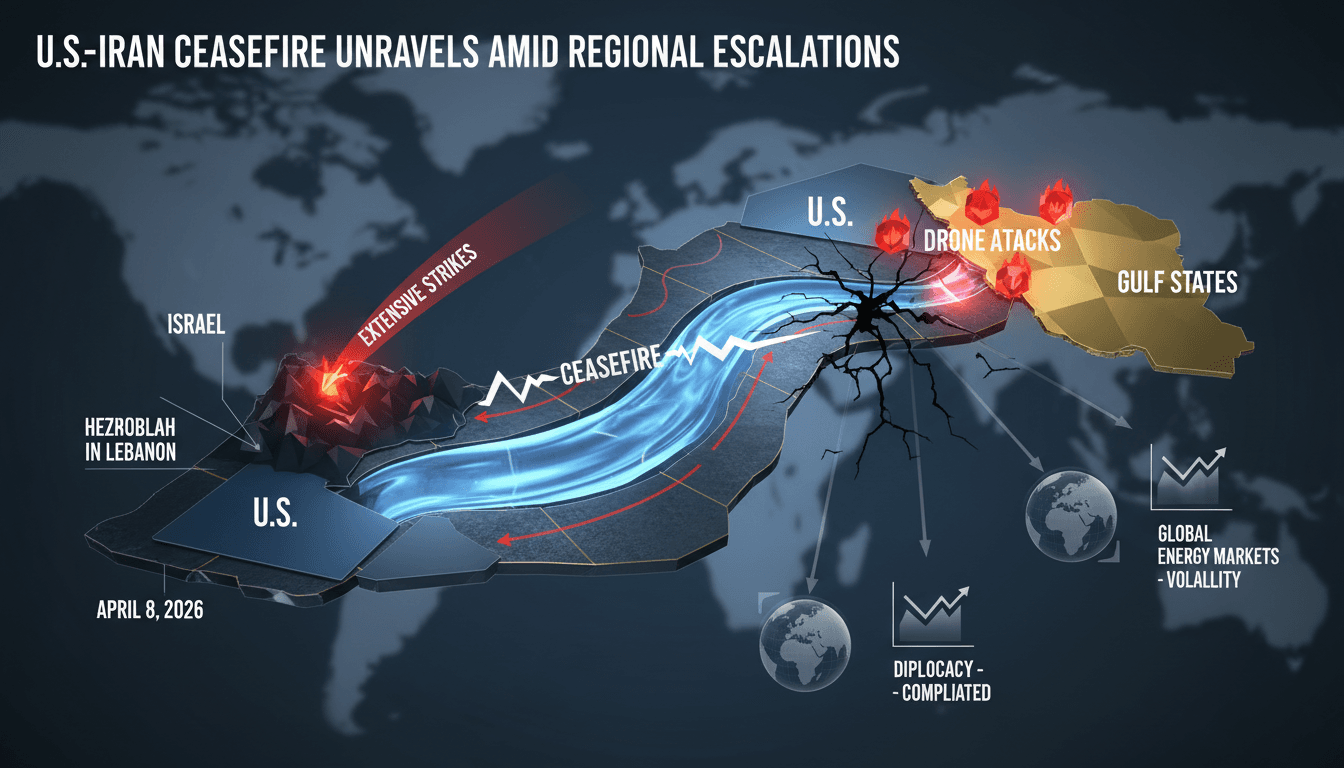
Here's what it means for you.
If you're in the Gulf region, the recent ceasefire breakdown could directly affect your security and economic stability.
Why it matters
The ongoing tensions between the U.S. and Iran could destabilize global oil markets and heighten security risks in the Middle East.
What happened (in 30 seconds)
- Ceasefire announced: On April 7, 2026, the U.S. and Iran brokered a two-week ceasefire amid escalating conflict.
- Immediate violations: Hours later, Israel launched over 100 strikes on Hezbollah in Lebanon, while Iran targeted Gulf states with drones.
- Ambiguous peace terms: President Trump's peace conditions remain undisclosed, complicating the situation further.
The context you actually need
- Escalating conflict: The 2026 Iran war began in late February with U.S. and Israeli strikes, leading to Iran closing the Strait of Hormuz.
- Brokered ceasefire: Pakistan mediated the ceasefire, but it excluded Lebanon, reflecting U.S.-Israeli positions on regional security.
- Ongoing negotiations: Despite the ceasefire, private negotiations continue, with both sides accusing each other of violations.
What's really happening
The fragile ceasefire between the U.S. and Iran, brokered by Pakistan, was intended as a tactical pause following weeks of escalating military actions. However, the immediate violations from both sides highlight the precarious nature of the agreement. Israel's extensive airstrikes on Hezbollah in Lebanon, resulting in over 250 deaths, signal a significant escalation in the conflict. These strikes were the largest since the war began, indicating Israel's commitment to countering Iranian influence in the region.
Simultaneously, Iran's retaliatory actions, including drone strikes targeting Gulf infrastructure, underscore its determination to assert its military capabilities despite the ceasefire. The Iranian government has accused the U.S. of complicity in Israeli actions, further straining relations and complicating the ceasefire's effectiveness. The U.S. administration, under President Trump, has not disclosed specific peace terms, focusing instead on Iran's nuclear uranium stockpiles and dismissing Tehran's public 10-point proposal.
The situation is exacerbated by the strategic importance of the Strait of Hormuz, a critical chokepoint for global oil shipments. Iran's threats to restrict traffic through this waterway have raised concerns about energy security, particularly for Gulf states like the UAE, which have already experienced direct impacts from drone attacks. The ambiguity surrounding the ceasefire terms and the ongoing military actions create a volatile environment, making it difficult for businesses and governments to plan for the future.
As the ceasefire frays, the potential for further escalation looms large, with both sides seemingly unwilling to back down. The international community, particularly European leaders, has called for the inclusion of Lebanon in negotiations, recognizing that a comprehensive solution is necessary to stabilize the region. However, the lack of clarity in U.S. policy and the entrenched positions of both Iran and Israel complicate the path forward.
Who feels it first (and how)
- Gulf residents: Increased security risks and potential disruptions in daily life due to regional attacks.
- Energy sector professionals: Fluctuations in oil prices and supply chain disruptions could impact jobs and investments.
- International businesses: Companies reliant on stable trade routes through the Strait of Hormuz may face operational challenges.
What to watch next
- Iran's military responses: Monitor Iran's actions in the Gulf, particularly regarding drone strikes and Hormuz traffic, as they could escalate tensions further.
- U.S. diplomatic moves: Watch for any shifts in U.S. policy or new peace proposals from the Trump administration that could influence negotiations.
- Global oil prices: Keep an eye on oil market reactions, as instability in the region could lead to price fluctuations affecting global economies.
The ceasefire is currently under strain with reported violations from both sides.
Further military actions could occur, escalating the conflict and impacting regional security.
The long-term effectiveness of negotiations and potential for a comprehensive peace agreement remains uncertain.
Frequently Asked Questions
- Why it matters?
- The ongoing tensions between the U.S. and Iran could destabilize global oil markets and heighten security risks in the Middle East.
- What happened (in 30 seconds)?
- Ceasefire announced: On April 7, 2026, the U.S. and Iran brokered a two-week ceasefire amid escalating conflict. Immediate violations: Hours later, Israel launched over 100 strikes on Hezbollah in Lebanon, while Iran targeted Gulf states with drones. Ambiguous peace terms: President Trump's peace conditions remain undisclosed, complicating the situation further.
- What's really happening?
- The fragile ceasefire between the U.S. and Iran, brokered by Pakistan, was intended as a tactical pause following weeks of escalating military actions. However, the immediate violations from both sides highlight the precarious nature of the agreement. Israel's extensive airstrikes on Hezbollah in Lebanon, resulting in over 250 deaths, signal a significant escalation in the conflict. These strikes were the largest since the war began, indicating Israel's commitment to countering Iranian influence
- Who feels it first (and how)?
- Gulf residents: Increased security risks and potential disruptions in daily life due to regional attacks. Energy sector professionals: Fluctuations in oil prices and supply chain disruptions could impact jobs and investments. International businesses: Companies reliant on stable trade routes through the Strait of Hormuz may face operational challenges.
- What to watch next?
- Iran's military responses: Monitor Iran's actions in the Gulf, particularly regarding drone strikes and Hormuz traffic, as they could escalate tensions further. U.S. diplomatic moves: Watch for any shifts in U.S. policy or new peace proposals from the Trump administration that could influence negotiations. Global oil prices: Keep an eye on oil market reactions, as instability in the region could lead to price fluctuations affecting global economies.
U.S. national news with a West Coast perspective.
"The Los Angeles Times is a major West Coast newspaper offering in-depth reporting with a liberal editorial tone and strong regional focus."
— A47 Editor
Iran ceasefire deal frays as attacks continue; Trump's peace terms remain unclear
The United States and Iran have reached a provisional two-week ceasefire, announced by Defense Secretary Pete Hegseth, amidst ongoing military tensions. The ceasefire follows a series of threats from President Trump, who had demanded Iran's complianc...
International news with cultural insight.
"The Los Angeles Times is a major West Coast newspaper offering in-depth reporting with a liberal editorial tone and strong regional focus."
— A47 Editor
Iran ceasefire deal frays as attacks continue; Trump's peace terms remain unclear
The United States and Iran have reached a provisional two-week ceasefire, announced by Defense Secretary Pete Hegseth, amidst ongoing military tensions. The ceasefire follows a series of threats from President Trump, who had demanded Iran's complianc...
Arabic-language coverage of political affairs and current events.
"Okaz political coverage typically follows mainstream Saudi framing on national and regional affairs."
— A47 Editor
البنتاغون يعلن «نصراً كاسحاً» على إيران.. ويحذّر: قواتنا باقية وجاهزة لأي تصعيد
U.S. Secretary of Defense Pete Hegseth announced a significant military victory over Iran, stating that American forces will remain in the region to ensure compliance with a temporary peace agreement. This declaration followed President Donald Trump'...
International coverage of politics, security, and social issues.
"Global News is a mainstream Canadian outlet with a centrist editorial stance, focusing on factual reporting."
— A47 Editor
U.S. claims ‘victory’ in Iran. What’s the situation on the ground?
U.S. Defense Secretary Pete Hegseth announced that Iran's airforce and missile capabilities have been significantly destroyed, following a week of escalating military tensions that included the downing of a U.S. fighter jet by Iran. This declaration ...