
Targeted Assassinations of Iranian Military Leaders Amid US Ultimatum Deadline
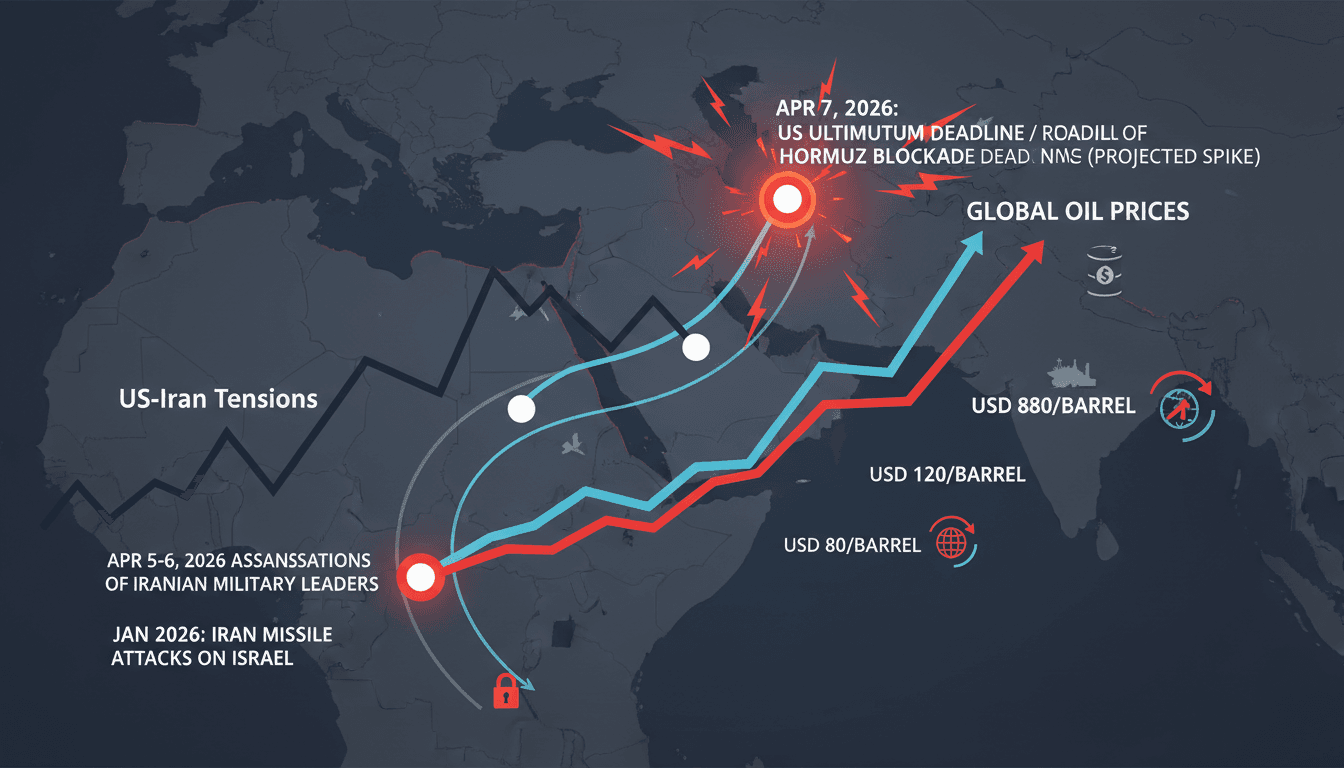
Here's what it means for you.
As tensions rise in the Middle East, expect fluctuations in oil prices that could impact your cost of living and business operations.
Why it matters
The targeted killings of Iranian military leaders threaten to destabilize an already volatile region, with direct implications for global oil supply and security.
What happened (in 30 seconds)
- Israeli and US strikes killed two prominent Iranian military leaders, Majid Khademi and Asghar Bagheri, in Tehran on April 5-6, 2026.
- Iran retaliated with missile attacks on Israel, coinciding with the expiration of a US ultimatum regarding the Strait of Hormuz.
- Civilian casualties occurred during the airstrikes, with at least 19 people killed and 20 injured in Tehran.
The context you actually need
- Escalating conflict: The assassinations are part of a broader US-Israel-Iran conflict that intensified after Iran closed the Strait of Hormuz, disrupting oil exports.
- Oil price surge: Brent crude prices have exceeded $120 per barrel, driven by fears of supply shortages due to regional instability.
- US ultimatum: President Trump’s ultimatum for Iran to reopen the Strait of Hormuz has created a ticking clock for potential military actions.
What's really happening
The recent targeted killings of Majid Khademi and Asghar Bagheri signal a significant escalation in the ongoing conflict between Iran and a coalition of US and Israeli forces. These assassinations were not mere tactical strikes; they represent a strategic effort to dismantle Iran's military leadership, particularly within the Islamic Revolutionary Guard Corps (IRGC), which has been implicated in orchestrating attacks against Western interests globally.
The backdrop to these events is a series of provocations that began with Iran's closure of the Strait of Hormuz on March 4, 2026. This closure stranded oil and LNG exports, leading to a spike in global oil prices and heightened tensions in the region. President Trump’s ultimatum, initially set for 48 hours, was extended as Iran continued its aggressive posture, launching missile and drone attacks on Israel and US assets in the region. The US and Israel responded with targeted strikes, aiming to eliminate key figures responsible for these operations.
The implications of these actions extend beyond immediate military objectives. The deaths of Khademi and Bagheri could destabilize Iran's military command structure, potentially leading to retaliatory strikes against US and Israeli interests. Furthermore, the civilian casualties resulting from the airstrikes—19 dead and 20 injured—could galvanize public sentiment in Iran against foreign intervention, complicating any potential diplomatic resolutions.
As the situation unfolds, the region is on high alert, with the UAE enhancing its air defenses in anticipation of further Iranian retaliation. The economic ramifications are already being felt, with oil prices fluctuating as markets react to the uncertainty surrounding supply disruptions. This volatility could lead to increased costs for consumers and businesses globally, particularly in regions heavily reliant on oil imports.
Who feels it first (and how)
- Oil traders: Expect immediate impacts on trading strategies and price volatility in global markets.
- Consumers: Rising petrol prices will affect daily commuting and transportation costs.
- Businesses: Companies reliant on oil and gas may face increased operational costs and supply chain disruptions.
- Residents in the UAE: Heightened security alerts and potential military actions could lead to increased anxiety and disruptions in daily life.
What to watch next
- US and Israeli military responses: Monitor for further strikes or military actions as tensions escalate, which could lead to broader regional conflict.
- Iran's retaliatory measures: Watch for missile attacks or other forms of retaliation against US or Israeli targets, which could further destabilize the region.
- Oil price trends: Keep an eye on Brent crude prices; sustained increases could signal prolonged instability affecting global markets.
The assassinations have escalated tensions between Iran and the US-Israel coalition.
Iran will respond with retaliatory actions, potentially leading to further military engagements.
The long-term effects on global oil supply and prices remain uncertain as the situation develops.
Frequently Asked Questions
- Why it matters?
- The targeted killings of Iranian military leaders threaten to destabilize an already volatile region, with direct implications for global oil supply and security.
- What happened (in 30 seconds)?
- Israeli and US strikes killed two prominent Iranian military leaders, Majid Khademi and Asghar Bagheri, in Tehran on April 5-6, 2026. Iran retaliated with missile attacks on Israel, coinciding with the expiration of a US ultimatum regarding the Strait of Hormuz. Civilian casualties occurred during the airstrikes, with at least 19 people killed and 20 injured in Tehran.
- What's really happening?
- The recent targeted killings of Majid Khademi and Asghar Bagheri signal a significant escalation in the ongoing conflict between Iran and a coalition of US and Israeli forces. These assassinations were not mere tactical strikes; they represent a strategic effort to dismantle Iran's military leadership, particularly within the Islamic Revolutionary Guard Corps (IRGC), which has been implicated in orchestrating attacks against Western interests globally. The backdrop to these events is a series o
- Who feels it first (and how)?
- Oil traders: Expect immediate impacts on trading strategies and price volatility in global markets. Consumers: Rising petrol prices will affect daily commuting and transportation costs. Businesses: Companies reliant on oil and gas may face increased operational costs and supply chain disruptions. Residents in the UAE: Heightened security alerts and potential military actions could lead to increased anxiety and disruptions in daily life.
- What to watch next?
- US and Israeli military responses: Monitor for further strikes or military actions as tensions escalate, which could lead to broader regional conflict. Iran's retaliatory measures: Watch for missile attacks or other forms of retaliation against US or Israeli targets, which could further destabilize the region. Oil price trends: Keep an eye on Brent crude prices; sustained increases could signal prolonged instability affecting global markets.
Arabic-language political and world news coverage for UAE readers.
"Emarat Al Youm world coverage usually presents international developments through a UAE and Arab audience lens."
— A47 Editor
مقتل قادة عسكريين إيرانيين بارزين مع اقتراب انتهاء مهلة ترامب مقتل قادة عسكريين إيرانيين بارزين مع اقتراب انتهاء مهلة ترامب
The Iranian Revolutionary Guard announced the death of its intelligence chief, Majid Khadami, on Monday, coinciding with Iran's military actions in the Tel area. This incident marks a significant loss for the Iranian military leadership amid escalati...
Pan-Arab news coverage spanning politics, business, sports, and regional affairs.
"Asharq Al-Awsat reflects a broad Arab editorial perspective with strong attention to regional geopolitics."
— A47 Editor
مجيد خادمي… رئاسة خاطفة لجهاز مثقل بالاختراقات انتهت باغتيال
Majid Khademi, who recently ascended to the leadership of the Revolutionary Guard's intelligence organization during the June conflict, has been killed in an airstrike, marking a significant blow to the Revolutionary Guard.
Arabic-language coverage of international news and geopolitics.
"RT Arabic is a Russian state-funded outlet often criticized for promoting Kremlin-aligned narratives."
— A47 Editor
الحرس الثوري الإيراني يعلن مقتل رئيس استخباراته
The Iranian Revolutionary Guard announced the death of its intelligence chief, Major General Majid Khademi, early today due to an American-Israeli attack in Tehran. This incident marks a significant escalation in tensions between Iran and these natio...