
Pakistan's Prime Minister Calls for Two-Week Extension of Iran Ultimatum Amid Ongoing Conflict
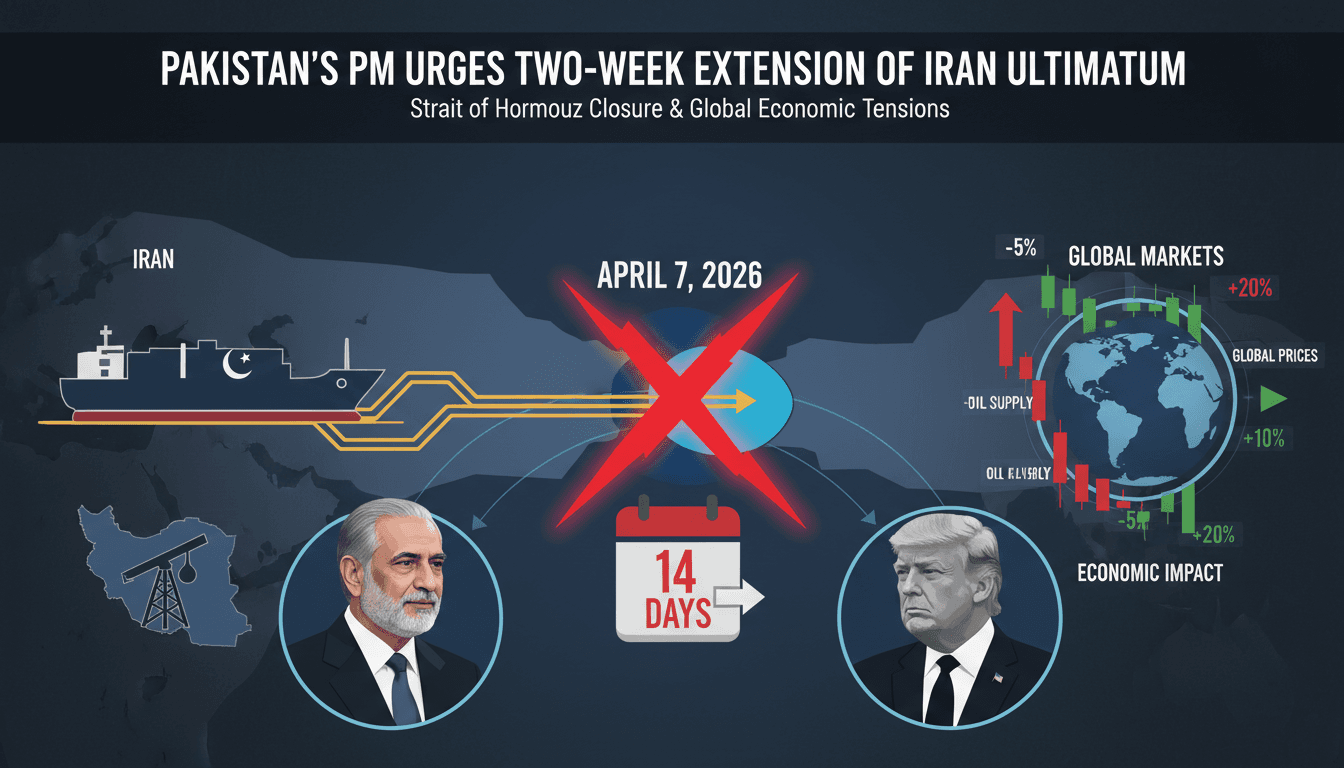
Here's what it means for you.
The ongoing tensions in the Middle East could significantly impact global oil prices and supply chains, affecting your costs.
Why it matters
The Strait of Hormuz is crucial for global oil transit, with about 20% of the world's oil and LNG passing through it annually.
What happened (in 30 seconds)
- On April 7, 2026, Pakistan's Prime Minister Shehbaz Sharif urged U.S. President Donald Trump to extend his ultimatum to Iran by two weeks.
- Sharif called for a ceasefire among all parties to facilitate diplomatic resolution amid the ongoing U.S.-Israel-Iran war.
- Trump agreed to a conditional two-week ceasefire, pending Iran's reopening of the Strait of Hormuz, averting immediate military action.
The context you actually need
- The U.S.-Israel war on Iran began on February 28, 2026, leading to Iran's closure of the Strait of Hormuz, disrupting oil supplies.
- Trump's ultimatum had escalated tensions, threatening strikes on Iranian infrastructure if the strait remained closed.
- Pakistan's role as a mediator highlights its strategic importance in regional diplomacy and the broader implications for global energy markets.
What's really happening
The situation surrounding the Strait of Hormuz is a complex interplay of geopolitical maneuvering, economic interests, and energy security. The U.S.-Israel-Iran conflict, which escalated dramatically in early 2026, has drawn in various international actors, with Pakistan stepping up as a mediator. The closure of the Strait of Hormuz by Iran has already disrupted approximately 20% of the world's oil and LNG transit, causing energy prices to spike and creating ripple effects across global markets.
Pakistan's Prime Minister Shehbaz Sharif's appeal to Trump for a two-week extension of the ultimatum reflects a strategic attempt to de-escalate tensions and facilitate dialogue. This move is not just about averting immediate military conflict; it also serves to stabilize energy markets that are sensitive to disruptions in oil supply. The request for a ceasefire and the reopening of the Strait of Hormuz underscores the critical nature of this waterway for global energy security.
Trump's conditional acceptance of this ceasefire indicates a willingness to explore diplomatic solutions, albeit under the pressure of looming military action. The U.S. administration is balancing its hardline stance against Iran with the need to maintain stability in global oil markets, which are already facing inflationary pressures due to rising prices exceeding $100 per barrel.
As negotiations continue, the situation remains fluid. Iran's response to the ceasefire proposal and its willingness to reopen the Strait will be pivotal. The outcome will not only affect regional dynamics but also have significant implications for global energy prices, shipping costs, and economic stability in countries reliant on oil imports.
Who feels it first (and how)
- Energy sector professionals: Fluctuating oil prices directly impact their operations and profitability.
- Consumers: Rising fuel costs affect transportation and goods prices, leading to higher living expenses.
- Shipping companies: Delays in oil transit can disrupt supply chains and increase shipping costs.
- Governments: Countries dependent on oil imports face economic strain from rising prices and potential inflation.
What to watch next
- Iran's response to the ceasefire: A positive response could stabilize oil markets, while a refusal may escalate tensions further.
- Global oil prices: Watch for fluctuations as markets react to developments in the Strait of Hormuz and the U.S.-Iran negotiations.
- Diplomatic engagements: Monitor ongoing talks between the U.S., Iran, and Pakistan, which could shape future regional stability.
The Strait of Hormuz is vital for global oil transit, with significant economic implications for disruptions.
Continued diplomatic efforts will shape the immediate future of U.S.-Iran relations and oil market stability.
The long-term impact of the current ceasefire on regional geopolitics and energy security remains uncertain.
Frequently Asked Questions
- Why it matters?
- The Strait of Hormuz is crucial for global oil transit, with about 20% of the world's oil and LNG passing through it annually.
- What happened (in 30 seconds)?
- On April 7, 2026, Pakistan's Prime Minister Shehbaz Sharif urged U.S. President Donald Trump to extend his ultimatum to Iran by two weeks. Sharif called for a ceasefire among all parties to facilitate diplomatic resolution amid the ongoing U.S.-Israel-Iran war. Trump agreed to a conditional two-week ceasefire, pending Iran's reopening of the Strait of Hormuz, averting immediate military action.
- What's really happening?
- The situation surrounding the Strait of Hormuz is a complex interplay of geopolitical maneuvering, economic interests, and energy security. The U.S.-Israel-Iran conflict, which escalated dramatically in early 2026, has drawn in various international actors, with Pakistan stepping up as a mediator. The closure of the Strait of Hormuz by Iran has already disrupted approximately 20% of the world's oil and LNG transit, causing energy prices to spike and creating ripple effects across global markets.
- Who feels it first (and how)?
- Energy sector professionals: Fluctuating oil prices directly impact their operations and profitability. Consumers: Rising fuel costs affect transportation and goods prices, leading to higher living expenses. Shipping companies: Delays in oil transit can disrupt supply chains and increase shipping costs. Governments: Countries dependent on oil imports face economic strain from rising prices and potential inflation.
- What to watch next?
- Iran's response to the ceasefire: A positive response could stabilize oil markets, while a refusal may escalate tensions further. Global oil prices: Watch for fluctuations as markets react to developments in the Strait of Hormuz and the U.S.-Iran negotiations. Diplomatic engagements: Monitor ongoing talks between the U.S., Iran, and Pakistan, which could shape future regional stability.
Arabic-language coverage of political affairs and current events.
"Okaz political coverage typically follows mainstream Saudi framing on national and regional affairs."
— A47 Editor
باكستان تدعو ترمب لتمديد المهلة أسبوعين.. وتطالب طهران بفتح «هرمز»
Pakistani Prime Minister Shahbaz Sharif has requested U.S. President Donald Trump to extend Iran's deadline by two weeks and urged Tehran to open the Strait of Hormuz during this period as a goodwill gesture. Sharif emphasized the need for a ceasefir...
Algerian and regional news coverage.
"Echorouk is a major Algerian outlet with broad national reporting."
— A47 Editor
رئيس الوزراء الباكستاني يدعو ترامب إلى تمديد “مهلته لإيران” لأسبوعين
Pakistani Prime Minister Shahbaz Sharif has called on U.S. President Donald Trump to extend the deadline given to Iran for opening the Strait of Hormuz by two weeks. Sharif stated that diplomatic efforts for a peaceful resolution to the conflict in t...
Arabic-language coverage of international news and geopolitics.
"RT Arabic is a Russian state-funded outlet often criticized for promoting Kremlin-aligned narratives."
— A47 Editor
باكستان تطلب من ترامب تمديد مهلة إيران أسبوعين ومن طهران فتح مضيق هرمز لـ14 يوما
Pakistan has formally requested U.S. President Donald Trump to extend the deadline for Iran by two weeks, allowing diplomatic efforts for a peaceful resolution to the ongoing conflict in Iran to proceed. This request highlights Pakistan's role in see...