
UK Transport Secretary Proposes Slower HS2 Train Speeds to Address Cost Overruns
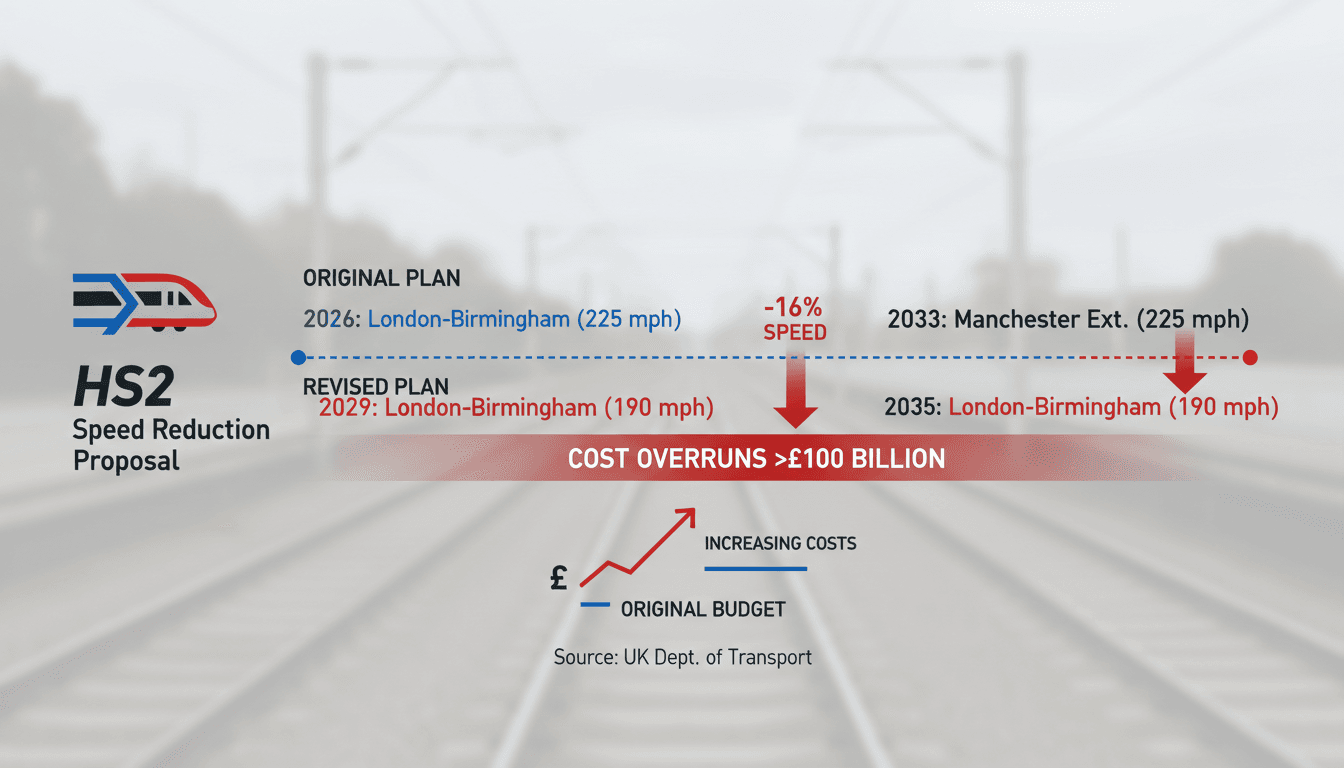
Here's what it means for you.
If you're involved in UK transport or infrastructure, this decision could reshape project timelines and budgets significantly.
Why it matters
This adjustment reflects broader challenges in high-speed rail development, impacting future infrastructure investments and public trust.
What happened (in 30 seconds)
- On March 23, 2026, UK Transport Secretary Heidi Alexander proposed reducing HS2 train speeds by 16% to save costs and expedite service.
- The current top speed would drop from 360 km/h to 300 km/h, aligning with existing UK rail capabilities.
- This proposal is part of a broader project reset amid escalating costs exceeding £100 billion and delays pushing completion beyond 2033.
The context you actually need
- HS2 was approved in 2012 with an initial budget of £20.5 billion for the London-Birmingham phase, which ballooned to an estimated £49-£56.6 billion by 2024.
- Recent leadership changes at HS2 Ltd, including CEO Mark Wild, have prompted a reassessment of project scope and management practices.
- The proposed speed reduction aims to simplify testing requirements, as current UK infrastructure does not support the originally planned speeds.
What's really happening
The proposed reduction in HS2 train speeds from 360 km/h to 300 km/h is a strategic move to address escalating costs and delays that have plagued the project since its inception. Initially approved in 2012, HS2 was designed to connect London with northern cities, promising high-speed travel that could transform regional connectivity. However, a series of miscalculations regarding costs and timelines have led to a staggering budget increase, with estimates now exceeding £100 billion.
The decision to slow down the trains is rooted in the practical challenges of high-speed rail testing. Currently, no UK tracks can accommodate the original top speed of 360 km/h, necessitating either overseas testing or significant infrastructure upgrades. By reducing the operational speed, the government aims to bypass these complex requirements, potentially saving billions and allowing for a quicker rollout of services. This shift also aligns HS2 with existing high-speed services like HS1 and the Channel Tunnel, which operate at similar speeds.
Transport Secretary Heidi Alexander's directive to evaluate this speed reduction comes after an interim review highlighted the need for a project reset. Mark Wild, the new CEO of HS2 Ltd, has been tasked with quantifying the financial implications of this change and assessing how it can expedite the project's delivery. The emphasis on reducing complexity reflects a broader acknowledgment of past mismanagement and the need for a more streamlined approach to infrastructure development.
As the government prepares for a detailed assessment report due in mid-July 2026, the implications of this proposal extend beyond mere speed adjustments. The debate surrounding HS2 has sparked discussions about the project's overall viability and its perceived value to taxpayers. Critics label HS2 a "vanity project," questioning the rationale behind high-speed rail in a context of fiscal constraints. Meanwhile, government sources have indicated that prioritizing capacity over speed could ultimately benefit the public by delivering services more efficiently, even if it means accepting a modest reduction in speed.
Who feels it first (and how)
- Transport sector professionals: Engineers and project managers may face shifts in project timelines and resource allocation.
- Taxpayers and commuters: Public perception of HS2's value may influence future funding and support for infrastructure projects.
- Investors in rail infrastructure: Companies involved in HS2 may need to adjust their financial forecasts and project commitments.
What to watch next
- Completion timelines: Monitor updates on the revised project schedule and any further delays that may arise.
- Cost assessments: Look for the detailed financial report in July 2026, which will clarify the economic impact of the speed reduction.
- Public sentiment: Track social media and public opinion regarding HS2, as this could influence political support and funding decisions.
The HS2 project is facing significant budget overruns and delays.
The proposed speed reduction will lead to cost savings and a more feasible project timeline.
The long-term impact on public perception and support for high-speed rail in the UK remains uncertain.
Frequently Asked Questions
- Why it matters?
- This adjustment reflects broader challenges in high-speed rail development, impacting future infrastructure investments and public trust.
- What happened (in 30 seconds)?
- On March 23, 2026, UK Transport Secretary Heidi Alexander proposed reducing HS2 train speeds by 16% to save costs and expedite service. The current top speed would drop from 360 km/h to 300 km/h, aligning with existing UK rail capabilities. This proposal is part of a broader project reset amid escalating costs exceeding £100 billion and delays pushing completion beyond 2033.
- What's really happening?
- The proposed reduction in HS2 train speeds from 360 km/h to 300 km/h is a strategic move to address escalating costs and delays that have plagued the project since its inception. Initially approved in 2012, HS2 was designed to connect London with northern cities, promising high-speed travel that could transform regional connectivity. However, a series of miscalculations regarding costs and timelines have led to a staggering budget increase, with estimates now exceeding £100 billion. The decisio
- Who feels it first (and how)?
- Transport sector professionals: Engineers and project managers may face shifts in project timelines and resource allocation. Taxpayers and commuters: Public perception of HS2's value may influence future funding and support for infrastructure projects. Investors in rail infrastructure: Companies involved in HS2 may need to adjust their financial forecasts and project commitments.
- What to watch next?
- Completion timelines: Monitor updates on the revised project schedule and any further delays that may arise. Cost assessments: Look for the detailed financial report in July 2026, which will clarify the economic impact of the speed reduction. Public sentiment: Track social media and public opinion regarding HS2, as this could influence political support and funding decisions.
UK politics, business, and social stories.
"Sky News is a UK-based 24-hour channel known for fast-breaking news and political coverage."
— A47 Editor
HS2 trains could run 16% slower than planned to save billions, minister says
The UK government is considering operating HS2 trains at speeds up to 16% slower than initially planned as part of efforts to reduce costs for the long-delayed railway project connecting London and Birmingham. This decision reflects ongoing budgetary...
UK and international business news, economics, and corporate coverage.
"The Guardian’s business section covers finance and markets with a progressive editorial tone."
— A47 Editor
Ministers tell HS2 to consider slower train speeds to cut costs
Ministers have instructed High Speed Two (HS2) to evaluate the possibility of reducing train speeds from 224mph to 186mph as a cost-cutting measure. This assessment aims to determine if the slower speeds could result in significant savings and facili...
International coverage from The Guardian's global desks.
"The Guardian is known for its progressive editorial stance and in-depth analysis."
— A47 Editor
Ministers tell HS2 to consider slower train speeds to cut costs
Ministers have instructed High Speed Two (HS2) to evaluate the possibility of reducing train speeds from 224mph to 186mph as a cost-cutting measure. This assessment aims to determine if the slower speeds could result in significant savings and facili...
Corporate news, economic trends, and markets with UK and global scope.
"BBC News is widely regarded as reputable and impartial, with a public service mandate."
— A47 Editor
HS2 trains could run slower than planned to save money
The UK government is exploring options to reduce costs for the much-delayed HS2 railway line connecting London and Birmingham, which may include operating trains at slower speeds than originally planned. This decision comes amid ongoing concerns abou...
United Kingdom-focused news including local politics, business, and social issues.
"BBC News is widely regarded as a reputable international news organization, known for its impartial tone and public service mandate."
— A47 Editor
HS2 trains could run slower than planned to save money
The UK government is exploring options to reduce costs for the much-delayed HS2 railway line connecting London and Birmingham, which may include operating trains at slower speeds than originally planned. This decision comes amid ongoing concerns abou...