
Keir Starmer Highlights Challenges in US-Iran Ceasefire and Strait of Hormuz Reopening
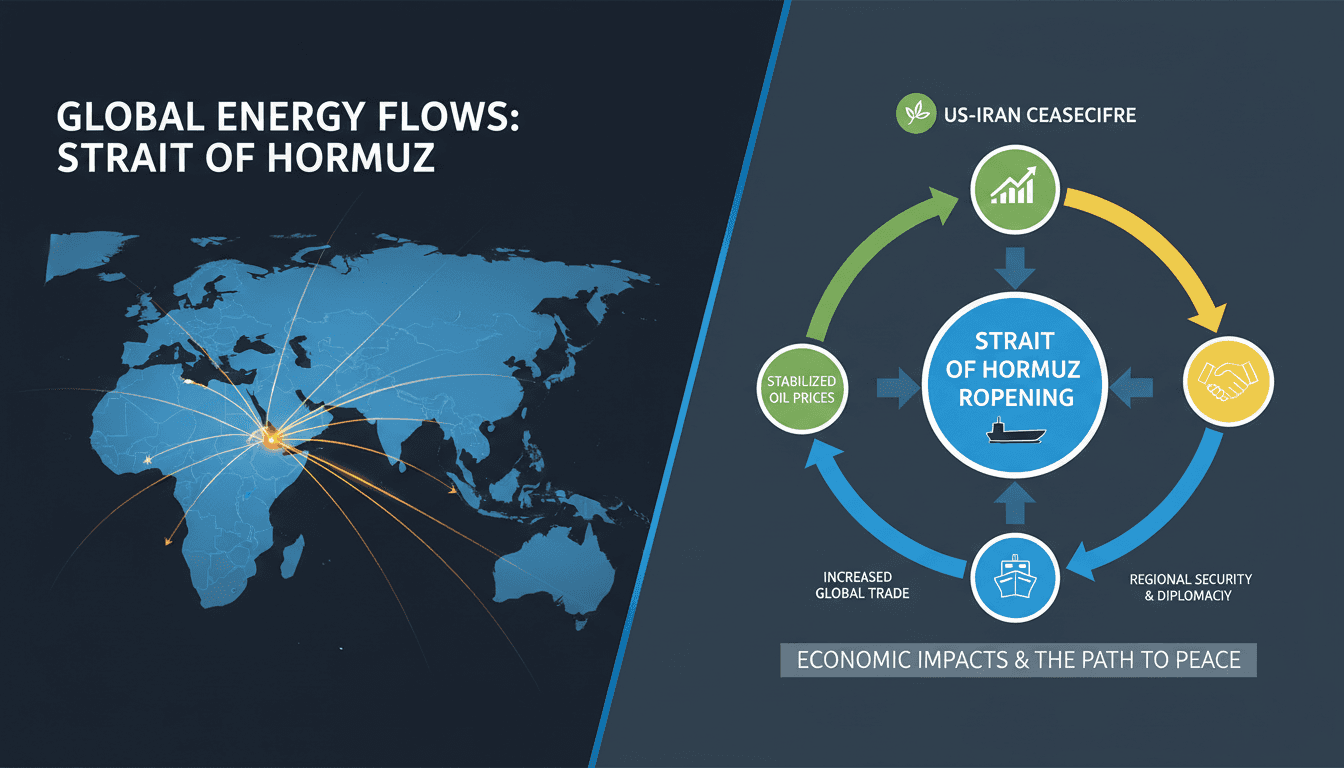
Here's what it means for you.
If you rely on global energy markets, the stability of the Strait of Hormuz directly impacts your costs and availability of resources.
Why it matters
The Strait of Hormuz is a critical chokepoint for approximately 20% of the world's oil supply, making its security vital for global energy prices and economic stability.
What happened (in 30 seconds)
- April 8, 2026: UK Prime Minister Keir Starmer emphasizes the need for extensive efforts to solidify a ceasefire between the US and Iran and to reopen the Strait of Hormuz.
- April 7, 2026: A two-week conditional ceasefire is announced, following a series of regional escalations due to Iran's nuclear program.
- February 2026: The conflict began with US and Israeli strikes on Iran, leading to Iranian retaliation and a blockade of the Strait of Hormuz.
The context you actually need
- February 2026: The US and Israel launched strikes against Iran, citing concerns over its nuclear development, prompting Iranian attacks on Gulf neighbors and the blockade of the Strait.
- April 2026: A virtual summit hosted by the UK aimed to establish security measures for the Strait post-conflict, highlighting the international stakes involved.
- Ongoing tensions: Despite the ceasefire, the situation remains fragile, with the Iranian Revolutionary Guard Corps (IRGC) controlling access to the Strait, affecting shipping and energy markets.
What's really happening
The recent ceasefire between the US and Iran marks a significant moment in a conflict that has escalated since February 2026, when coordinated strikes by the US and Israel targeted Iran's nuclear facilities. This military action was a response to perceived threats from Iran's advancing nuclear program, which led to a series of retaliatory strikes by Iran on its Gulf neighbors and the blockade of the Strait of Hormuz—a vital maritime route for global oil shipments.
The blockade had immediate repercussions, causing crude oil prices to spike and creating volatility in global energy markets. The Strait of Hormuz is crucial, with about 1/5 of the world's energy shipments passing through it. The blockade not only threatened energy security but also raised concerns about broader economic stability, prompting urgent diplomatic efforts.
In early April 2026, US President Donald Trump issued an ultimatum for a ceasefire, which was facilitated by Pakistan as a mediator. The announcement of a two-week conditional ceasefire came just hours before the deadline, reflecting the high stakes involved. UK Prime Minister Starmer's visit to Saudi Arabia underscored the international community's commitment to ensuring the ceasefire's success and the reopening of the Strait.
However, Starmer's remarks highlighted the fragility of the situation. The ceasefire is conditional on Iran's compliance with reopening the Strait, and ongoing tensions remain, particularly with the IRGC's control over maritime access. This control has led to cautious navigation among shipping companies, even amidst the truce.
The implications of this ceasefire extend beyond immediate military concerns. The reopening of the Strait is essential for stabilizing global oil prices, which recently saw a decline below $100 per barrel following the ceasefire announcement. The economic recovery in regions like Dubai, which experienced a 30.5% drop in property sales during the conflict, is closely tied to the stability of energy markets.
As diplomatic negotiations continue, the focus will be on ensuring that the ceasefire leads to a more permanent resolution and the safe reopening of the Strait of Hormuz, which is critical for global energy security.
Who feels it first (and how)
- Energy companies: Fluctuations in oil prices directly impact profitability and operational costs.
- Shipping industries: Companies reliant on the Strait for transport face increased caution and potential delays.
- Investors in Gulf markets: Economic recovery in regions like Dubai will be influenced by the stability of energy prices and regional security.
- Consumers globally: Changes in oil prices affect fuel costs and, subsequently, consumer goods prices.
What to watch next
- Iran's compliance: Monitoring Iran's actions regarding the reopening of the Strait will be crucial. Non-compliance could reignite tensions.
- Global oil prices: Watch for fluctuations in oil prices as the situation evolves. Prices below $100 per barrel could indicate market stabilization or ongoing concerns.
- Diplomatic developments: Future negotiations involving key players like the US, Iran, and Gulf states will shape the region's stability. Successful talks could lead to a more permanent ceasefire.
The ceasefire is currently in place, but it is conditional and fragile.
Continued diplomatic efforts will be necessary to ensure the Strait of Hormuz is reopened.
The long-term implications of the ceasefire on regional stability and Iran's nuclear program remain uncertain.
Frequently Asked Questions
- Why it matters?
- The Strait of Hormuz is a critical chokepoint for approximately 20% of the world's oil supply, making its security vital for global energy prices and economic stability.
- What happened (in 30 seconds)?
- April 8, 2026: UK Prime Minister Keir Starmer emphasizes the need for extensive efforts to solidify a ceasefire between the US and Iran and to reopen the Strait of Hormuz. April 7, 2026: A two-week conditional ceasefire is announced, following a series of regional escalations due to Iran's nuclear program. February 2026: The conflict began with US and Israeli strikes on Iran, leading to Iranian retaliation and a blockade of the Strait of Hormuz.
- What's really happening?
- The recent ceasefire between the US and Iran marks a significant moment in a conflict that has escalated since February 2026, when coordinated strikes by the US and Israel targeted Iran's nuclear facilities. This military action was a response to perceived threats from Iran's advancing nuclear program, which led to a series of retaliatory strikes by Iran on its Gulf neighbors and the blockade of the Strait of Hormuz—a vital maritime route for global oil shipments. The blockade had immediate rep
- Who feels it first (and how)?
- Energy companies: Fluctuations in oil prices directly impact profitability and operational costs. Shipping industries: Companies reliant on the Strait for transport face increased caution and potential delays. Investors in Gulf markets: Economic recovery in regions like Dubai will be influenced by the stability of energy prices and regional security. Consumers globally: Changes in oil prices affect fuel costs and, subsequently, consumer goods prices.
- What to watch next?
- Iran's compliance: Monitoring Iran's actions regarding the reopening of the Strait will be crucial. Non-compliance could reignite tensions. Global oil prices: Watch for fluctuations in oil prices as the situation evolves. Prices below $100 per barrel could indicate market stabilization or ongoing concerns. Diplomatic developments: Future negotiations involving key players like the US, Iran, and Gulf states will shape the region's stability. Successful talks could lead to a more permanent cea
Political developments, policy debates, elections, and government affairs in the UK.
"BBC News is widely regarded as a reputable international news organization, known for its impartial tone and public service mandate."
— A47 Editor
Starmer says much work remains to make US-Iran ceasefire hold
UK Prime Minister Keir Starmer has emphasized the need for significant efforts to ensure the sustainability of a recently announced two-week ceasefire between the United States and Iran, which aims to ease escalating tensions in the Middle East. Star...
International coverage from The Guardian's global desks.
"The Guardian is known for its progressive editorial stance and in-depth analysis."
— A47 Editor
Starmer says UK wants to help with opening of Hormuz strait on Gulf visit
UK Prime Minister Keir Starmer has emphasized the UK's commitment to assist in reopening the Strait of Hormuz during his visit to Saudi Arabia, where he met with Crown Prince Mohammed bin Salman. This comes amid reports of the strait being closed aga...
Comprehensive coverage of Middle Eastern and global issues.
"Al Jazeera is a prominent voice from the Global South, especially the Middle East, with an emphasis on underreported stories."
— A47 Editor
‘A lot of work to do’ to reopen Strait of Hormuz after US-Iran ceasefire
British Prime Minister Keir Starmer stated that significant efforts are required to reopen the Strait of Hormuz following a recently announced two-week ceasefire between the United States and Iran, aimed at reducing tensions in the region.
Global news coverage with extensive reporting on Middle Eastern conflicts and geopolitics.
"Al Jazeera is a Qatar-based broadcaster known for wide regional coverage and alternative perspectives."
— A47 Editor
‘A lot of work to do’ to reopen Strait of Hormuz after US-Iran ceasefire
British Prime Minister Keir Starmer stated that significant efforts are required to reopen the Strait of Hormuz following a recently announced two-week ceasefire between the United States and Iran, aimed at reducing tensions in the region.
International coverage from The Guardian's global desks.
"The Guardian is known for its progressive editorial stance and in-depth analysis."
— A47 Editor
Starmer warns ‘lot of work to do’ to make ceasefire permanent at start of talks in Gulf - UK politics live
UK Prime Minister Keir Starmer has arrived in Saudi Arabia to engage with Gulf leaders, emphasizing the need for significant efforts to ensure the sustainability of a newly agreed two-week ceasefire between the United States and Iran. This ceasefire,...
Arabic-language UAE newspaper coverage focused on domestic affairs, public institutions, business, society, and regional developments.
"Al Khaleej coverage generally reflects a mainstream UAE editorial lens with strong attention to public affairs, institutions, and regional developments."
— A47 Editor
ستارمر: هناك الكثير من العمل لمعاودة فتح «هرمز»
British Prime Minister Keir Starmer stated on Wednesday that significant work remains to be done to reopen the Strait of Hormuz. This statement highlights ongoing concerns regarding the strategic waterway, which is crucial for global oil transportati...
International coverage from The Guardian's global desks.
"The Guardian is known for its progressive editorial stance and in-depth analysis."
— A47 Editor
Keir Starmer arrives in Gulf after US and Iran agree two-week ceasefire
UK Prime Minister Keir Starmer has arrived in Saudi Arabia to engage with Gulf leaders following a newly agreed two-week ceasefire between the United States and Iran. This ceasefire, announced after a diplomatic intervention from Pakistan, allows for...
Arabic-language coverage of political affairs and current events.
"Okaz political coverage typically follows mainstream Saudi framing on national and regional affairs."
— A47 Editor
ستارمر يتجه إلى الخليج لضمان فتح مضيق هرمز بعد هدنة واشنطن وطهران
British Prime Minister Keir Starmer is traveling to the Gulf region to engage in discussions with regional leaders, aiming to ensure the permanent reopening of the Strait of Hormuz following a ceasefire agreement between the United States and Iran. S...
Regional coverage and analysis focused on politics, diplomacy, and business across the Middle East.
"Al-Monitor is known for analytical reporting on Middle East politics and policy developments."
— A47 Editor
UK's Starmer heads to the Gulf to discuss reopening the Strait of Hormuz
British Prime Minister Keir Starmer is set to visit the Gulf to engage in discussions aimed at ensuring the permanent reopening of the strategically vital Strait of Hormuz, following a recent ceasefire agreement between the U.S. and Iran. Starmer exp...
Oil, metals, and agriculture: supply/demand headlines, OPEC chatter, inventories, and price action.
"Solid tape for energy and metals traders tracking macro and micro catalysts."
— A47 Editor
UK’s Starmer heads to the Gulf to discuss reopening the Strait of Hormuz
UK Labour leader Keir Starmer is traveling to the Gulf to engage in discussions aimed at reopening the Strait of Hormuz, a vital maritime route for global oil shipments that has faced disruptions due to tensions with Iran. This visit underscores the ...