
Israeli Airstrikes Resume in Southern Lebanon Post US-Iran Ceasefire
Here's what it means for you.
Rising tensions in the Middle East could lead to increased fuel prices and market volatility affecting your daily expenses.
Why it matters
The ongoing conflict has significant implications for global oil markets and regional stability, impacting economies far beyond the immediate area.
What happened (in 30 seconds)
- On April 8, 2026, the Israeli Defense Forces renewed airstrikes on southern Lebanon, targeting Hezbollah positions despite a US-mediated ceasefire with Iran.
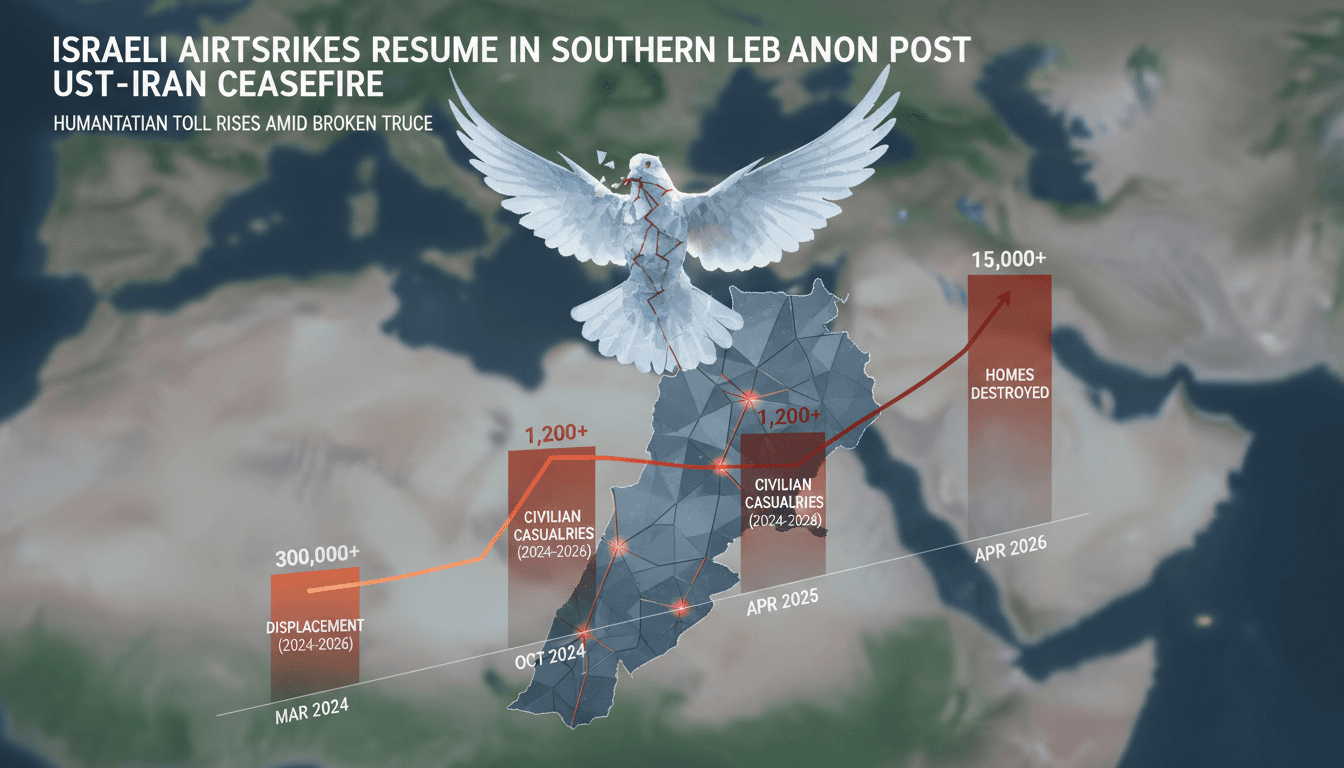
- The conflict has displaced over 1.2 million Lebanese since March, with civilian casualties rising sharply.
- Lebanon's President Joseph Aoun is seeking regional peace, while Hezbollah lawmakers threaten further regional responses if strikes continue.
The context you actually need
- The 2026 Lebanon war began on March 2, 2026, following Hezbollah's retaliation for the killing of Iran's supreme leader, escalating tensions in the region.
- Israel's military operations aim to dismantle Hezbollah's infrastructure and establish a buffer zone, complicating the ceasefire's effectiveness.
- The US-Iran ceasefire, mediated via Pakistan, explicitly excludes Lebanon, allowing Israel to continue its military operations against Hezbollah.
What's really happening
The renewed airstrikes by the Israeli Defense Forces (IDF) on southern Lebanon are a direct response to the ongoing conflict with Hezbollah, which has escalated since early March 2026. This conflict was triggered by Hezbollah's rocket attacks on Israel, a retaliation for the assassination of Iran's supreme leader. The situation has been further complicated by the US-Israel war on Iran, which began on February 28, 2026.
The Israeli government, led by Prime Minister Benjamin Netanyahu, has made it clear that the newly established two-week ceasefire with Iran does not apply to operations against Hezbollah. This stance allows the IDF to continue its military actions, including airstrikes and ground operations, aimed at dismantling Hezbollah's military capabilities. The airstrikes on April 8 targeted key Hezbollah positions near Tyre and Sidon, resulting in civilian casualties and further displacement of the Lebanese population.
As of now, the humanitarian crisis in Lebanon is dire, with over 1,500 individuals reported killed since the conflict began, including more than 130 children. The Lebanese state media has reported ongoing shelling, and the Lebanese army has warned displaced citizens against returning to the southern regions amid active strikes. This situation is exacerbated by the fact that the conflict has displaced over 1.2 million people, creating a significant humanitarian challenge.
The international community is watching closely, with calls for a ceasefire extension to Lebanon coming from figures like French President Macron. However, Hezbollah lawmakers have threatened a regional response if Israeli operations continue, indicating that the conflict could escalate further. The economic implications are also significant, as oil markets have surged despite the ceasefire, and the UAE exchanges have reported sustained capitalization erosion due to the ongoing war.
Who feels it first (and how)
- Residents of southern Lebanon: Facing immediate danger from airstrikes and displacement.
- Lebanese government officials: Under pressure to manage the humanitarian crisis and seek regional peace.
- Global oil consumers: Experiencing rising fuel prices due to market volatility linked to the conflict.
- Investors in the UAE: Feeling the impact of stock market losses exceeding $120 billion due to regional instability.
What to watch next
- Oil price fluctuations: Increased tensions could lead to higher oil prices, affecting global markets and consumer costs.
- Humanitarian aid responses: The international community's efforts to address the humanitarian crisis in Lebanon will be critical in shaping regional stability.
- Hezbollah's military responses: Any escalation in Hezbollah's retaliatory actions could further destabilize the region and impact global security.
The conflict has resulted in significant civilian casualties and displacement in Lebanon.
Continued Israeli military operations against Hezbollah will exacerbate the humanitarian crisis and regional tensions.
The long-term implications of the US-Iran ceasefire on the broader Middle East dynamics remain uncertain.
Frequently Asked Questions
- Why it matters?
- The ongoing conflict has significant implications for global oil markets and regional stability, impacting economies far beyond the immediate area.
- What happened (in 30 seconds)?
- On April 8, 2026, the Israeli Defense Forces renewed airstrikes on southern Lebanon, targeting Hezbollah positions despite a US-mediated ceasefire with Iran. The conflict has displaced over 1.2 million Lebanese since March, with civilian casualties rising sharply. Lebanon's President Joseph Aoun is seeking regional peace, while Hezbollah lawmakers threaten further regional responses if strikes continue.
- What's really happening?
- The renewed airstrikes by the Israeli Defense Forces (IDF) on southern Lebanon are a direct response to the ongoing conflict with Hezbollah, which has escalated since early March 2026. This conflict was triggered by Hezbollah's rocket attacks on Israel, a retaliation for the assassination of Iran's supreme leader. The situation has been further complicated by the US-Israel war on Iran, which began on February 28, 2026. The Israeli government, led by Prime Minister Benjamin Netanyahu, has made
- Who feels it first (and how)?
- Residents of southern Lebanon: Facing immediate danger from airstrikes and displacement. Lebanese government officials: Under pressure to manage the humanitarian crisis and seek regional peace. Global oil consumers: Experiencing rising fuel prices due to market volatility linked to the conflict. Investors in the UAE: Feeling the impact of stock market losses exceeding $120 billion due to regional instability.
- What to watch next?
- Oil price fluctuations: Increased tensions could lead to higher oil prices, affecting global markets and consumer costs. Humanitarian aid responses: The international community's efforts to address the humanitarian crisis in Lebanon will be critical in shaping regional stability. Hezbollah's military responses: Any escalation in Hezbollah's retaliatory actions could further destabilize the region and impact global security.
International coverage of politics, culture, and current affairs.
"BBC News is widely regarded as a reputable international news organization, known for its impartial tone and public service mandate."
— A47 Editor
At least 182 killed across Lebanon in large wave of Israeli strikes
A large wave of Israeli airstrikes across Lebanon has resulted in at least 182 fatalities, primarily affecting the southern suburbs of Beirut, southern Lebanon, and the eastern Bekaa Valley. This escalation occurred shortly after a ceasefire agreemen...
English-language reporting on Saudi politics, policy, and society.
"Saudi Gazette reflects mainstream Saudi institutional perspectives."
— A47 Editor
Israeli army renews strikes on southern Lebanon after Iran truce
Israel has resumed airstrikes on southern Lebanon, with Prime Minister Benjamin Netanyahu asserting that the recent US-Iran ceasefire agreement does not extend to Lebanon. The strikes follow a period of relative calm from Hezbollah, which has not con...