
UAE Air Defenses Successfully Intercept Iranian Missile and Drones
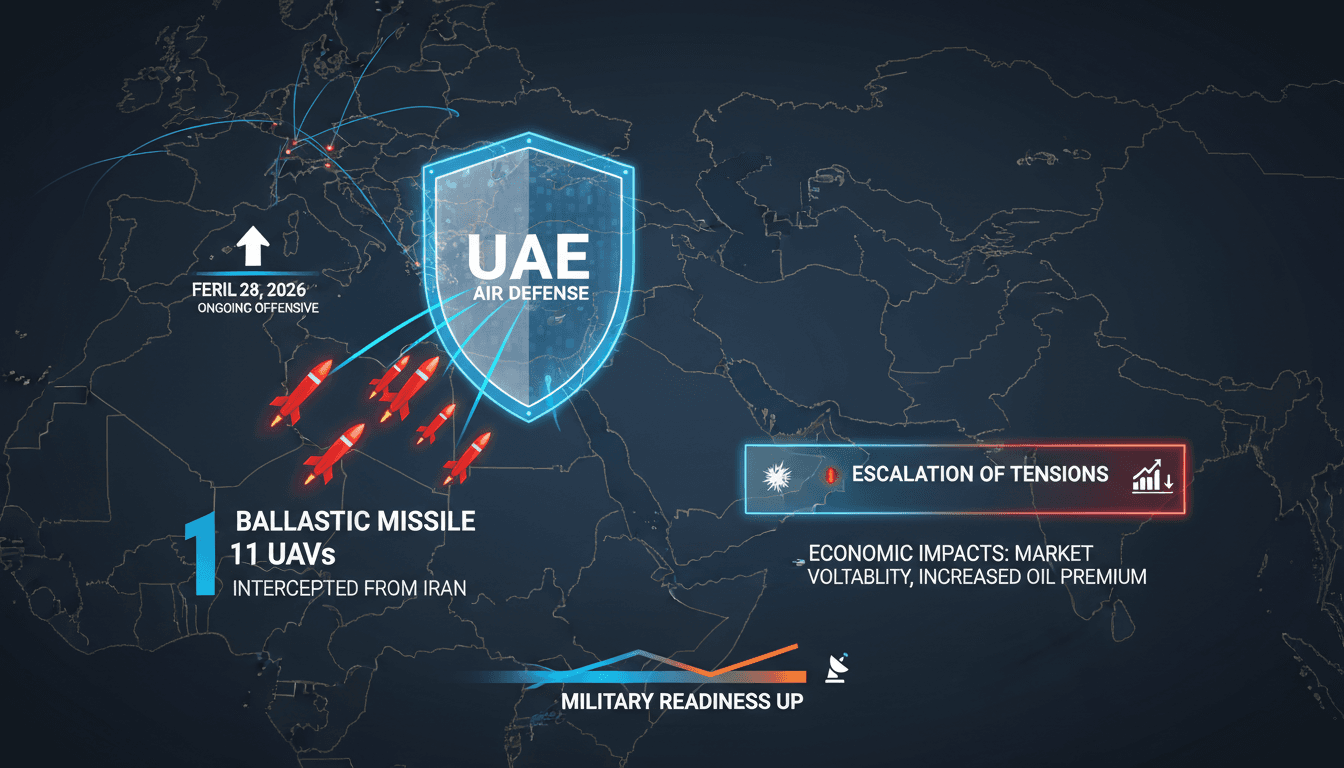
Here's what it means for you.
As tensions escalate in the Middle East, understanding the implications of military engagements can help you navigate potential market shifts and security concerns.
Why it matters
The ongoing conflict dynamics between Iran and the UAE could influence economic stability and investment sentiment in the region.
What happened (in 30 seconds)
- On April 7, 2026, UAE air defense systems intercepted one ballistic missile and eleven unmanned aerial vehicles launched from Iran.
- No casualties or damage were reported, as all threats were successfully neutralized.
- Since February 28, 2026, UAE defenses have intercepted a total of 2,221 UAVs, highlighting the scale of the ongoing Iranian offensive.
The context you actually need
- Iran's retaliatory campaign began after U.S. and Israeli strikes targeted its military infrastructure, escalating regional tensions.
- UAE air defenses, equipped with advanced systems like THAAD, have been crucial in protecting national sovereignty amidst these threats.
- Economic repercussions have already been felt, with stock market closures and significant losses exceeding $120 billion in Dubai and Abu Dhabi exchanges since the conflict began.
What's really happening
The April 7 interception of a ballistic missile and multiple drones by UAE air defenses marks a critical moment in an escalating conflict that began with Iranian retaliatory strikes against the UAE. This cycle of aggression was ignited by U.S. and Israeli military operations targeting Iranian missile sites and infrastructure, which prompted Iran to launch a series of attacks aimed at UAE territory. The UAE's Ministry of Defence has reported that since the onset of this campaign on February 28, 2026, they have successfully intercepted a staggering 520 ballistic missiles, 26 cruise missiles, and 2,221 unmanned aerial vehicles (UAVs).
The successful interception of these threats is a testament to the UAE's advanced military capabilities and the strategic importance of its air defense systems, which include the Terminal High Altitude Area Defense (THAAD) system. These systems are designed to neutralize aerial threats before they can cause harm, ensuring the safety of civilians and infrastructure. The absence of casualties or damage during the April 7 incident reflects the effectiveness of these defenses in safeguarding national interests.
However, the broader implications of this conflict extend beyond immediate military engagements. The ongoing hostilities have already led to significant economic repercussions, with stock market closures and a loss of over $120 billion in value across Dubai and Abu Dhabi exchanges. Investors are closely monitoring these developments, as continued military actions could further destabilize the region and impact economic growth.
The UAE's proactive stance in intercepting threats is part of a larger strategy to maintain regional stability and deter further aggression from Iran. The Ministry of Defence has reaffirmed its commitment to protecting national sovereignty and security, indicating that the UAE will remain vigilant in the face of ongoing threats. This sustained military readiness is crucial not only for national security but also for maintaining investor confidence in the region.
As the conflict evolves, the potential for escalation remains high, particularly if Iran perceives further military actions from the U.S. or its allies. The situation is fluid, and the UAE's ability to manage these threats will be critical in shaping the future security landscape of the Gulf region.
Who feels it first (and how)
- Investors in the UAE stock market, facing volatility and potential losses due to conflict-related disruptions.
- Residents of Dubai, who received emergency alerts and experienced heightened security measures during interceptions.
- Businesses reliant on stability in the region, which may face operational challenges or shifts in consumer confidence.
What to watch next
- Military engagements: Continued Iranian missile and drone attacks could lead to further interceptions, impacting regional security dynamics.
- Economic indicators: Monitor stock market performance in Dubai and Abu Dhabi for signs of investor sentiment and potential recovery or decline.
- International relations: Watch for diplomatic responses from the U.S. and allies, as their involvement could influence the trajectory of the conflict.
The UAE successfully intercepted one ballistic missile and eleven UAVs on April 7, 2026.
Ongoing military tensions will continue to affect economic stability and investor confidence in the UAE.
The long-term impact of these military engagements on regional geopolitics and economic recovery remains uncertain.
Frequently Asked Questions
- Why it matters?
- The ongoing conflict dynamics between Iran and the UAE could influence economic stability and investment sentiment in the region.
- What happened (in 30 seconds)?
- On April 7, 2026, UAE air defense systems intercepted one ballistic missile and eleven unmanned aerial vehicles launched from Iran. No casualties or damage were reported, as all threats were successfully neutralized. Since February 28, 2026, UAE defenses have intercepted a total of 2,221 UAVs, highlighting the scale of the ongoing Iranian offensive.
- What's really happening?
- The April 7 interception of a ballistic missile and multiple drones by UAE air defenses marks a critical moment in an escalating conflict that began with Iranian retaliatory strikes against the UAE. This cycle of aggression was ignited by U.S. and Israeli military operations targeting Iranian missile sites and infrastructure, which prompted Iran to launch a series of attacks aimed at UAE territory. The UAE's Ministry of Defence has reported that since the onset of this campaign on February 28, 2
- Who feels it first (and how)?
- Investors in the UAE stock market, facing volatility and potential losses due to conflict-related disruptions. Residents of Dubai, who received emergency alerts and experienced heightened security measures during interceptions. Businesses reliant on stability in the region, which may face operational challenges or shifts in consumer confidence.
- What to watch next?
- Military engagements: Continued Iranian missile and drone attacks could lead to further interceptions, impacting regional security dynamics. Economic indicators: Monitor stock market performance in Dubai and Abu Dhabi for signs of investor sentiment and potential recovery or decline. International relations: Watch for diplomatic responses from the U.S. and allies, as their involvement could influence the trajectory of the conflict.
English-language coverage focused on UAE news, government updates, and domestic affairs.
"Emirates 24|7 reflects a mainstream UAE editorial perspective with strong emphasis on official and domestic developments."
— A47 Editor
UAE Air Defences engage 1 ballistic missile and 11 UAV’s UAE Air Defences engage 1 ballistic missile and 11 UAV’s
On April 7, 2026, the UAE Ministry of Defence reported that its air defense systems successfully engaged one ballistic missile and 11 UAVs launched from Iran, continuing a pattern of military confrontations in the region. This incident adds to the to...
Arabic-language UAE newspaper coverage focused on domestic affairs, public institutions, business, society, and regional developments.
"Al Khaleej coverage generally reflects a mainstream UAE editorial lens with strong attention to public affairs, institutions, and regional developments."
— A47 Editor
الدفاعات الجوية الإماراتية تتصدى لصاروخ باليستي و11 مسيّرة إيرانية
On April 7, 2026, the Ministry of Defense announced that the UAE's air defenses successfully intercepted one ballistic missile and eleven drones launched from Iran. This incident highlights ongoing tensions in the region and the UAE's commitment to s...
UAE-based English-language newspaper covering regional politics, economics, and global affairs.
"The National reflects Emirati policy perspectives while maintaining international editorial standards."
— A47 Editor
UAE intercepts 12 ballistic missiles, two cruise missiles and 19 drones
On April 6, 2026, the United Arab Emirates (UAE) successfully intercepted twelve ballistic missiles, two cruise missiles, and 19 drones, reflecting ongoing military tensions in the region. This operation highlights the UAE's commitment to safeguardin...
UAE-based English-language newspaper covering regional politics, economics, and global affairs.
"The National reflects Emirati policy perspectives while maintaining international editorial standards."
— A47 Editor
UAE intercepts nine ballistic missiles, one cruise missile and 50 drones on Sunday
On April 5, 2026, the United Arab Emirates (UAE) successfully intercepted nine ballistic missiles, one cruise missile, and 50 drones, marking a significant escalation in military tensions in the region. This incident reflects the ongoing threats pose...