
IMF Warns Iran War Will Leave Lasting Damage on Global Economy
Here's what it means for you.
If you’re in a global market, expect increased volatility and potential supply chain disruptions.
Why it matters
The ongoing conflict in Iran threatens to derail global economic recovery, affecting everything from oil prices to consumer confidence.
What happened (in 30 seconds)
- On April 9, 2026, IMF Managing Director Kristalina Georgieva warned that the Iran war would leave permanent scars on the global economy.
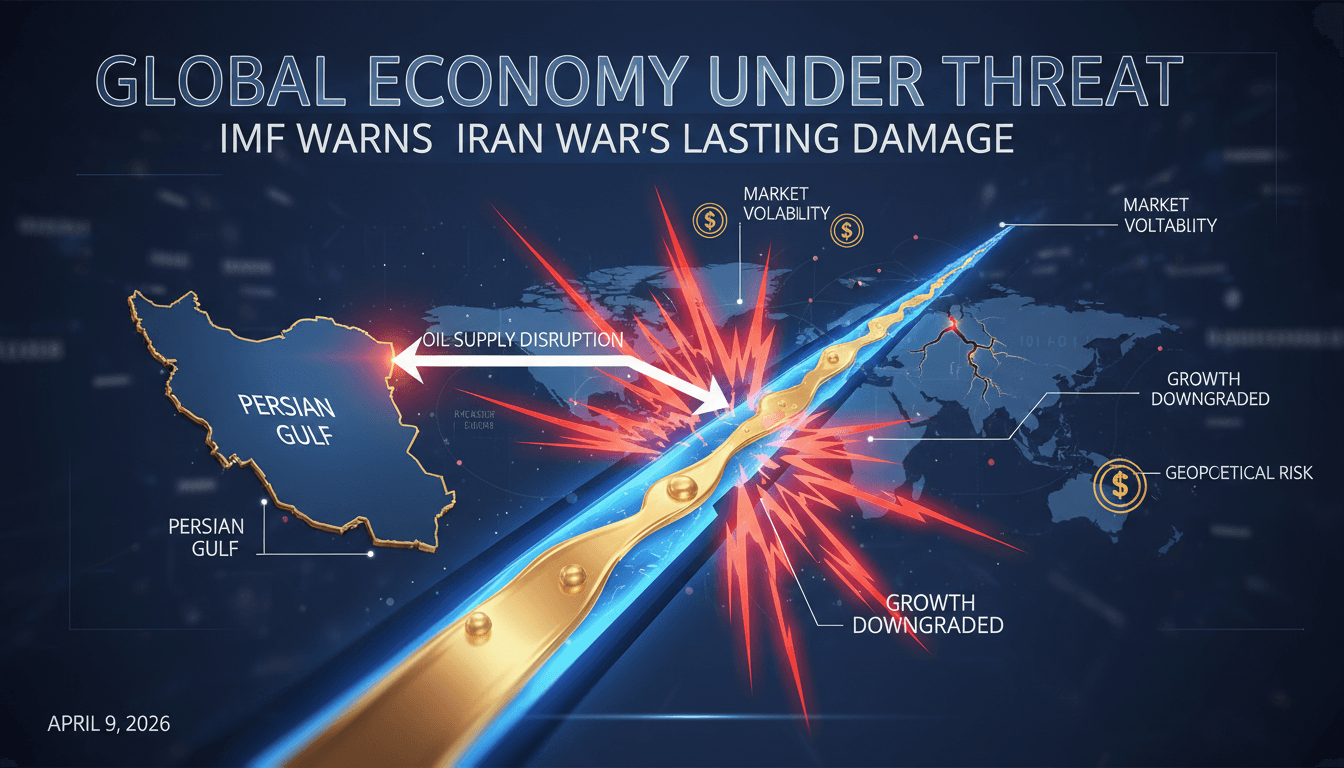
- The conflict, which began on February 28, has disrupted 20% of global oil supplies, causing Brent crude prices to surge over 50%.
- A fragile ceasefire was announced on April 7, but ongoing tensions raise concerns about future stability and economic forecasts.
The context you actually need
- The Iran war escalated after U.S.-Israeli strikes on Iranian targets and Iran's closure of the Strait of Hormuz, a critical shipping route for oil.
- Global market volatility has surged, with oil prices spiking and growth projections being downgraded from 3.1% to lower figures due to the conflict's impact.
- Dubai's economy faces significant threats, including an expatriate exodus and a slashed growth forecast, as the UAE grapples with the fallout from the war.
What's really happening
The Iran war, which erupted on February 28, 2026, has rapidly escalated into a geopolitical crisis with far-reaching economic implications. The initial U.S.-Israeli strikes on Iranian targets triggered a swift Iranian response, leading to the closure of the Strait of Hormuz. This strategic waterway is vital for global oil transport, accounting for approximately 20% of the world's oil supply. The closure has resulted in a significant drop in oil availability, with Brent crude prices soaring over 50% to $109 per barrel.
The International Monetary Fund (IMF) has responded to these developments by downgrading its global growth projections. Kristalina Georgieva's warning highlights that even if a durable peace is achieved, the scars from the conflict will linger. Infrastructure damage, supply chain disruptions, and eroded consumer and investor confidence are expected to hinder economic recovery for years to come. The IMF's reassessment comes at a time when previous forecasts had been optimistic, buoyed by advancements in AI and technology investments.
The fragile ceasefire announced on April 7 is merely a temporary reprieve. Ongoing tensions between the U.S. and Iran, coupled with the involvement of regional players like the Houthis, create a precarious situation. The potential for renewed hostilities remains high, which could further destabilize oil markets and global economies. As central banks signal a hold on interest rates to combat inflation, the risk of a recession looms larger, particularly in the U.S., where Goldman Sachs has raised the recession risk to 30%.
The economic fallout is not limited to oil prices. Countries reliant on oil imports are facing increased costs, which could lead to inflationary pressures worldwide. In Dubai, the repercussions are already evident, with a forecasted growth rate slashed to 1.5% for 2026 and significant losses in tourism revenues. The UAE government is implementing contingency fiscal measures to shield its economy from the fallout, but the long-term effects of the conflict are likely to reshape the region's economic landscape.
Who feels it first (and how)
- Oil-dependent countries: Increased costs and potential inflation.
- Expatriates in Dubai: Risk of job losses and reduced living standards.
- Investors: Heightened market volatility and uncertainty in equities and energy sectors.
- Tourism sectors: Significant revenue losses due to instability in the region.
What to watch next
- Oil price fluctuations: Continued volatility in oil prices will signal the market's reaction to geopolitical developments.
- Ceasefire durability: The stability of the ceasefire will impact global economic forecasts and investor confidence.
- IMF updates: Watch for updates from the IMF regarding growth projections and economic strategies in response to the conflict.
The Iran war has disrupted 20% of global oil supplies and caused significant price increases.
Economic growth forecasts will continue to be downgraded as the conflict persists.
The long-term impact on global supply chains and consumer confidence remains uncertain.
Frequently Asked Questions
- Why it matters?
- The ongoing conflict in Iran threatens to derail global economic recovery, affecting everything from oil prices to consumer confidence.
- What happened (in 30 seconds)?
- On April 9, 2026, IMF Managing Director Kristalina Georgieva warned that the Iran war would leave permanent scars on the global economy. The conflict, which began on February 28, has disrupted 20% of global oil supplies, causing Brent crude prices to surge over 50%. A fragile ceasefire was announced on April 7, but ongoing tensions raise concerns about future stability and economic forecasts.
- What's really happening?
- The Iran war, which erupted on February 28, 2026, has rapidly escalated into a geopolitical crisis with far-reaching economic implications. The initial U.S.-Israeli strikes on Iranian targets triggered a swift Iranian response, leading to the closure of the Strait of Hormuz. This strategic waterway is vital for global oil transport, accounting for approximately 20% of the world's oil supply. The closure has resulted in a significant drop in oil availability, with Brent crude prices soaring over
- Who feels it first (and how)?
- Oil-dependent countries: Increased costs and potential inflation. Expatriates in Dubai: Risk of job losses and reduced living standards. Investors: Heightened market volatility and uncertainty in equities and energy sectors. Tourism sectors: Significant revenue losses due to instability in the region.
- What to watch next?
- Oil price fluctuations: Continued volatility in oil prices will signal the market's reaction to geopolitical developments. Ceasefire durability: The stability of the ceasefire will impact global economic forecasts and investor confidence. IMF updates: Watch for updates from the IMF regarding growth projections and economic strategies in response to the conflict.
UK and international business news, economics, and corporate coverage.
"The Guardian’s business section covers finance and markets with a progressive editorial tone."
— A47 Editor
Head of IMF says Iran war will permanently scar global economy even if peace is reached
Kristalina Georgieva, the head of the International Monetary Fund (IMF), has warned that the ongoing conflict in Iran will have lasting negative impacts on the global economy, even if a peace agreement is reached. She highlighted that the war's scarr...
News from the United States including domestic politics, society, and culture.
"The Guardian is known for its progressive editorial stance and in-depth analysis, often advocating for social justice, environmental issues, and liberal values."
— A47 Editor
Head of IMF says Iran war will permanently scar global economy even if peace is reached
Kristalina Georgieva, the head of the International Monetary Fund (IMF), has warned that the ongoing conflict in Iran will have lasting negative impacts on the global economy, even if a peace agreement is reached. She highlighted that the war's scarr...
International coverage from The Guardian's global desks.
"The Guardian is known for its progressive editorial stance and in-depth analysis."
— A47 Editor
Head of IMF says Iran war will permanently scar global economy even if peace is reached
Kristalina Georgieva, the head of the International Monetary Fund (IMF), has warned that the ongoing conflict in Iran will have lasting negative impacts on the global economy, even if a peace agreement is reached. She highlighted that the war's effec...
UAE-based English-language newspaper covering regional politics, economics, and global affairs.
"The National reflects Emirati policy perspectives while maintaining international editorial standards."
— A47 Editor
IMF chief warns Iran war could lead to higher interest rates
The International Monetary Fund (IMF) chief, Kristalina Georgieva, has warned that the ongoing war in Iran could lead to higher interest rates globally, as the conflict disrupts economic stability. This warning comes amid rising inflation concerns li...