
High Court Upholds Metropolitan Police's Use of Live Facial Recognition Technology
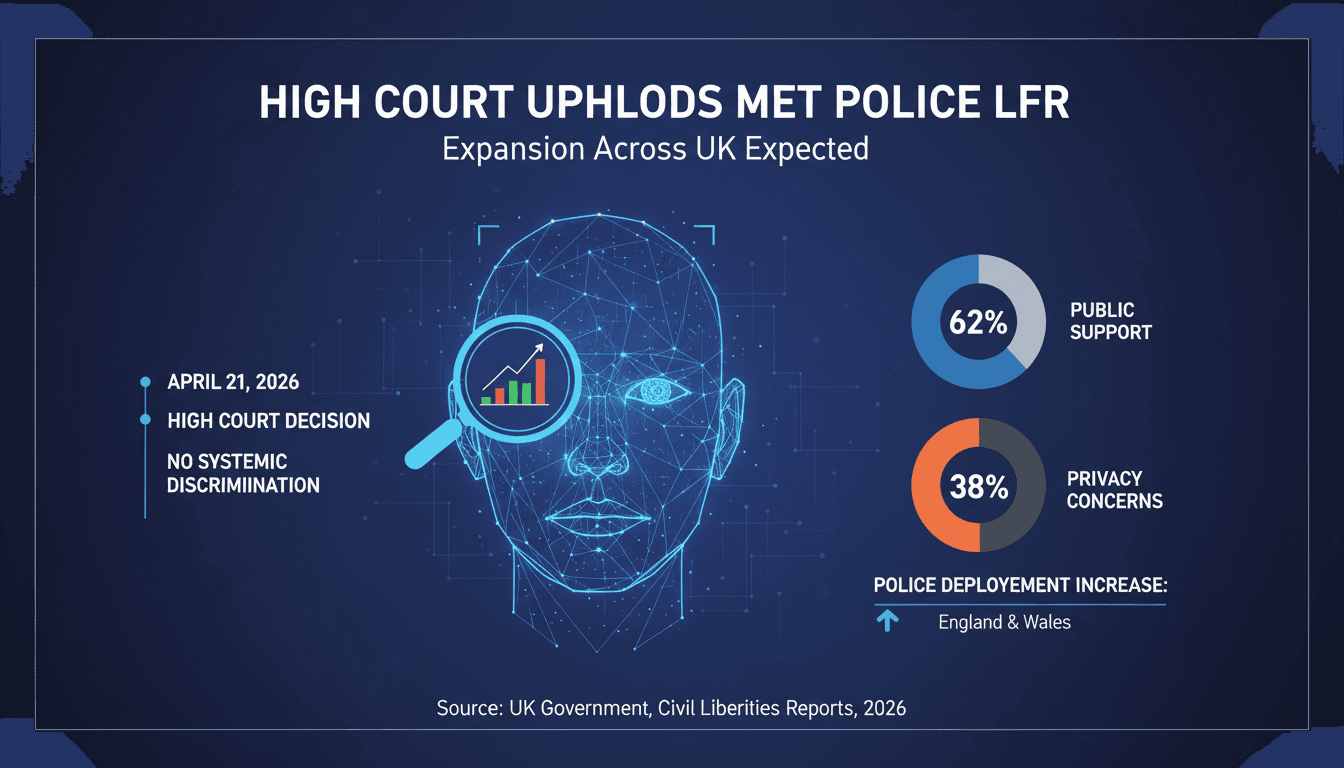
Here's what it means for you.
If you work in law enforcement or technology, this ruling could shape the future of surveillance practices and privacy standards globally.
Why it matters
The ruling sets a precedent for the use of facial recognition technology in policing, influencing similar debates worldwide.
What happened (in 30 seconds)
- On April 21, 2026, the High Court dismissed a challenge to the Metropolitan Police's live facial recognition (LFR) technology.
- Claimants Shaun Thompson and Silkie Carlo argued that LFR violated human rights and privacy laws, particularly affecting ethnic minorities.
- Judges ruled the technology lawful, finding no evidence of systemic discrimination or human rights violations.
The context you actually need
- LFR trials began in 2016 with variable accuracy rates, raising concerns about privacy and bias.
- Over three million faces were scanned annually by 2025, prompting scrutiny from privacy advocates.
- The ruling follows a misidentification incident involving Shaun Thompson, which highlighted potential flaws in LFR deployment.
What's really happening
The High Court's decision to uphold the Metropolitan Police's use of live facial recognition technology reflects a complex interplay of public safety, technological advancement, and civil liberties. The judges, Lord Justice Holgate and Mrs Justice Farbey, emphasized the lawfulness of the technology, dismissing claims of human rights violations and systemic discrimination. This ruling is significant not only for the UK but also for global discussions on surveillance and privacy.
The Metropolitan Police began deploying LFR in 2016, initially at events like the Notting Hill Carnival. Over the years, the technology has evolved, with the police claiming it has facilitated over 2,100 arrests since January 2024. However, the technology's accuracy and potential for bias have been contentious issues, particularly in ethnic minority communities. The claimants argued that LFR could lead to discriminatory practices, echoing concerns raised in previous legal challenges, such as the landmark South Wales Police case in 2020.
Despite these concerns, the High Court found that the deployment policies were adequate and that there was insufficient evidence to support claims of systemic discrimination. This ruling paves the way for the expansion of LFR technology across England and Wales, with the Policing Minister announcing an increase in LFR vans from 10 to 50 nationwide. The Metropolitan Police's Commissioner hailed the decision as a victory for public safety, indicating strong institutional support for the technology.
However, the ruling has sparked backlash from privacy advocates and the claimants themselves. Shaun Thompson has vowed to appeal, labeling LFR as "stop and search on steroids." This highlights a growing tension between law enforcement's push for advanced surveillance tools and the public's demand for privacy and civil liberties.
As LFR technology becomes more entrenched in policing practices, the implications for civil rights and public trust in law enforcement will be critical. The ruling not only legitimizes the use of LFR but also sets a precedent for future legal challenges, potentially influencing how similar technologies are deployed globally.
Who feels it first (and how)
- Law enforcement agencies: Increased reliance on LFR for crime prevention and public safety.
- Privacy advocates: Heightened concerns over surveillance and civil liberties.
- Ethnic minority communities: Potential for increased scrutiny and misidentification.
- Technology developers: Opportunities for growth in surveillance technology markets.
- Legal professionals: New precedents for future cases involving technology and civil rights.
What to watch next
- Expansion of LFR technology: Monitor how quickly and widely the Metropolitan Police deploys LFR vans across England and Wales, as this will indicate the technology's acceptance in policing.
- Public response and legal challenges: Watch for potential appeals and public protests against LFR, which could shape future policy and public sentiment.
- International implications: Observe how this ruling influences other countries' approaches to facial recognition technology and privacy laws.
The High Court ruled LFR technology lawful, allowing its continued use by the Metropolitan Police.
The expansion of LFR technology will lead to increased public scrutiny and potential legal challenges.
The long-term impact on public trust in law enforcement and the effectiveness of LFR in crime prevention remains uncertain.
Frequently Asked Questions
- Why it matters?
- The ruling sets a precedent for the use of facial recognition technology in policing, influencing similar debates worldwide.
- What happened (in 30 seconds)?
- On April 21, 2026, the High Court dismissed a challenge to the Metropolitan Police's live facial recognition (LFR) technology. Claimants Shaun Thompson and Silkie Carlo argued that LFR violated human rights and privacy laws, particularly affecting ethnic minorities. Judges ruled the technology lawful, finding no evidence of systemic discrimination or human rights violations.
- What's really happening?
- The High Court's decision to uphold the Metropolitan Police's use of live facial recognition technology reflects a complex interplay of public safety, technological advancement, and civil liberties. The judges, Lord Justice Holgate and Mrs Justice Farbey, emphasized the lawfulness of the technology, dismissing claims of human rights violations and systemic discrimination. This ruling is significant not only for the UK but also for global discussions on surveillance and privacy. The Metropolitan
- Who feels it first (and how)?
- Law enforcement agencies: Increased reliance on LFR for crime prevention and public safety. Privacy advocates: Heightened concerns over surveillance and civil liberties. Ethnic minority communities: Potential for increased scrutiny and misidentification. Technology developers: Opportunities for growth in surveillance technology markets. Legal professionals: New precedents for future cases involving technology and civil rights.
- What to watch next?
- Expansion of LFR technology: Monitor how quickly and widely the Metropolitan Police deploys LFR vans across England and Wales, as this will indicate the technology's acceptance in policing. Public response and legal challenges: Watch for potential appeals and public protests against LFR, which could shape future policy and public sentiment. International implications: Observe how this ruling influences other countries' approaches to facial recognition technology and privacy laws.
United Kingdom-focused news including local politics, business, and social issues.
"BBC News is widely regarded as a reputable international news organization, known for its impartial tone and public service mandate."
— A47 Editor
Court challenge over Met Police's use of live facial recognition lost
A court challenge regarding the Metropolitan Police's use of live facial recognition technology has been lost, raising concerns about the potential for arbitrary or discriminatory applications of the technology. The case highlighted significant publi...
UK and global business, economy, and markets coverage.
"Sky News is often seen as a center-right outlet in the UK, known for rolling news and breaking business stories."
— A47 Editor
Facial recognition being rolled out across UK
The UK government has announced the rollout of facial recognition systems across the country, following the dismissal of a legal challenge against the technology. The West Yorkshire Police have begun utilizing Live Facial Recognition (LFR) technology...
UK politics, business, and social stories.
"Sky News is a UK-based 24-hour channel known for fast-breaking news and political coverage."
— A47 Editor
Facial recognition being rolled out across UK
The UK government has announced the rollout of facial recognition systems across the country, following the dismissal of a legal challenge against the technology. The West Yorkshire Police have begun using Live Facial Recognition (LFR) technology for...