
Lebanon and Israel Engage in Direct Negotiations Independent of U.S.-Iran Talks
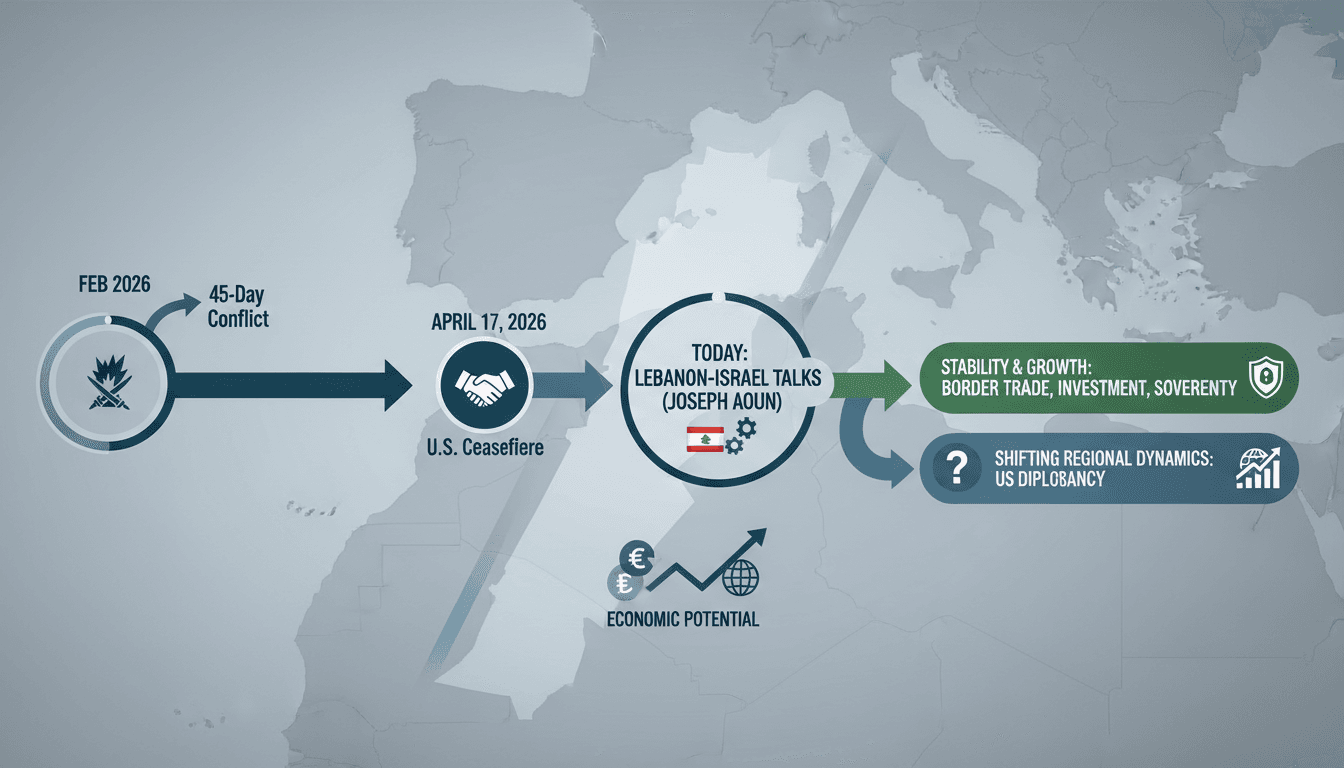
Here's what it means for you.
The ongoing negotiations between Lebanon and Israel could reshape regional stability and economic conditions, impacting global markets and trade dynamics.
Why it matters
This diplomatic breakthrough could signal a shift in Middle Eastern geopolitics, influencing energy prices and trade routes that affect global economies.
What happened (in 30 seconds)
- Lebanese President Joseph Aoun announced that negotiations with Israel will proceed independently of U.S.-Iran talks, aiming to halt hostilities and secure the border.
- A 10-day U.S.-brokered ceasefire began on April 17, 2026, allowing for good-faith discussions following a 45-day conflict that resulted in significant casualties.
- Simon Karam leads the Lebanese delegation, with a second round of talks scheduled for April 24, 2026, in Washington, D.C.
The context you actually need
- The recent conflict was triggered by Hezbollah's attack on Israel in March 2025, escalating tensions amid broader U.S.-Iran hostilities.
- Lebanon's reformist government has taken steps to reclaim sovereignty, including criminalizing Hezbollah's military operations and expelling Iranian influence.
- The U.S. has played a mediating role, facilitating the ceasefire and supporting Lebanon's efforts to stabilize its border with Israel.
What's really happening
The announcement of ongoing negotiations between Lebanon and Israel marks a significant pivot in Middle Eastern diplomacy, particularly as U.S.-Iran talks stall. The backdrop of this development is a 45-day conflict that began with Hezbollah's attack on Israel, which resulted in 2,294 reported Lebanese fatalities. This escalation prompted a U.S.-brokered ceasefire that has allowed for renewed discussions aimed at establishing a lasting peace.
Lebanon's current government, which came to power in early 2025, has taken a strong stance against Hezbollah, criminalizing its military operations and expelling Iranian diplomats. This shift reflects a broader desire to reclaim national sovereignty and stabilize the country after years of external influence and internal strife. The Lebanese delegation, led by former Ambassador Simon Karam, is now negotiating directly with Israel, signaling a willingness to engage in dialogue independent of Iranian interests.
The U.S. has facilitated these talks, with Secretary of State Marco Rubio playing a key role in coordinating discussions between Lebanese and Israeli officials. The ongoing negotiations are crucial for Lebanon, as they aim to halt hostilities and establish a framework for security along the international border. The Lebanese government is enforcing a state monopoly on arms, which is a critical step in reducing the influence of non-state actors like Hezbollah.
Despite the ceasefire, tensions remain high, with border incidents continuing to occur. However, the Lebanese authorities are focused on reinforcing state control and condemning any actions that undermine national sovereignty. The positive response from global markets, including a 7% surge in the Dubai Financial Market index, indicates that investors are optimistic about the potential for stability in the region.
This diplomatic initiative is not just about peace; it also has significant economic implications. A stable Lebanon could enhance trade routes and energy security in the region, benefiting countries like the UAE and impacting global oil prices. As the negotiations progress, the outcomes will likely influence broader geopolitical dynamics, particularly in relation to U.S.-Iran relations and the role of regional powers.
Who feels it first (and how)
- Lebanese citizens: Directly affected by the outcomes of negotiations, especially regarding security and economic stability.
- Investors in the Gulf region: Likely to see changes in market conditions and investment opportunities based on regional stability.
- Energy sector stakeholders: Changes in border security and peace could impact oil prices and trade routes.
What to watch next
- The outcome of the April 24 talks: This meeting will be crucial in determining the future of Lebanon-Israel relations and regional stability.
- Reactions from Hezbollah: Their response to the negotiations could influence the security situation along the border and impact the ceasefire's longevity.
- Global market reactions: Continued positive or negative shifts in stock markets and oil prices will indicate how investors perceive the evolving situation.
The negotiations are ongoing, and a ceasefire is currently in place.
Increased regional stability could lead to improved economic conditions in Lebanon and surrounding areas.
The long-term impact of Hezbollah's actions on the negotiations and regional security remains uncertain.
Frequently Asked Questions
- Why it matters?
- This diplomatic breakthrough could signal a shift in Middle Eastern geopolitics, influencing energy prices and trade routes that affect global economies.
- What happened (in 30 seconds)?
- Lebanese President Joseph Aoun announced that negotiations with Israel will proceed independently of U.S.-Iran talks, aiming to halt hostilities and secure the border. A 10-day U.S.-brokered ceasefire began on April 17, 2026, allowing for good-faith discussions following a 45-day conflict that resulted in significant casualties. Simon Karam leads the Lebanese delegation, with a second round of talks scheduled for April 24, 2026, in Washington, D.C.
- What's really happening?
- The announcement of ongoing negotiations between Lebanon and Israel marks a significant pivot in Middle Eastern diplomacy, particularly as U.S.-Iran talks stall. The backdrop of this development is a 45-day conflict that began with Hezbollah's attack on Israel, which resulted in 2,294 reported Lebanese fatalities. This escalation prompted a U.S.-brokered ceasefire that has allowed for renewed discussions aimed at establishing a lasting peace. Lebanon's current government, which came to power in
- Who feels it first (and how)?
- Lebanese citizens: Directly affected by the outcomes of negotiations, especially regarding security and economic stability. Investors in the Gulf region: Likely to see changes in market conditions and investment opportunities based on regional stability. Energy sector stakeholders: Changes in border security and peace could impact oil prices and trade routes.
- What to watch next?
- The outcome of the April 24 talks: This meeting will be crucial in determining the future of Lebanon-Israel relations and regional stability. Reactions from Hezbollah: Their response to the negotiations could influence the security situation along the border and impact the ceasefire's longevity. Global market reactions: Continued positive or negative shifts in stock markets and oil prices will indicate how investors perceive the evolving situation.
Regional coverage and analysis focused on politics, diplomacy, and business across the Middle East.
"Al-Monitor is known for analytical reporting on Middle East politics and policy developments."
— A47 Editor
Lebanon-Israel negotiations to continue even as Iran talks stall
Lebanon's President Joseph Aoun has confirmed that negotiations with Israel will proceed independently, despite stalled talks regarding Iran. He emphasized that Lebanon will take the lead in these discussions, asserting the nation's sovereignty and t...
Regional and international reporting focused on Middle Eastern politics, diplomacy, and economics.
"Asharq Al-Awsat is a Saudi-owned international newspaper reflecting mainstream Gulf political perspectives."
— A47 Editor
Lebanon President Says Israel Talks Aim to End Hostilities, Occupation
Lebanese President Joseph Aoun announced that ongoing negotiations with Israel aim to end hostilities and occupation, emphasizing Lebanon's sovereignty in the discussions. This comes as Lebanon prepares for a second round of direct talks in Washingto...
UAE-based English-language newspaper covering regional politics, economics, and global affairs.
"The National reflects Emirati policy perspectives while maintaining international editorial standards."
— A47 Editor
Lebanon forced into negotiations with Israel, says Geagea, as Hezbollah 'calls the shots'
Lebanon is currently engaged in negotiations with Israel, a move described by political leader Samir Geagea as a forced decision influenced by Hezbollah's dominance in the region. This situation reflects the complex dynamics of Lebanese politics and ...
Regional and international reporting focused on Middle Eastern politics, diplomacy, and economics.
"Asharq Al-Awsat is a Saudi-owned international newspaper reflecting mainstream Gulf political perspectives."
— A47 Editor
Lebanon President, PM Discuss Readiness for Israel Talks
Lebanese President Joseph Aoun and Prime Minister Nawaf Salam have discussed their readiness to engage in negotiations with Israel, emphasizing the importance of these talks in addressing longstanding tensions between the two nations. The discussions...