
U.S. Vice President JD Vance to Lead Iran Negotiations in Islamabad Following Cease-Fire
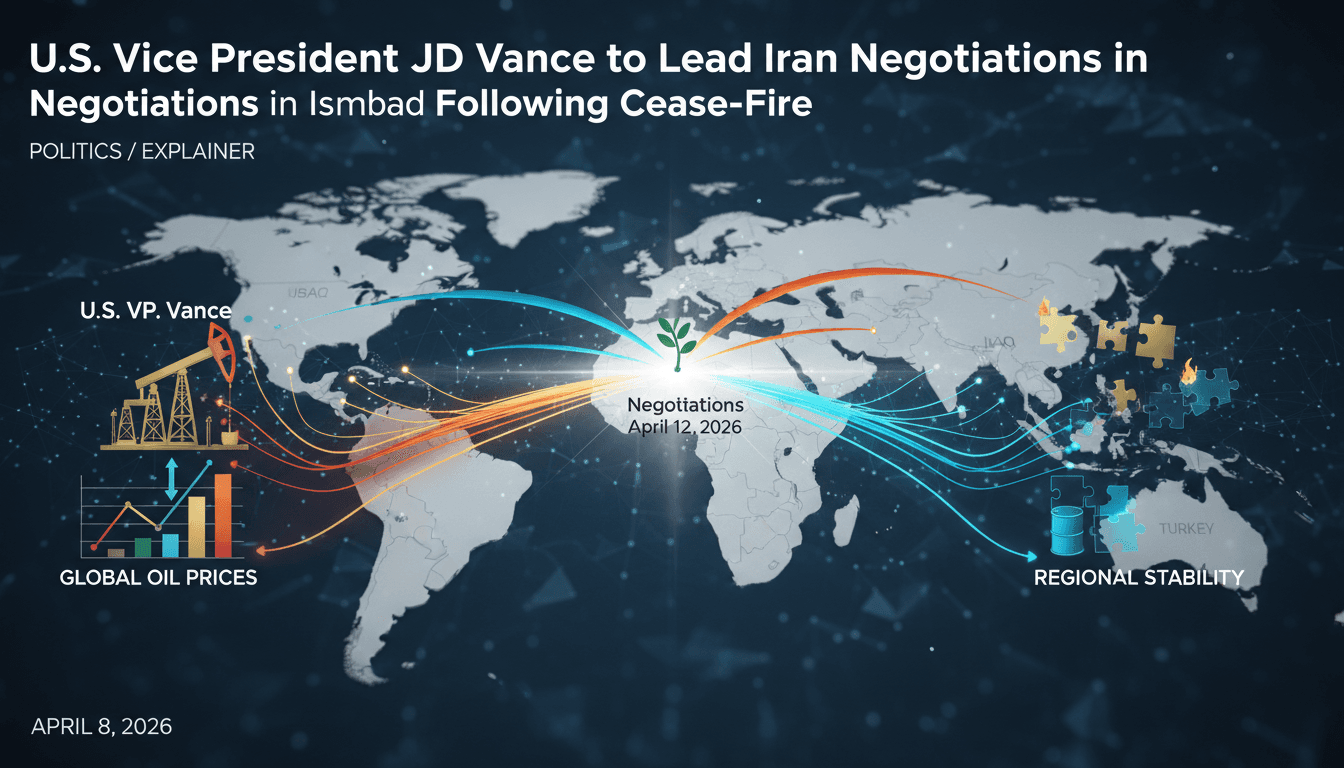
Here's what it means for you.
The outcome of these negotiations could significantly impact global oil prices and trade routes, affecting your cost of living and business operations.
Why it matters
The U.S.-Iran negotiations could reshape geopolitical dynamics in the Middle East, influencing energy markets and international relations.
What happened (in 30 seconds)
- April 8, 2026: The White House announced Vice President JD Vance will lead U.S. negotiations with Iran in Islamabad.
- Cease-fire: A conditional two-week cease-fire was established amid ongoing tensions over the Strait of Hormuz and Iranian nuclear activities.
- Market reaction: Following the cease-fire announcement, global crude oil prices fell below $100 per barrel, while U.S. stock indices surged.
The context you actually need
- Failed negotiations: The 2026 U.S.-Iran conflict escalated from failed nuclear negotiations, leading to military strikes initiated on February 28, 2026.
- Regional tensions: The conflict involves multiple actors, including Israel and Hezbollah, complicating the diplomatic landscape.
- Pakistan's role: Pakistan has emerged as a mediator, facilitating backchannel diplomacy that led to the current cease-fire.
What's really happening
The recent announcement of U.S.-Iran negotiations in Islamabad marks a critical juncture in a conflict that has escalated since February 2026. The U.S. military's involvement began after Israel's strikes on Iranian targets, which were perceived as a direct threat to regional stability. President Trump's ultimatum for Iran to cease uranium enrichment and reopen the Strait of Hormuz set the stage for military actions that targeted Iranian infrastructure, including Kharg Island.
The cease-fire, while fragile, represents a potential thaw in relations, with Vice President JD Vance at the helm of the U.S. delegation. His team includes notable figures such as Steve Witkoff and Jared Kushner, indicating a high-stakes diplomatic effort. The negotiations are not just about halting military actions; they also aim to address broader issues, including Iran's nuclear ambitions and its influence in Lebanon through Hezbollah.
The economic implications of these talks are significant. The immediate market reaction saw a plunge in global crude oil prices, dropping below $100 per barrel, reflecting investor optimism about de-escalation. This drop is crucial for economies heavily reliant on oil, including those in the Gulf region. However, the situation remains precarious, as the cease-fire is conditional and dependent on Iran's good faith in negotiations.
Moreover, the U.S. stock market responded positively, with the Dow Jones and S&P 500 indices rising significantly. This uptick indicates investor confidence in a potential resolution that could stabilize the region and, by extension, global markets. However, skepticism remains, particularly regarding the security of the negotiation venue in Pakistan and the ongoing threats posed by drone and missile attacks on energy facilities in the UAE.
The negotiations also highlight the complex interplay of regional actors. While Gulf states have endorsed the cease-fire, Israel's dissatisfaction over the late notification of the talks underscores the delicate balance of power in the region. Iranian officials have insisted on including Lebanon in the discussions, which could further complicate the negotiations.
In summary, the U.S.-Iran talks are a pivotal moment that could redefine not just U.S.-Iran relations but also the broader geopolitical landscape in the Middle East. The outcomes will likely have lasting implications for energy markets, regional stability, and international relations.
Who feels it first (and how)
- Energy sector: Companies involved in oil production and distribution will experience immediate impacts on pricing and supply chains.
- Investors: Stock market investors will feel the effects of market volatility and potential shifts in energy stocks.
- Consumers: Individuals may see changes in fuel prices and overall cost of living based on fluctuations in oil prices.
- Regional governments: Countries in the Gulf region will monitor the situation closely, as their economies are heavily dependent on oil exports.
What to watch next
- Negotiation outcomes: Monitor the results of the talks in Islamabad, as they will dictate the future of U.S.-Iran relations and regional stability.
- Oil price fluctuations: Keep an eye on global crude oil prices, as any significant changes could affect consumer costs and economic forecasts.
- Regional security developments: Watch for any escalations or de-escalations in military actions involving Iran, Israel, and Hezbollah, as these will influence diplomatic efforts.
The U.S. and Iran are engaged in negotiations mediated by Pakistan following a cease-fire.
The outcomes of these negotiations will impact global oil prices and regional stability.
The long-term effectiveness of the cease-fire and the willingness of Iran to engage in good faith negotiations remain uncertain.
Frequently Asked Questions
- Why it matters?
- The U.S.-Iran negotiations could reshape geopolitical dynamics in the Middle East, influencing energy markets and international relations.
- What happened (in 30 seconds)?
- April 8, 2026: The White House announced Vice President JD Vance will lead U.S. negotiations with Iran in Islamabad. Cease-fire: A conditional two-week cease-fire was established amid ongoing tensions over the Strait of Hormuz and Iranian nuclear activities. Market reaction: Following the cease-fire announcement, global crude oil prices fell below $100 per barrel, while U.S. stock indices surged.
- What's really happening?
- The recent announcement of U.S.-Iran negotiations in Islamabad marks a critical juncture in a conflict that has escalated since February 2026. The U.S. military's involvement began after Israel's strikes on Iranian targets, which were perceived as a direct threat to regional stability. President Trump's ultimatum for Iran to cease uranium enrichment and reopen the Strait of Hormuz set the stage for military actions that targeted Iranian infrastructure, including Kharg Island. The cease-fire, wh
- Who feels it first (and how)?
- Energy sector: Companies involved in oil production and distribution will experience immediate impacts on pricing and supply chains. Investors: Stock market investors will feel the effects of market volatility and potential shifts in energy stocks. Consumers: Individuals may see changes in fuel prices and overall cost of living based on fluctuations in oil prices. Regional governments: Countries in the Gulf region will monitor the situation closely, as their economies are heavily dependent
- What to watch next?
- Negotiation outcomes: Monitor the results of the talks in Islamabad, as they will dictate the future of U.S.-Iran relations and regional stability. Oil price fluctuations: Keep an eye on global crude oil prices, as any significant changes could affect consumer costs and economic forecasts. Regional security developments: Watch for any escalations or de-escalations in military actions involving Iran, Israel, and Hezbollah, as these will influence diplomatic efforts.
U.S. business news, corporate developments, and economy.
"The Wall Street Journal is respected for deep financial and economic reporting with a center-right editorial perspective."
— A47 Editor
Vance to Take the Lead on Iran Talks
A two-week ceasefire agreement has been reached between the United States and Iran, leading to a surge in U.S. stocks and a significant drop in oil prices. This development follows President Trump's announcement, which aims to de-escalate military te...
Regional coverage and analysis focused on politics, diplomacy, and business across the Middle East.
"Al-Monitor is known for analytical reporting on Middle East politics and policy developments."
— A47 Editor
Vance says up to Iran if it wants truce to 'fall apart' over Lebanon
US Vice President JD Vance urged Iran to maintain the fragile ceasefire in Lebanon, emphasizing that the continuation of hostilities could jeopardize peace efforts in the region. This statement comes ahead of Vance's scheduled talks with Iranian offi...
Regional coverage and analysis focused on politics, diplomacy, and business across the Middle East.
"Al-Monitor is known for analytical reporting on Middle East politics and policy developments."
— A47 Editor
US did not agree that ceasefire would cover Lebanon, Vance says
U.S. Vice President JD Vance clarified that the recent ceasefire agreement between the United States and Iran does not extend to Lebanon, despite Tehran's negotiators believing otherwise. This misunderstanding was addressed during a press conference ...
Macro commentary, policy analysis, growth/inflation themes, and global outlooks.
"Contextual macro coverage that complements day-to-day market headlines."
— A47 Editor
Vance addresses Iran ceasefire confusion ahead of weekend talks
U.S. Special Envoy Vance has addressed the confusion surrounding the recent ceasefire agreement with Iran, which is set to facilitate upcoming peace talks. The ceasefire, announced by President Trump, aims to halt military actions and provide a frame...