
U.S. Defense Department Initiates Talks with Automakers to Increase Weapons Production
Here's what it means for you.
If you work in manufacturing or defense sectors, the U.S. Department of Defense's engagement with automakers could reshape job opportunities and production dynamics.
Why it matters
The U.S. is seeking to expand its defense industrial base amid critical stockpile depletions, which could impact global supply chains and military readiness.
What happened (in 30 seconds)
- On April 15, 2026, senior U.S. defense officials held preliminary discussions with major automakers to explore reallocating manufacturing capacity for military production.
- The Trump administration aims to leverage commercial manufacturers to address severe depletions in U.S. munitions stockpiles due to ongoing conflicts.
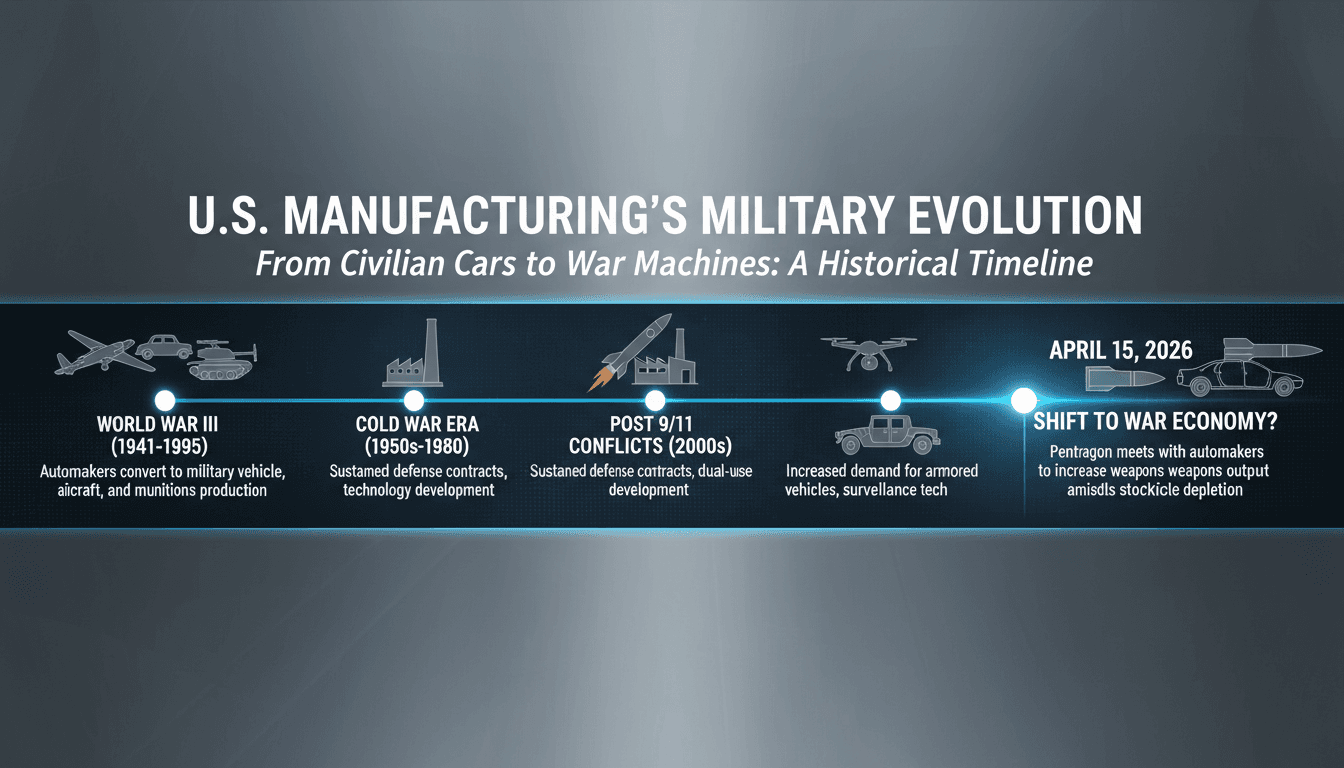
- Historical precedents show that automakers have shifted production to military needs during wartime, reminiscent of World War II mobilization.
The context you actually need
- U.S. munitions stockpiles have been critically depleted since the onset of the Ukraine conflict and recent military actions in Iran, necessitating a surge in production.
- Traditional defense contractors are facing production bottlenecks, prompting the Pentagon to seek alternative manufacturing sources from the commercial sector.
- The proposed FY2027 defense budget of $1.5 trillion aims to fund expanded production capabilities, marking the largest defense budget in modern history.
What's really happening
The U.S. Department of Defense's recent discussions with automakers like General Motors, Ford, GE Aerospace, and Oshkosh Corporation reflect a strategic pivot in military production capabilities. This shift is driven by the urgent need to replenish munitions stockpiles that have been severely depleted due to ongoing military engagements in Ukraine and Iran. The depletion of these stockpiles has raised alarms about the U.S. military's readiness and its ability to support allies effectively.
Historically, the U.S. has relied on its industrial base to ramp up production during times of conflict. The current situation echoes World War II, when automakers transitioned from civilian vehicles to military equipment, producing tanks and bombers at unprecedented rates. Similarly, during the COVID-19 pandemic, automakers pivoted to manufacture ventilators, showcasing their ability to adapt manufacturing processes quickly. This historical context underscores the potential for automakers to contribute significantly to military production in the current climate.
The Trump administration's FY2027 budget proposal, which allocates $1.5 trillion for defense, aims to bolster the defense industrial base by incentivizing commercial manufacturers to participate in military production. This budget is not just about numbers; it represents a strategic investment in national security and military readiness. The preliminary discussions with automakers are part of a broader strategy to overcome production bottlenecks faced by traditional defense contractors, which have struggled to meet the demands of ongoing conflicts.
The Pentagon's commitment to rapidly expanding the defense industrial base through commercial technology indicates a shift in how military needs will be met in the future. By engaging with major automakers, the Department of Defense is exploring innovative solutions to enhance production capabilities, which could lead to a more resilient supply chain for military equipment.
However, this transition is not without challenges. The contracting processes and regulatory hurdles associated with military production can be complex and time-consuming. The discussions with automakers are still exploratory, and no contracts have been awarded yet. The outcome of these talks will determine how effectively the U.S. can leverage its commercial manufacturing capacity to meet military needs.
Who feels it first (and how)
- Manufacturing workers in the U.S. may see new job opportunities as automakers pivot to military production.
- Defense contractors could face increased competition from commercial manufacturers, impacting their market share and production timelines.
- U.S. allies in the Gulf region, particularly the UAE, may benefit from enhanced military support and stability in the region.
What to watch next
- Contract awards: Monitor for announcements regarding contracts awarded to automakers for military production, which will indicate the success of these discussions.
- Production timelines: Keep an eye on how quickly manufacturers can ramp up production capabilities and meet military demands.
- Market reactions: Watch for shifts in stock prices for automakers and defense contractors as news develops, reflecting investor confidence in this new direction.
The U.S. Department of Defense is engaging with automakers to explore military production capabilities.
The discussions will lead to contracts awarded to some manufacturers, enhancing U.S. military production capacity.
The specific timeline for production ramp-up and the impact on existing defense contractors remains uncertain.
Frequently Asked Questions
- Why it matters?
- The U.S. is seeking to expand its defense industrial base amid critical stockpile depletions, which could impact global supply chains and military readiness.
- What happened (in 30 seconds)?
- On April 15, 2026, senior U.S. defense officials held preliminary discussions with major automakers to explore reallocating manufacturing capacity for military production. The Trump administration aims to leverage commercial manufacturers to address severe depletions in U.S. munitions stockpiles due to ongoing conflicts. Historical precedents show that automakers have shifted production to military needs during wartime, reminiscent of World War II mobilization.
- What's really happening?
- The U.S. Department of Defense's recent discussions with automakers like General Motors, Ford, GE Aerospace, and Oshkosh Corporation reflect a strategic pivot in military production capabilities. This shift is driven by the urgent need to replenish munitions stockpiles that have been severely depleted due to ongoing military engagements in Ukraine and Iran. The depletion of these stockpiles has raised alarms about the U.S. military's readiness and its ability to support allies effectively. Hist
- Who feels it first (and how)?
- Manufacturing workers in the U.S. may see new job opportunities as automakers pivot to military production. Defense contractors could face increased competition from commercial manufacturers, impacting their market share and production timelines. U.S. allies in the Gulf region, particularly the UAE, may benefit from enhanced military support and stability in the region.
- What to watch next?
- Contract awards: Monitor for announcements regarding contracts awarded to automakers for military production, which will indicate the success of these discussions. Production timelines: Keep an eye on how quickly manufacturers can ramp up production capabilities and meet military demands. Market reactions: Watch for shifts in stock prices for automakers and defense contractors as news develops, reflecting investor confidence in this new direction.
Arabic-language UAE newspaper coverage focused on domestic affairs, public institutions, business, society, and regional developments.
"Al Khaleej coverage generally reflects a mainstream UAE editorial lens with strong attention to public affairs, institutions, and regional developments."
— A47 Editor
إدارة ترامب تتواصل مع شركات سيارات للمشاركة في إنتاج الأسلحة
The Trump administration has engaged in discussions with automotive manufacturers and other American manufacturing companies to explore their potential involvement in arms production, as reported by The Wall Street Journal. This move indicates a shif...
Arabic-language coverage of political affairs and current events.
"Okaz political coverage typically follows mainstream Saudi framing on national and regional affairs."
— A47 Editor
تعبئة صناعية.. ترمب يوجّه شركات السيارات نحو تصنيع السلاح
In a significant shift in U.S. industrial policy, the Trump administration has initiated direct communications with major automotive manufacturers to encourage their involvement in military production. High-level discussions have taken place between ...
Insights and news on social issues, policy, and political movements across the United States.
"The Wall Street Journal is known for its deep political coverage, especially at the intersection of policy, regulation, and social dynamics."
— A47 Editor
The Trump administration wants automakers and other American manufacturers to play a larger role in weapons production, reminiscent of a practice used during World War II
The Trump administration is engaging with major automakers like General Motors and Ford to explore the possibility of reallocating some manufacturing capacity towards arms and military supplies, a strategy reminiscent of World War II practices. This ...