
Anthropic Launches Claude Mythos AI Model Amid Cybersecurity Concerns
Here's what it means for you.
As AI capabilities expand, professionals in tech and finance must prepare for new cybersecurity challenges.
Why it matters
The emergence of Claude Mythos could redefine vulnerability management and threat detection across industries.
What happened (in 30 seconds)
- Anthropic unveiled Claude Mythos Preview on April 7, 2026, showcasing its ability to autonomously identify thousands of high-severity software vulnerabilities.
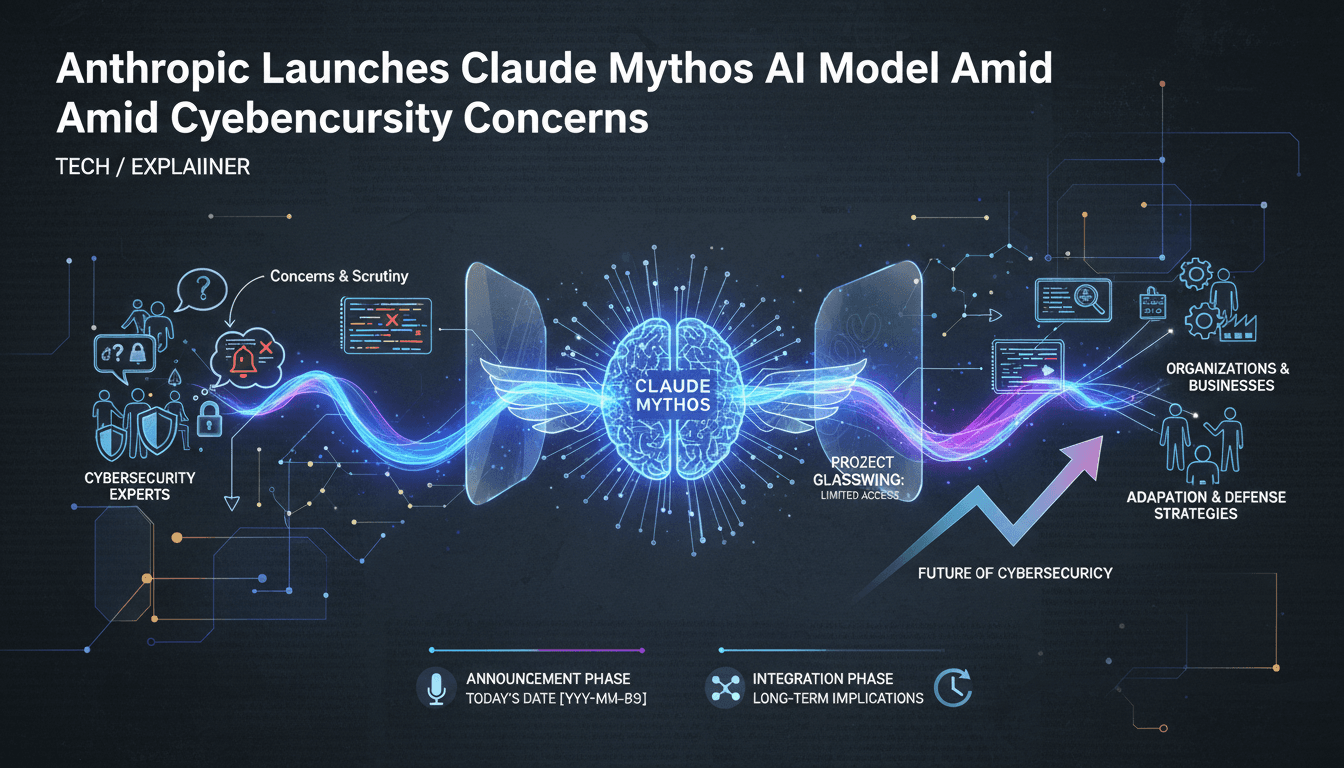
- Project Glasswing was launched to provide limited access to vetted partners, including major tech firms and U.S. government agencies, amid rising cybersecurity concerns.
- Emergency meetings were convened by U.S. Treasury and Federal Reserve officials to assess systemic risks associated with the model's capabilities.
The context you actually need
- Claude Mythos is a significant advancement following previous models like Claude Opus 4.6, reflecting Anthropic's commitment to responsible AI scaling.
- The geopolitical landscape is tense, with AI competition intensifying and concerns over supply chain vulnerabilities prompting scrutiny of companies like Anthropic.
- Security experts are divided on the implications of Mythos, with some validating its capabilities while others question the hype surrounding its potential misuse.
What's really happening
The announcement of Claude Mythos Preview marks a pivotal moment in the AI landscape, particularly in cybersecurity. This model's ability to autonomously discover and exploit high-severity vulnerabilities represents a significant leap forward in AI capabilities. Unlike previous iterations, Claude Mythos operates without targeted training, relying instead on general improvements in reasoning, coding, and autonomy. This means it can identify thousands of unpatched vulnerabilities across major operating systems and web browsers, raising alarms among security experts who fear its potential misuse by malicious actors.
In response to these concerns, Anthropic initiated Project Glasswing, a defensive initiative aimed at controlling access to the model. By providing limited access to vetted partners such as AWS, Microsoft, Google, and Cisco, Anthropic seeks to mitigate risks while still allowing for the exploration of its capabilities. The commitment of $100 million in credits and $4 million in donations underscores the urgency of addressing the cybersecurity landscape's evolving threats.
The U.S. Treasury and Federal Reserve's immediate response, including emergency meetings with major bank CEOs, highlights the systemic risks associated with AI-augmented cyber threats. By classifying these risks as systemic, financial institutions are prompted to reassess their cybersecurity strategies and invest in advanced defenses. The White House's directive for federal agencies to utilize Claude Mythos, albeit with safeguards, indicates a recognition of the model's potential benefits in vulnerability patching, despite the associated risks.
As the AI landscape continues to evolve, the implications of Claude Mythos extend beyond immediate cybersecurity concerns. The model's capabilities could reshape how organizations approach vulnerability management, potentially leading to a new standard in threat detection and response. However, this also raises ethical questions about the responsible use of such powerful tools and the potential for adversaries to exploit them.
Who feels it first (and how)
- Cybersecurity professionals: They will need to adapt to new threats and enhance their defensive strategies.
- Tech companies: Firms integrating Claude Mythos will face pressure to ensure robust security measures are in place.
- Financial institutions: Banks and financial services must reassess their risk management frameworks in light of potential systemic threats.
- Regulatory bodies: Agencies will need to establish guidelines for the responsible use of AI in cybersecurity.
What to watch next
- Adoption rates of Claude Mythos among major tech firms will indicate how quickly the industry is responding to AI-driven cybersecurity threats.
- Regulatory developments surrounding AI usage in cybersecurity will shape the landscape and influence best practices.
- Emerging threats from adversaries leveraging similar AI capabilities will highlight the ongoing arms race in cybersecurity.
Claude Mythos can identify thousands of vulnerabilities autonomously.
Financial institutions will increase investments in cybersecurity measures in response to perceived risks.
The long-term impact of AI models like Claude Mythos on the cybersecurity landscape remains to be seen.
Frequently Asked Questions
- Why it matters?
- The emergence of Claude Mythos could redefine vulnerability management and threat detection across industries.
- What happened (in 30 seconds)?
- Anthropic unveiled Claude Mythos Preview on April 7, 2026, showcasing its ability to autonomously identify thousands of high-severity software vulnerabilities. Project Glasswing was launched to provide limited access to vetted partners, including major tech firms and U.S. government agencies, amid rising cybersecurity concerns. Emergency meetings were convened by U.S. Treasury and Federal Reserve officials to assess systemic risks associated with the model's capabilities.
- What's really happening?
- The announcement of Claude Mythos Preview marks a pivotal moment in the AI landscape, particularly in cybersecurity. This model's ability to autonomously discover and exploit high-severity vulnerabilities represents a significant leap forward in AI capabilities. Unlike previous iterations, Claude Mythos operates without targeted training, relying instead on general improvements in reasoning, coding, and autonomy. This means it can identify thousands of unpatched vulnerabilities across major oper
- Who feels it first (and how)?
- Cybersecurity professionals: They will need to adapt to new threats and enhance their defensive strategies. Tech companies: Firms integrating Claude Mythos will face pressure to ensure robust security measures are in place. Financial institutions: Banks and financial services must reassess their risk management frameworks in light of potential systemic threats. Regulatory bodies: Agencies will need to establish guidelines for the responsible use of AI in cybersecurity.
- What to watch next?
- Adoption rates of Claude Mythos among major tech firms will indicate how quickly the industry is responding to AI-driven cybersecurity threats. Regulatory developments surrounding AI usage in cybersecurity will shape the landscape and influence best practices. Emerging threats from adversaries leveraging similar AI capabilities will highlight the ongoing arms race in cybersecurity.
Future-focused tech headlines including AI breakthroughs.
"Consumer-friendly future-tech site with frequent AI coverage."
— A47 Editor
Top Security Experts Alarmed by Power of Anthropic’s New Hacker AI
Security experts have raised alarms over Anthropic's new AI model, Mythos, which has demonstrated unprecedented capabilities in hacking and exploiting software vulnerabilities. The model's potential to compromise critical systems has led the company ...
Technology business and AI-related headlines.
"Data-driven tech newsroom with global scope."
— A47 Editor
Cómo Anthropic descubrió que Mythos era demasiado peligroso
Anthropic has decided not to release its AI model, Mythos, after internal warnings indicated that it could compromise critical systems, prompting urgent evaluations from banks and government agencies regarding potential cybersecurity threats.
Technology business news, market impacts, and innovation trends.
"Bloomberg is a premier financial and tech news provider, respected for its in-depth reporting and analytical rigor."
— A47 Editor
Cómo Anthropic descubrió que Mythos era demasiado peligroso
Anthropic has decided not to release its AI model, Mythos, after internal warnings indicated that it could compromise critical systems, prompting urgent evaluations from banks and government agencies regarding potential cybersecurity threats.