
OpenAI Enhances Agents SDK with New Sandboxing Features for Enterprise Applications
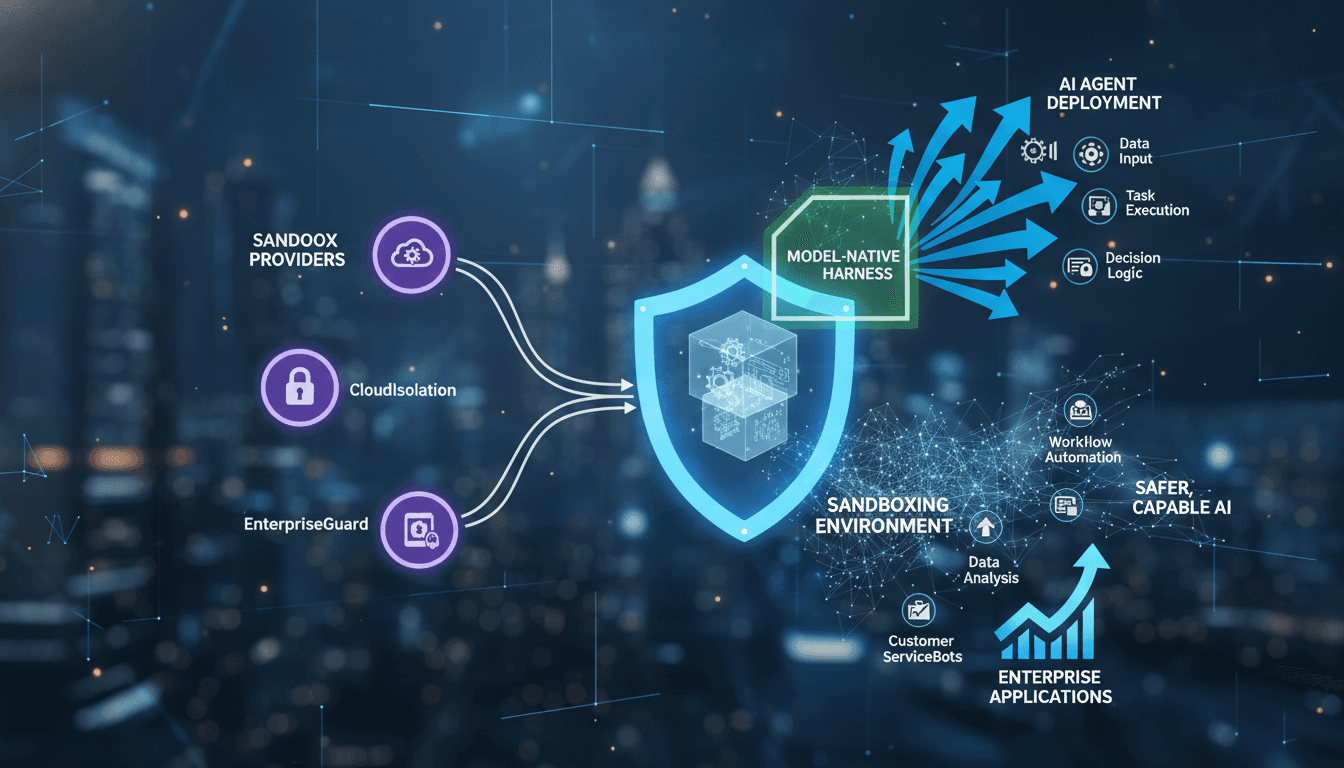
Here's what it means for you.
If you're in tech or business, this update could enhance the safety and efficiency of AI applications in your organization.
Why it matters
The update addresses critical enterprise needs for secure and scalable AI agent deployment, impacting how businesses integrate AI into their operations.
What happened (in 30 seconds)
- OpenAI released an update to its Agents SDK on April 15, 2026, introducing native sandboxing and a model-native harness.
- The update supports multiple sandbox providers, including Blaxel, Cloudflare, and Vercel, enhancing the safety of AI agents.
- Developers are excited about the new features, which promise to improve long-horizon task execution and integration with existing infrastructure.
The context you actually need
- Agentic AI is on the rise, with companies like OpenAI and Anthropic leading the charge in developing tools for autonomous agents in enterprise settings.
- Previous limitations in safety and scalability for AI agents have hindered their deployment in complex tasks, necessitating this update.
- The integration of frontier models with existing infrastructure is crucial for enterprises looking to leverage AI for competitive advantage.
What's really happening
On April 15, 2026, OpenAI announced a significant update to its Agents SDK, a software framework designed to facilitate the development of AI agents capable of performing complex, long-horizon tasks. This update introduces two key features: native sandboxing and a model-native harness. The native sandboxing allows developers to execute AI agents in controlled environments, significantly enhancing safety and reliability. This is particularly important for enterprises that require stringent testing and validation of AI systems before deployment.
The update supports integration with seven sandbox providers, including Blaxel, Cloudflare, and Vercel, which enables developers to choose the best environment for their specific needs. The model-native harness enhances the capabilities of AI agents by allowing for better file handling, tool usage via the Model Context Protocol (MCP), and configurable memory. These features are designed to facilitate durable and scalable agents that can handle complex workflows over extended periods.
The rise of agentic AI has created a competitive landscape where companies are racing to develop tools that can be deployed in production environments. OpenAI's update is a direct response to previous limitations in safety and scalability that have plagued the deployment of AI agents in unsupervised operations. By addressing these concerns, OpenAI is positioning itself as a leader in the enterprise AI space, catering to businesses that require reliable and secure AI solutions.
The update is not just a technical enhancement; it represents a shift in how enterprises can leverage AI technology. With the ability to integrate frontier models into existing infrastructure securely, businesses can now explore new applications of AI that were previously deemed too risky or complex. This could lead to a broader adoption of AI technologies across various sectors, ultimately transforming how organizations operate and compete in the market.
Who feels it first (and how)
- Developers: They will benefit from enhanced tools for building safer AI applications.
- Enterprises: Companies looking to integrate AI into their workflows will find the new features crucial for safe deployment.
- Tech startups: Startups focused on AI solutions will leverage the updated SDK to create innovative products.
- Regulatory bodies: They may need to adapt to the evolving landscape of AI safety and compliance.
What to watch next
- Adoption rates of the updated SDK: Tracking how quickly developers and enterprises implement the new features will indicate market readiness for advanced AI applications.
- Integration with existing enterprise systems: Observing how well the new sandboxing capabilities mesh with current infrastructures will reveal potential challenges or successes.
- Feedback from early adopters: Insights from developers using the updated SDK will provide valuable information on its effectiveness and areas for improvement.
The update introduces native sandboxing and a model-native harness for AI agents.
Increased adoption of AI agents in enterprise settings as safety and scalability concerns are addressed.
The long-term impact on regulatory frameworks and compliance standards for AI deployment.
Frequently Asked Questions
- Why it matters?
- The update addresses critical enterprise needs for secure and scalable AI agent deployment, impacting how businesses integrate AI into their operations.
- What happened (in 30 seconds)?
- OpenAI released an update to its Agents SDK on April 15, 2026, introducing native sandboxing and a model-native harness. The update supports multiple sandbox providers, including Blaxel, Cloudflare, and Vercel, enhancing the safety of AI agents. Developers are excited about the new features, which promise to improve long-horizon task execution and integration with existing infrastructure.
- What's really happening?
- On April 15, 2026, OpenAI announced a significant update to its Agents SDK, a software framework designed to facilitate the development of AI agents capable of performing complex, long-horizon tasks. This update introduces two key features: native sandboxing and a model-native harness. The native sandboxing allows developers to execute AI agents in controlled environments, significantly enhancing safety and reliability. This is particularly important for enterprises that require stringent testin
- Who feels it first (and how)?
- Developers: They will benefit from enhanced tools for building safer AI applications. Enterprises: Companies looking to integrate AI into their workflows will find the new features crucial for safe deployment. Tech startups: Startups focused on AI solutions will leverage the updated SDK to create innovative products. Regulatory bodies: They may need to adapt to the evolving landscape of AI safety and compliance.
- What to watch next?
- Adoption rates of the updated SDK: Tracking how quickly developers and enterprises implement the new features will indicate market readiness for advanced AI applications. Integration with existing enterprise systems: Observing how well the new sandboxing capabilities mesh with current infrastructures will reveal potential challenges or successes. Feedback from early adopters: Insights from developers using the updated SDK will provide valuable information on its effectiveness and areas for i
Curated tech headlines including AI stories.
"Influential aggregator surfacing the day’s top tech/AI links."
— A47 Editor
OpenAI updates Agents SDK with native sandboxing and an in-distribution harness for deploying and testing agents on long-horizon tasks (Lucas Ropek/TechCrunch)
OpenAI has announced a significant update to its Agents SDK, introducing native sandboxing and an in-distribution harness designed for deploying and testing AI agents on long-horizon tasks. This enhancement allows developers to create more capable an...
Startup news with frequent AI coverage.
"Covers launches, funding, and product updates in AI."
— A47 Editor
OpenAI updates its Agents SDK to help enterprises build safer, more capable agents
OpenAI has announced an update to its Agents SDK, enhancing the toolkit for enterprises to develop AI agents that are safer and more capable. This update introduces features such as native sandbox support, allowing developers to create agents that ca...
Daily AI news: models, tools, and policy.
"Independent outlet tracking the fast pace of AI."
— A47 Editor
OpenAI updates Agents SDK with new sandbox support for safer AI agents
OpenAI has released a significant update to its Agents SDK, introducing native sandbox support that allows developers to create AI agents capable of performing complex tasks in isolated environments. This enhancement aims to improve the safety and ef...