
White House Issues Insider Trading Warning Following Suspicious Oil Futures Activity Amid Iran Conflict
Here's what it means for you.
If you’re involved in finance or investment, heightened scrutiny on prediction markets could affect your trading strategies and compliance requirements.
Why it matters
This situation underscores the ethical complexities and regulatory challenges surrounding insider trading in volatile markets.
What happened (in 30 seconds)
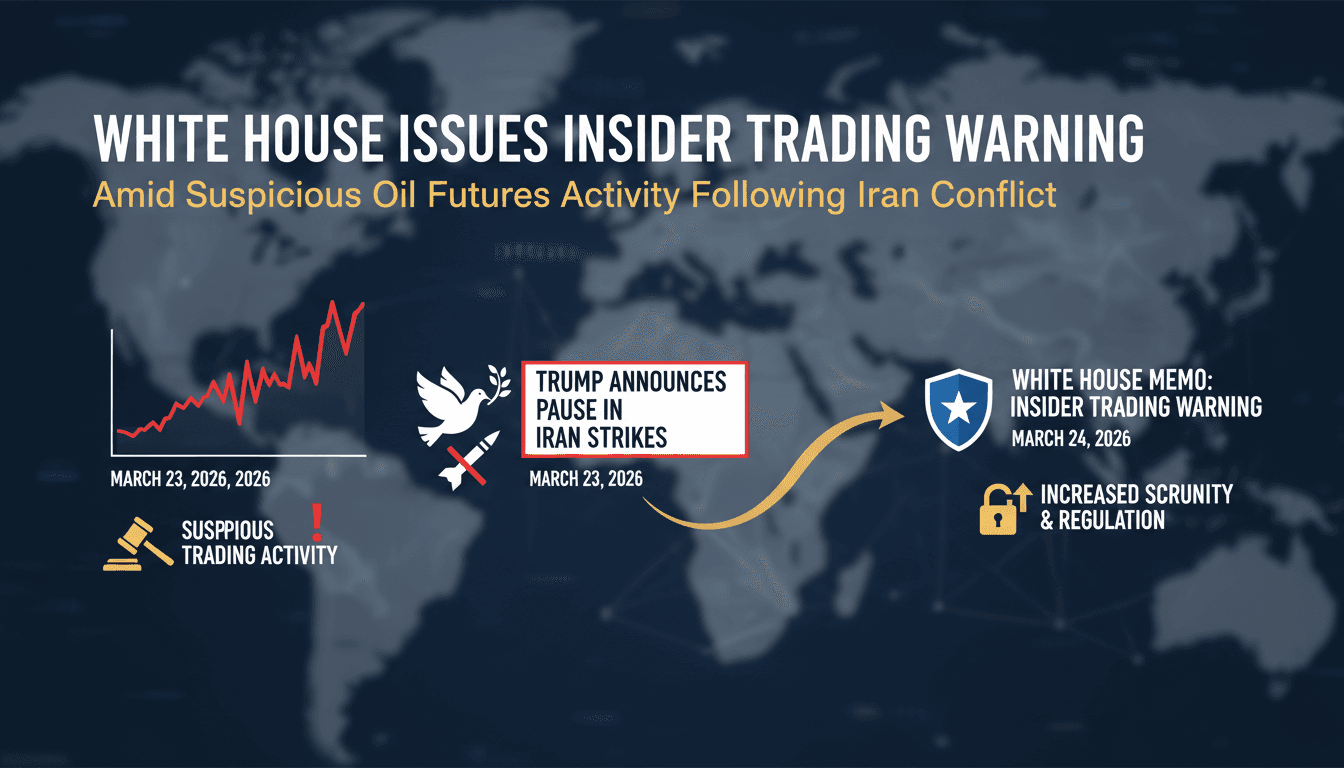
- On March 24, 2026, the White House Management Office issued a memo warning staff against using nonpublic information for financial gain on prediction markets.
- This warning followed unusual trading activity in oil futures and significant profits on platforms like Polymarket, coinciding with President Trump's announcements regarding military actions in Iran.
- Despite no direct evidence linking White House personnel to the trades, critics raised concerns about potential ethics violations, leading to ongoing media scrutiny.
The context you actually need
- U.S. and Israeli military strikes against Iran began in February 2026, escalating regional tensions and influencing global oil markets.
- Trading volumes surged in anticipation of policy announcements, with over $760 million in oil futures traded just minutes before a key announcement on March 23.
- Previous incidents involving insider trading related to other geopolitical events have prompted calls for stricter regulations on prediction markets.
What's really happening
The White House's recent memo serves as a critical reminder of the ethical boundaries that public officials must navigate, especially in times of geopolitical tension. The surge in trading activity on platforms like Polymarket highlights a growing trend where individuals leverage nonpublic information for financial gain, raising alarms about insider trading.
In the lead-up to President Trump's announcement on March 23, 2026, there was a notable spike in trading volumes—over $760 million in oil futures and S&P 500 futures traded within a two-minute window, just 15 minutes before the announcement. This timing raises questions about whether traders had advance knowledge of the announcement, which is a hallmark of insider trading. The fact that three accounts on Polymarket secured profits exceeding $600,000 on ceasefire bets further complicates the narrative, suggesting that some individuals may have been privy to information not available to the general public.
The White House's response, which included a reminder of existing ethics guidelines and potential criminal penalties, reflects an attempt to mitigate reputational damage amid ongoing scrutiny. This isn't the first time such warnings have been issued; previous incidents involving insider trading related to tariffs and other geopolitical events have prompted similar responses. The ethical implications are significant, as they not only affect the integrity of prediction markets but also the public's trust in government officials.
Moreover, the implications extend beyond the immediate political landscape. The volatility in oil futures, driven by U.S. policy announcements, has had a tangible impact on global markets, particularly in regions like Dubai. The UAE has already seen losses exceeding $120 billion in its markets, with disruptions in tourism, logistics, and property sectors. This situation illustrates how interconnected global markets are and how actions taken by a single government can reverberate across the world.
As the media continues to scrutinize these trades and the ethics surrounding them, the potential for regulatory changes looms large. The proposed bills by Democratic lawmakers aimed at curbing insider trading on prediction markets could reshape how these platforms operate and how public officials engage with them.
Who feels it first (and how)
- Traders and Investors: Those involved in prediction markets may face stricter regulations and compliance requirements.
- Government Officials: Increased scrutiny could lead to more cautious behavior regarding public statements and trading activities.
- Market Analysts: Analysts will need to adjust their models and forecasts based on potential regulatory changes and market reactions.
- Residents of Dubai: Economic instability in the UAE due to oil market fluctuations may affect local businesses and employment.
What to watch next
- Legislative Developments: Watch for the progress of proposed bills aimed at regulating insider trading on prediction markets, as these could significantly alter the landscape.
- Market Reactions: Monitor how global oil prices respond to ongoing developments in the Iran situation and any subsequent U.S. policy announcements.
- Ethics Compliance: Keep an eye on how the White House and other government entities enforce compliance with ethics guidelines in light of this incident.
The White House issued a memo warning against insider trading amid suspicious trading activity.
Stricter regulations on prediction markets will be proposed and potentially enacted in response to these events.
The long-term impact on prediction markets and oil prices remains uncertain as geopolitical tensions evolve.
Frequently Asked Questions
- Why it matters?
- This situation underscores the ethical complexities and regulatory challenges surrounding insider trading in volatile markets.
- What happened (in 30 seconds)?
- On March 24, 2026, the White House Management Office issued a memo warning staff against using nonpublic information for financial gain on prediction markets. This warning followed unusual trading activity in oil futures and significant profits on platforms like Polymarket, coinciding with President Trump's announcements regarding military actions in Iran. Despite no direct evidence linking White House personnel to the trades, critics raised concerns about potential ethics violations, leadin
- What's really happening?
- The White House's recent memo serves as a critical reminder of the ethical boundaries that public officials must navigate, especially in times of geopolitical tension. The surge in trading activity on platforms like Polymarket highlights a growing trend where individuals leverage nonpublic information for financial gain, raising alarms about insider trading. In the lead-up to President Trump's announcement on March 23, 2026, there was a notable spike in trading volumes—over $760 million in oil
- Who feels it first (and how)?
- Traders and Investors: Those involved in prediction markets may face stricter regulations and compliance requirements. Government Officials: Increased scrutiny could lead to more cautious behavior regarding public statements and trading activities. Market Analysts: Analysts will need to adjust their models and forecasts based on potential regulatory changes and market reactions. Residents of Dubai: Economic instability in the UAE due to oil market fluctuations may affect local businesses a
- What to watch next?
- Legislative Developments: Watch for the progress of proposed bills aimed at regulating insider trading on prediction markets, as these could significantly alter the landscape. Market Reactions: Monitor how global oil prices respond to ongoing developments in the Iran situation and any subsequent U.S. policy announcements. Ethics Compliance: Keep an eye on how the White House and other government entities enforce compliance with ethics guidelines in light of this incident.
Right-of-center views on political news.
"The Washington Times is a conservative-leaning newspaper known for its political coverage and advocacy of right-of-center viewpoints."
— A47 Editor
White House staff issues insider trading warning due to well-timed bets
The White House has issued a warning to its staff against engaging in insider trading, particularly in light of well-timed bets related to the ongoing conflict in Iran. This caution comes amid scrutiny over potential conflicts of interest as staff re...
Covers blockchain, cryptocurrency news, project analysis, and market insights.
"Cointelegraph is a leading crypto-focused media outlet known for timely news, analysis, and educational content related to blockchain and digital assets."
— A47 Editor
White House warns staff as Iran bets add to growing insider trading concerns
The White House has issued a warning to its staff regarding the use of confidential information amid rising concerns over insider trading linked to Iran-related oil futures bets. This warning follows reports of suspicious betting activity that coinci...