
Iran's IRGC Mosquito Fleet Intensifies Disruption of Strait of Hormuz Amid US Naval Blockade
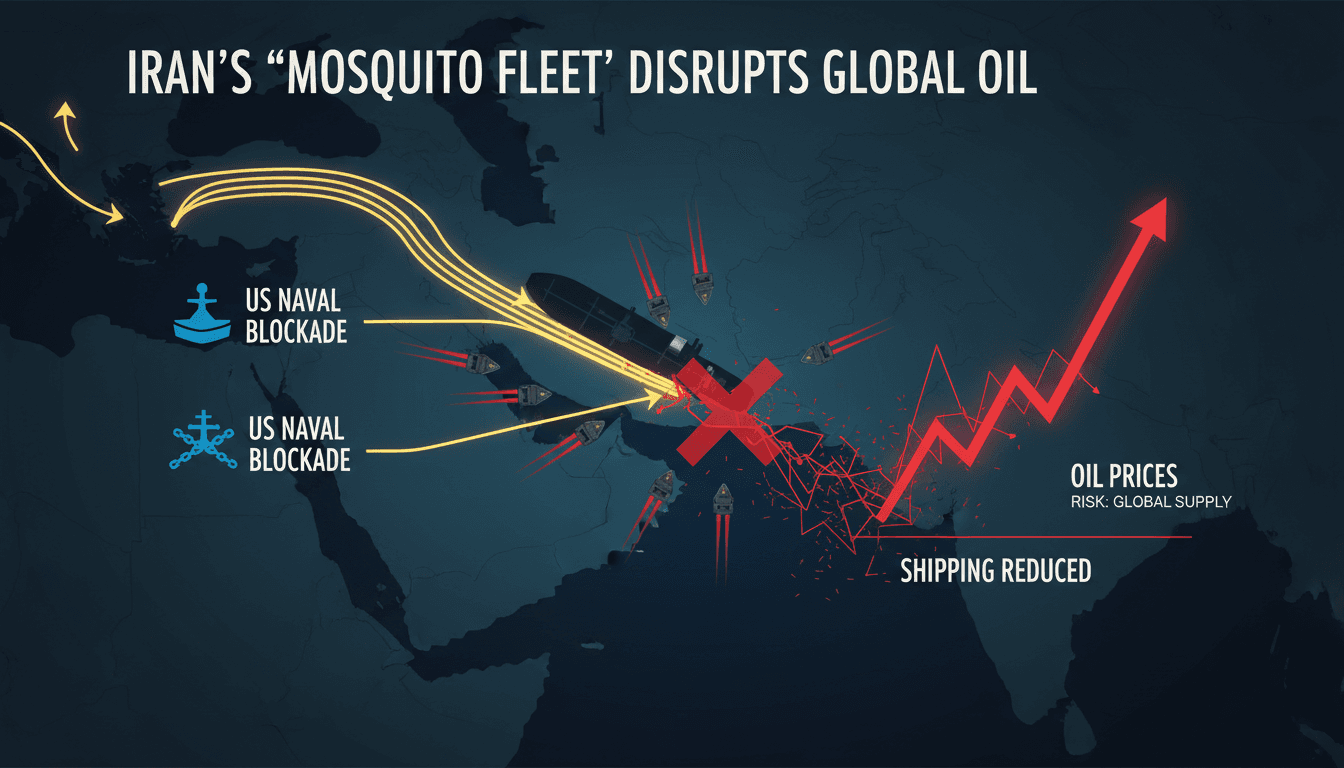
Here's what it means for you.
If you rely on global oil supplies, the ongoing disruptions in the Strait of Hormuz could lead to increased costs and volatility in energy prices.
Why it matters
The Strait of Hormuz is a critical chokepoint for global oil transit, with 20% of the world's oil passing through it.
What happened (in 30 seconds)
- Iran's IRGC 'Mosquito Fleet' continues to harass commercial vessels in the Strait of Hormuz, despite significant losses to its conventional navy.
- US naval blockade of Iranian ports has intensified following failed peace talks, leading to a dramatic reduction in shipping traffic.
- Oil prices surged above $100 per barrel amid fears of supply disruptions, impacting global markets and local economies.
The context you actually need
- Asymmetric warfare tactics: The IRGC's Mosquito Fleet employs swarm tactics using small, fast boats, drones, and missiles to create uncertainty for larger naval forces.
- Historical lessons: This strategy draws from Iran's experiences during the Iran-Iraq War and previous Gulf confrontations, emphasizing stealth and rapid deployment.
- Economic implications: The ongoing disruptions have led to soaring insurance premiums for shipping operators and increased fuel prices in regions like Dubai.
What's really happening
The IRGC's Mosquito Fleet, comprising over 1,500 small, high-speed boats, has emerged as a key player in Iran's naval strategy following significant losses to its conventional navy due to US and Israeli airstrikes. These boats, launched from fortified coastal caves, utilize swarm tactics that integrate drones and missiles, allowing them to impose costs on adversaries while remaining difficult to detect.
The backdrop of this situation is a US-imposed blockade of Iranian ports, which followed the collapse of peace talks in early April 2026. In response, the IRGC has ramped up its operations, targeting commercial vessels and employing tactics such as GPS jamming and naval mines. This has led to a drastic reduction in shipping traffic through the Strait of Hormuz, from approximately 140 vessels daily to as few as 4-5, primarily carrying dry cargo.
The economic ramifications are significant. The disruptions have caused a spike in oil prices, which surged above $100 per barrel before settling below $90 after claims of a ceasefire. However, the uncertainty remains, as the IRGC's tactics continue to pose a threat to shipping operations. Insurance premiums for vessels navigating the Strait have soared, adding billions in costs to global shipping operations.
Moreover, the UAE has experienced a 33% surge in fuel prices, the largest monthly increase on record, straining residents and businesses alike. The situation has forced commercial operators to reroute or idle tankers, leading to billions in daily costs across the global economy.
As the IRGC maintains its operations, the US has responded with airstrikes on Iranian targets and expanded its naval blockade to include sanctioned vessels. This ongoing conflict not only affects regional stability but also has far-reaching implications for global energy markets and supply chains.
Who feels it first (and how)
- Shipping operators: Facing increased costs and operational risks due to heightened insurance premiums and rerouted vessels.
- Energy consumers: Residents and businesses in regions like Dubai are experiencing rising fuel prices, impacting daily expenses.
- Oil producers: Countries like Saudi Arabia may benefit from increased revenues, while others like the UAE face economic strain due to reduced shipping volumes.
What to watch next
- US military responses: Monitor any escalations in US naval operations or airstrikes against Iranian assets, as these could further impact shipping routes.
- Oil price fluctuations: Keep an eye on global oil prices, particularly if shipping disruptions continue, as this will affect energy costs worldwide.
- Diplomatic developments: Watch for any renewed peace talks or negotiations that could alter the current blockade and reduce tensions in the region.
The IRGC's Mosquito Fleet is actively disrupting shipping in the Strait of Hormuz.
Oil prices will remain volatile as long as the threat of disruption persists.
The long-term effectiveness of US military responses in deterring Iranian naval operations.
Frequently Asked Questions
- Why it matters?
- The Strait of Hormuz is a critical chokepoint for global oil transit, with 20% of the world's oil passing through it.
- What happened (in 30 seconds)?
- Iran's IRGC 'Mosquito Fleet' continues to harass commercial vessels in the Strait of Hormuz, despite significant losses to its conventional navy. US naval blockade of Iranian ports has intensified following failed peace talks, leading to a dramatic reduction in shipping traffic. Oil prices surged above $100 per barrel amid fears of supply disruptions, impacting global markets and local economies.
- What's really happening?
- The IRGC's Mosquito Fleet, comprising over 1,500 small, high-speed boats, has emerged as a key player in Iran's naval strategy following significant losses to its conventional navy due to US and Israeli airstrikes. These boats, launched from fortified coastal caves, utilize swarm tactics that integrate drones and missiles, allowing them to impose costs on adversaries while remaining difficult to detect. The backdrop of this situation is a US-imposed blockade of Iranian ports, which followed th
- Who feels it first (and how)?
- Shipping operators: Facing increased costs and operational risks due to heightened insurance premiums and rerouted vessels. Energy consumers: Residents and businesses in regions like Dubai are experiencing rising fuel prices, impacting daily expenses. Oil producers: Countries like Saudi Arabia may benefit from increased revenues, while others like the UAE face economic strain due to reduced shipping volumes.
- What to watch next?
- US military responses: Monitor any escalations in US naval operations or airstrikes against Iranian assets, as these could further impact shipping routes. Oil price fluctuations: Keep an eye on global oil prices, particularly if shipping disruptions continue, as this will affect energy costs worldwide. Diplomatic developments: Watch for any renewed peace talks or negotiations that could alter the current blockade and reduce tensions in the region.
Algerian and regional news coverage.
"Echorouk is a major Algerian outlet with broad national reporting."
— A47 Editor
“أسطول البعوض” الإيراني.. حرب خفية تُربك الملاحة في مضيق هرمز
The New York Times published a controversial report discussing the Iranian 'Mosquito Fleet,' which continues to pose a significant threat in the Strait of Hormuz. The report raises questions about Tehran's ability to maintain this form of military po...
Regional and international reporting focused on Middle Eastern politics, diplomacy, and economics.
"Asharq Al-Awsat is a Saudi-owned international newspaper reflecting mainstream Gulf political perspectives."
— A47 Editor
Why Iran’s ‘Mosquito Fleet’ Remains a Potent Threat in the Strait of Hormuz
Iran's maritime assertiveness has escalated with the recent seizure of multiple ships in the Strait of Hormuz, a critical waterway for global oil transport. This action follows a series of confrontations, including the imposition of tolls deemed ille...