
Starmer and Trump Discuss Shipping Resumption in Strait of Hormuz Post Ceasefire
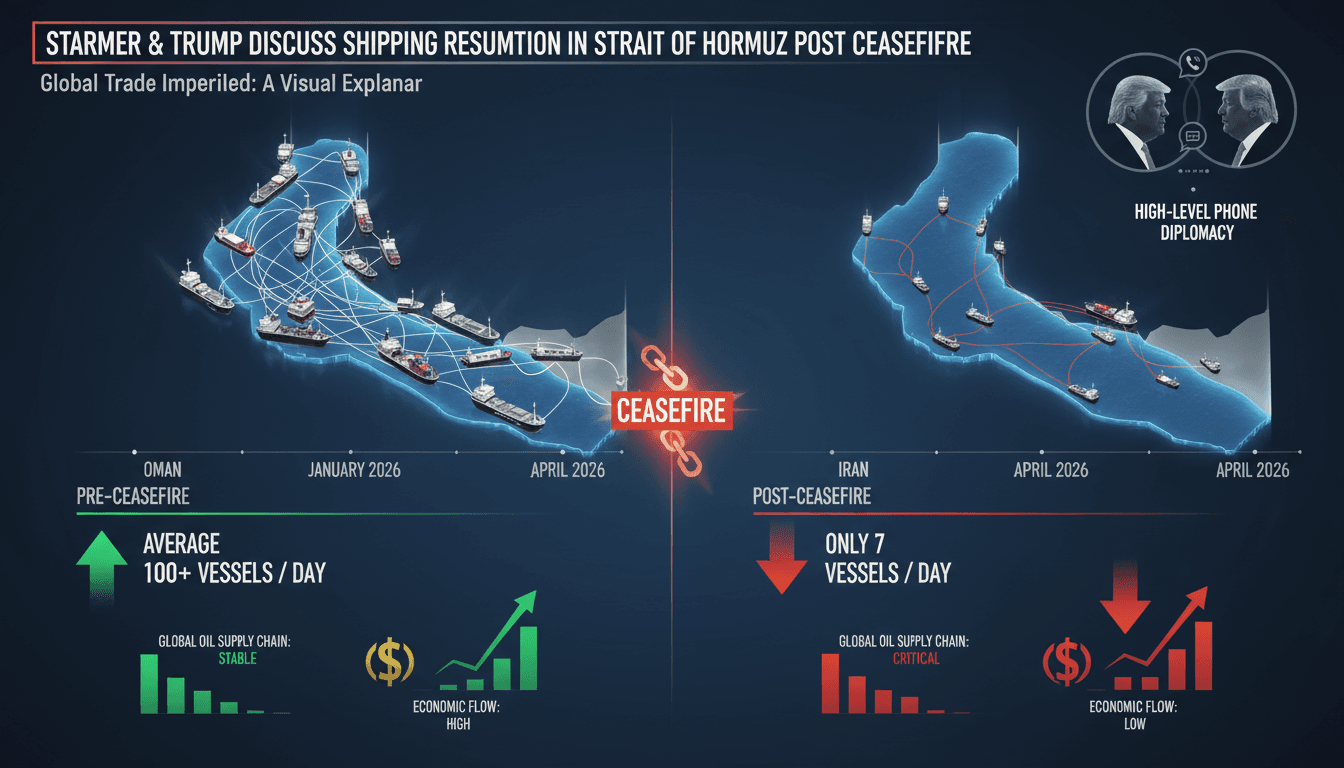
Here's what it means for you.
If shipping through the Strait of Hormuz resumes, global oil prices could stabilize, impacting fuel costs and supply chains everywhere.
Why it matters
The Strait of Hormuz is a critical chokepoint for global oil trade, and its disruption affects energy prices and economic stability worldwide.
What happened (in 30 seconds)
- On April 9, 2026, British Prime Minister Keir Starmer and U.S. President Donald Trump discussed plans to reopen the Strait of Hormuz following a recent U.S.-Iran ceasefire.
- Shipping traffic remains critically low, with only 7 vessels transiting the strait, compared to the normal 140, due to ongoing tensions and restrictions.
- The crisis began on February 28, 2026, when U.S.-Israeli airstrikes led to Iranian retaliation, effectively halting shipping in the strait.
The context you actually need
- The Strait of Hormuz accounts for approximately 20% of global seaborne oil trade, making it essential for energy security.
- The recent ceasefire was a temporary measure, with Iran maintaining tolls and restrictions, complicating the path to full shipping resumption.
- Economic repercussions are already visible, with rising fuel and grocery prices in regions like Dubai, as well as a decline in tourism and property markets.
What's really happening
The telephone discussion between Starmer and Trump represents a significant diplomatic effort to address the ongoing crisis in the Strait of Hormuz, which has seen a dramatic decline in shipping traffic since the onset of hostilities in February 2026. The initial crisis was triggered by U.S.-Israeli airstrikes that killed Iranian Supreme Leader Ali Khamenei, prompting Iran to retaliate with missile attacks and a blockade of the strait. This blockade effectively halted non-allied shipping, leading to a situation where over 150 ships were left anchored outside the strait, and only a handful managed to pass through.
The recent ceasefire, initiated on April 8, 2026, has provided a temporary reprieve, but the situation remains fragile. The Iranian government has demanded cryptocurrency tolls during this ceasefire, maintaining a level of control over the strait that complicates the reopening process. Starmer's call to Trump is part of a broader strategy to establish a practical plan for resuming shipping and restoring freedom of navigation in this vital waterway.
The implications of this crisis extend beyond immediate shipping concerns. With Brent crude prices exceeding $100 per barrel shortly after the onset of the crisis, the economic impact is felt globally. Countries reliant on oil imports are facing increased fuel prices, which in turn affects grocery costs and overall inflation. For instance, Dubai residents are already experiencing rising prices due to supply chain disruptions caused by the conflict.
The ongoing discussions between Starmer and Trump signal a commitment to resolving the crisis, but the path forward is fraught with challenges. Shipping firms remain cautious, with many choosing to suspend transits until a more stable environment is assured. The presence of over 230 tankers waiting inside the Gulf highlights the urgency of the situation, as the global oil supply has been curtailed by approximately 20%.
As the situation evolves, the focus will be on how quickly and effectively the leaders can translate their discussions into actionable plans that restore normal shipping operations. The economic stakes are high, and the ripple effects of this crisis will be felt across various sectors, from energy to consumer goods.
Who feels it first (and how)
- Shipping companies: Facing operational disruptions and increased costs due to limited traffic.
- Oil-importing nations: Experiencing rising fuel prices that impact inflation and economic stability.
- Consumers: Feeling the pinch from higher grocery and fuel prices as supply chains are affected.
- Tourism and hospitality sectors: Suffering from reduced travel and economic activity in regions like Dubai.
What to watch next
- Shipping traffic levels: Monitoring the number of vessels transiting the strait will indicate the effectiveness of diplomatic efforts.
- Oil price fluctuations: Changes in Brent crude prices will reflect market reactions to developments in the Strait of Hormuz.
- Iran's response to ceasefire terms: How Iran navigates toll demands and shipping restrictions will shape the future of maritime trade in the region.
The Strait of Hormuz is crucial for global oil trade, with significant economic implications.
Continued diplomatic efforts will be necessary to restore full shipping operations.
The long-term stability of the ceasefire and its impact on shipping traffic remains uncertain.
Frequently Asked Questions
- Why it matters?
- The Strait of Hormuz is a critical chokepoint for global oil trade, and its disruption affects energy prices and economic stability worldwide.
- What happened (in 30 seconds)?
- On April 9, 2026, British Prime Minister Keir Starmer and U.S. President Donald Trump discussed plans to reopen the Strait of Hormuz following a recent U.S.-Iran ceasefire. Shipping traffic remains critically low, with only 7 vessels transiting the strait, compared to the normal 140, due to ongoing tensions and restrictions. The crisis began on February 28, 2026, when U.S.-Israeli airstrikes led to Iranian retaliation, effectively halting shipping in the strait.
- What's really happening?
- The telephone discussion between Starmer and Trump represents a significant diplomatic effort to address the ongoing crisis in the Strait of Hormuz, which has seen a dramatic decline in shipping traffic since the onset of hostilities in February 2026. The initial crisis was triggered by U.S.-Israeli airstrikes that killed Iranian Supreme Leader Ali Khamenei, prompting Iran to retaliate with missile attacks and a blockade of the strait. This blockade effectively halted non-allied shipping, leadin
- Who feels it first (and how)?
- Shipping companies: Facing operational disruptions and increased costs due to limited traffic. Oil-importing nations: Experiencing rising fuel prices that impact inflation and economic stability. Consumers: Feeling the pinch from higher grocery and fuel prices as supply chains are affected. Tourism and hospitality sectors: Suffering from reduced travel and economic activity in regions like Dubai.
- What to watch next?
- Shipping traffic levels: Monitoring the number of vessels transiting the strait will indicate the effectiveness of diplomatic efforts. Oil price fluctuations: Changes in Brent crude prices will reflect market reactions to developments in the Strait of Hormuz. Iran's response to ceasefire terms: How Iran navigates toll demands and shipping restrictions will shape the future of maritime trade in the region.
Regional coverage and analysis focused on politics, diplomacy, and business across the Middle East.
"Al-Monitor is known for analytical reporting on Middle East politics and policy developments."
— A47 Editor
Starmer, Trump discussed opening Strait of Hormuz, Downing Street says
British Prime Minister Keir Starmer and U.S. President Donald Trump discussed the urgent need to restore shipping through the Strait of Hormuz following a ceasefire agreement with Iran. The conversation emphasized the importance of a viable plan to e...
Business, investment, entrepreneurship, leadership, and innovation.
"Forbes is known for its coverage of business leaders, market trends, and entrepreneurial ventures with a pro-business editorial stance."
— A47 Editor
Keir Starmer Questions Trump’s Values—As Global Leaders Express Distrust Of Iran Ceasefire
Keir Starmer has raised concerns regarding former President Donald Trump's values as global leaders express skepticism about a recently announced ceasefire with Iran. This ceasefire, which aims to de-escalate military tensions, has been met with mixe...
Political developments, policy debates, elections, and government affairs in the UK.
"BBC News is widely regarded as a reputable international news organization, known for its impartial tone and public service mandate."
— A47 Editor
Starmer says much work remains to make US-Iran ceasefire hold
UK Prime Minister Keir Starmer has emphasized the need for significant efforts to ensure the sustainability of a recently announced two-week ceasefire between the United States and Iran, which aims to ease escalating tensions in the Middle East. Star...
Arabic-language coverage of political affairs and current events.
"Okaz political coverage typically follows mainstream Saudi framing on national and regional affairs."
— A47 Editor
ستارمر يتجه إلى الخليج لضمان فتح مضيق هرمز بعد هدنة واشنطن وطهران
British Prime Minister Keir Starmer is traveling to the Gulf region to engage in discussions with regional leaders, aiming to ensure the permanent reopening of the Strait of Hormuz following a ceasefire agreement between the United States and Iran. S...