
New Jersey Men Sentenced for Facilitating North Korean IT Infiltration of U.S. Companies
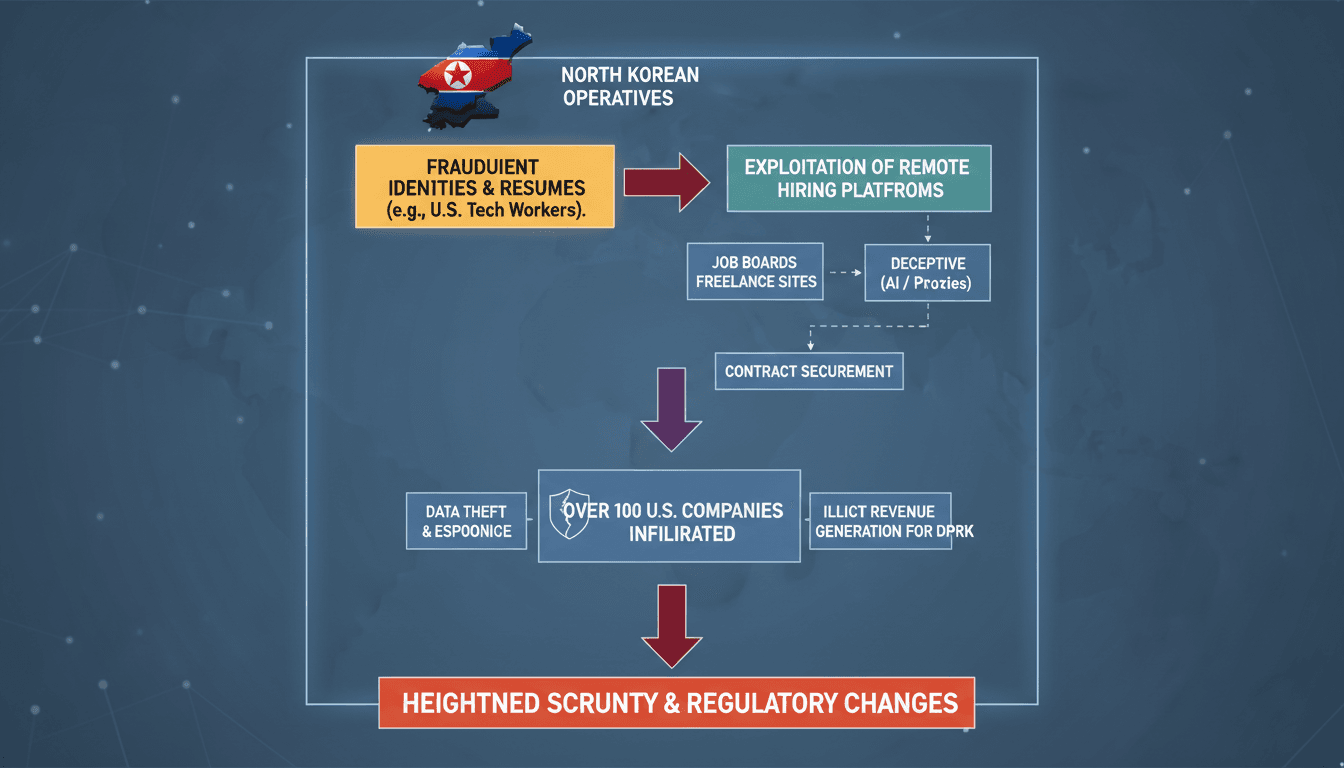
Here's what it means for you.
If you work in tech or cybersecurity, this incident underscores the critical need for enhanced vetting processes in remote hiring.
Why it matters
This case highlights vulnerabilities in U.S. companies' cybersecurity frameworks, particularly regarding remote work arrangements.
What happened (in 30 seconds)
- Two New Jersey men were sentenced for facilitating North Korean operatives' infiltration of over 100 U.S. companies.
- The scheme involved using stolen identities and shell companies to create fraudulent remote IT positions, generating over $5 million for North Korea.
- Kejia Wang received 108 months in prison, while Zhenxing Wang received 92 months, both facing supervised release and financial forfeitures.
The context you actually need
- North Korea's IT schemes have been operational since at least 2018, generating significant revenue to fund weapons programs while evading UN sanctions.
- U.S. authorities intensified crackdowns in 2025, targeting facilitators of these schemes, which often involve complex networks of remote access technology.
- The infiltration of sensitive roles in U.S. firms poses risks to proprietary data and national security, as evidenced by the involvement of a defense contractor in this case.
What's really happening
The scheme orchestrated by Kejia Wang and Zhenxing Wang illustrates a sophisticated approach to circumventing U.S. sanctions and exploiting the remote work trend accelerated by the COVID-19 pandemic. Beginning around 2021, Kejia Wang established shell companies, such as Hopana Tech LLC, to create a façade for hiring North Korean operatives. This operation relied on a network of "laptop farms," where hundreds of computers were hosted remotely, allowing North Korean workers to access U.S. companies' systems while masking their true locations.
The use of stolen identities was central to this operation, enabling the North Korean workers to appear legitimate to their employers. By employing KVM switches, the Wang brothers facilitated remote access to these laptops, effectively creating a virtual workspace that obscured the operatives' origins. This method not only generated substantial revenue for the Democratic People's Republic of Korea (DPRK) but also posed significant risks to U.S. companies, which faced millions in damages due to the infiltration.
The U.S. Department of Justice (DOJ) and the FBI have been increasingly vigilant against such schemes, recognizing the potential for sensitive data breaches and the implications for national security. The indictments unsealed in June 2025 against nine individuals, including eight overseas, reflect a broader strategy to dismantle these networks. The recovery of laptops and the seizure of domains and accounts further illustrate the proactive measures being taken to combat this threat.
Kejia Wang's guilty plea in September 2025 to multiple charges, including wire fraud and money laundering, and Zhenxing Wang's subsequent plea in January 2026, highlight the legal repercussions for those facilitating these operations. The sentences handed down in April 2026 serve as a deterrent against future attempts to exploit remote work for illicit purposes.
As remote work continues to be a staple in many industries, the vulnerabilities exposed by this case emphasize the need for companies to reassess their hiring practices and cybersecurity measures. The potential for similar schemes to emerge remains a pressing concern, particularly as global tensions persist.
Who feels it first (and how)
- Tech companies: Increased scrutiny on remote hiring practices and potential financial losses from compromised data.
- Cybersecurity professionals: Heightened demand for robust security measures and protocols to prevent similar infiltrations.
- Government agencies: Ongoing investigations and potential policy changes aimed at tightening regulations around remote work and cybersecurity.
What to watch next
- Increased regulatory scrutiny: Expect more stringent guidelines for remote hiring practices, particularly in sensitive sectors.
- Cybersecurity investments: Companies may ramp up spending on cybersecurity solutions to mitigate risks associated with remote work.
- International cooperation: Watch for enhanced collaboration between nations to combat cybercrime and sanction evasion, particularly involving North Korea.
The scheme generated over $5 million for North Korea and involved over 100 U.S. companies.
Companies will face increased pressure to enhance their cybersecurity measures and vetting processes for remote employees.
The full extent of data compromised and the long-term implications for affected companies remain to be seen.
Frequently Asked Questions
- Why it matters?
- This case highlights vulnerabilities in U.S. companies' cybersecurity frameworks, particularly regarding remote work arrangements.
- What happened (in 30 seconds)?
- Two New Jersey men were sentenced for facilitating North Korean operatives' infiltration of over 100 U.S. companies. The scheme involved using stolen identities and shell companies to create fraudulent remote IT positions, generating over $5 million for North Korea. Kejia Wang received 108 months in prison, while Zhenxing Wang received 92 months, both facing supervised release and financial forfeitures.
- What's really happening?
- The scheme orchestrated by Kejia Wang and Zhenxing Wang illustrates a sophisticated approach to circumventing U.S. sanctions and exploiting the remote work trend accelerated by the COVID-19 pandemic. Beginning around 2021, Kejia Wang established shell companies, such as Hopana Tech LLC, to create a façade for hiring North Korean operatives. This operation relied on a network of "laptop farms," where hundreds of computers were hosted remotely, allowing North Korean workers to access U.S. companie
- Who feels it first (and how)?
- Tech companies: Increased scrutiny on remote hiring practices and potential financial losses from compromised data. Cybersecurity professionals: Heightened demand for robust security measures and protocols to prevent similar infiltrations. Government agencies: Ongoing investigations and potential policy changes aimed at tightening regulations around remote work and cybersecurity.
- What to watch next?
- Increased regulatory scrutiny: Expect more stringent guidelines for remote hiring practices, particularly in sensitive sectors. Cybersecurity investments: Companies may ramp up spending on cybersecurity solutions to mitigate risks associated with remote work. International cooperation: Watch for enhanced collaboration between nations to combat cybercrime and sanction evasion, particularly involving North Korea.
Tech news, hardware, and AI tools coverage.
"PC/tech site increasingly covering AI hardware and apps."
— A47 Editor
Two New Jersey men jailed for helping North Korean IT workers infiltrate 100+ companies
Kejia Wang and Zhenxing Wang, two men from New Jersey, have been sentenced to prison for their involvement in a scheme that facilitated North Korean IT workers' infiltration of over 100 companies, with Kejia receiving nine years and Zhenxing nearly e...
Curated tech headlines including AI stories.
"Influential aggregator surfacing the day’s top tech/AI links."
— A47 Editor
The US DOJ says a judge sentenced two US citizens to a combined 16 years in prison for running laptop farms that let North Korean IT workers pose as US workers (Jowi Morales/Tom's Hardware)
The U.S. Department of Justice announced that a judge has sentenced two American citizens to a combined 16 years in prison for operating laptop farms that enabled North Korean IT workers to impersonate U.S. employees. This scheme reportedly generated...
Startup news with frequent AI coverage.
"Covers launches, funding, and product updates in AI."
— A47 Editor
Two Americans sentenced for helping North Korea steal $5 million in fake IT worker scheme
Two Americans have been sentenced to a combined 16 years in prison for facilitating a scheme that allowed North Korean operatives to impersonate U.S. IT workers, resulting in the theft of approximately $5 million. The U.S. Department of Justice annou...