
Israeli Defense Forces Warn of Maritime Evacuation Due to Hezbollah Threats
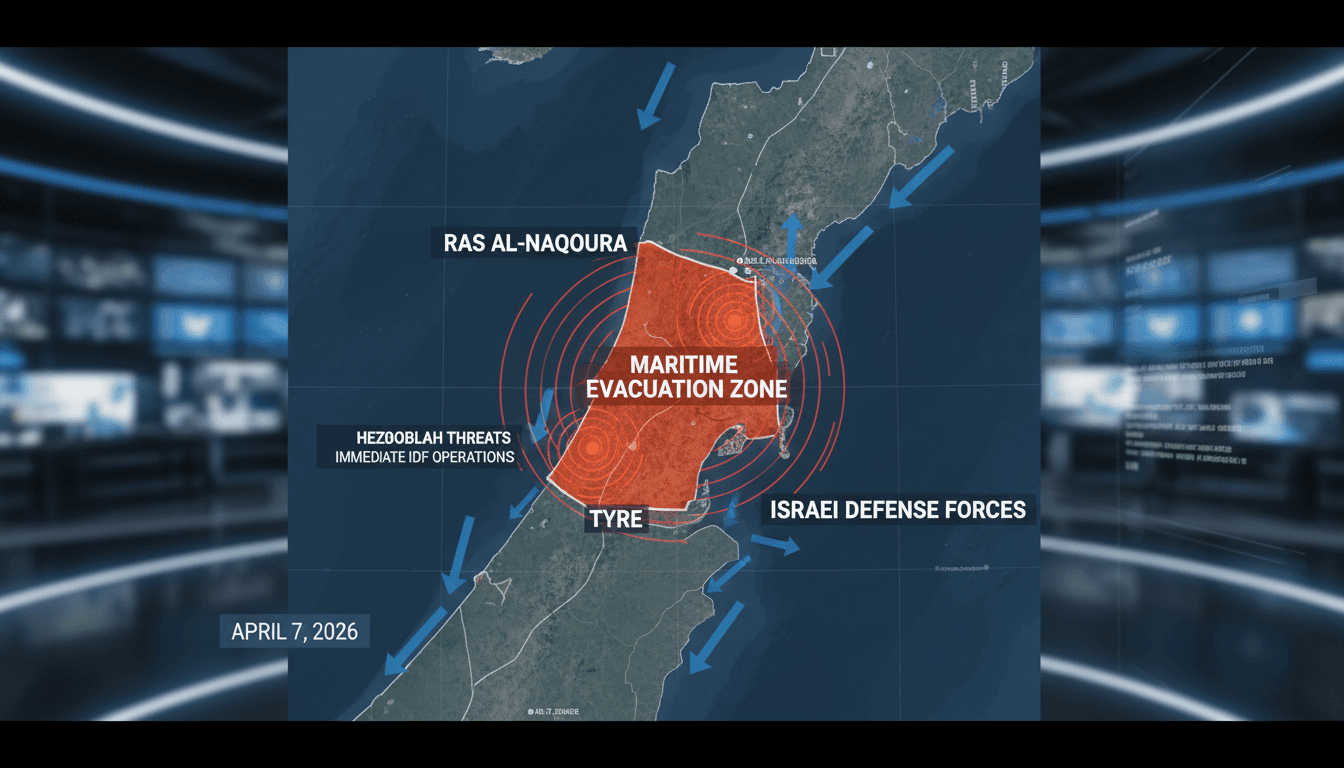
Here's what it means for you.
If you are part of the UAE's Lebanese expatriate community, the ongoing conflict could impact your remittances and travel plans.
Why it matters
This maritime warning highlights escalating tensions in the Israel-Hezbollah conflict, which could disrupt regional stability and economic activities.
What happened (in 30 seconds)
- On April 7, 2026, the Israeli Defense Forces (IDF) issued a maritime evacuation warning for vessels between Ras al-Naqoura and Tyre off the southern Lebanon coast.
- The warning, attributed to Hezbollah activities, directed vessels to immediately sail north of Tyre to ensure safety.
- This directive follows ongoing military operations in southern Lebanon amid the 2026 Israel-Hezbollah war, which has already displaced over 1 million Lebanese civilians.
The context you actually need
- The 2026 Lebanon war began on March 2, 2026, with Israeli airstrikes targeting Hezbollah, escalating to ground incursions.
- Over 1 million Lebanese have been displaced, with significant casualties reported, primarily on the Lebanese side.
- Prior evacuation orders were issued for Tyre, indicating a systematic approach by the IDF to manage civilian safety amid military operations.
What's really happening
The Israeli Defense Forces' (IDF) maritime evacuation warning is a direct response to perceived threats from Hezbollah, which has been actively engaging in military operations along the southern Lebanese coast. The warning, issued by IDF Arabic spokesperson Avichay Adraee, highlights the IDF's commitment to safeguarding maritime traffic in a region fraught with conflict. By ordering vessels to evacuate north of Tyre, the IDF aims to mitigate risks associated with Hezbollah's activities, which have escalated since the onset of the war.
This conflict has roots in long-standing tensions between Israel and Hezbollah, exacerbated by recent military engagements. The IDF's operations are not just about immediate military objectives; they also serve to assert control over maritime routes that are vital for regional trade and security. The decision to issue a maritime warning reflects a broader strategy to deter Hezbollah's influence and protect Israeli interests in the area.
The implications of this warning extend beyond immediate military concerns. With over 1 million Lebanese civilians displaced since the conflict began, the humanitarian crisis is deepening. The ongoing war has led to significant casualties and infrastructure destruction, further complicating the situation for civilians in southern Lebanon. The IDF's actions, while aimed at neutralizing threats, also contribute to the growing instability in the region, which could have ripple effects on neighboring countries, including the UAE.
For the UAE, where a substantial Lebanese expatriate community resides, the escalation of conflict raises concerns about remittances and travel. The potential for regional disruptions could strain financial ties and complicate logistics for those wishing to travel to Lebanon. As the situation evolves, the interconnectedness of regional economies means that developments in Lebanon will likely influence market conditions in the UAE and beyond.
Who feels it first (and how)
- Lebanese expatriates in the UAE: Concerns about remittances and family safety may increase.
- Maritime shipping companies: Potential disruptions in shipping routes could affect logistics and costs.
- Regional governments: Heightened tensions may lead to diplomatic challenges and security concerns.
What to watch next
- IDF operations: Monitor for further military actions and their implications for maritime safety.
- Humanitarian response: Watch for international efforts to address the displacement crisis in Lebanon.
- Economic indicators: Keep an eye on regional market stability, particularly oil prices and trade routes.
The IDF has issued a maritime evacuation warning due to Hezbollah activities.
Continued military operations will exacerbate the humanitarian crisis in Lebanon.
The long-term impact on regional stability and economic conditions remains uncertain.
Frequently Asked Questions
- Why it matters?
- This maritime warning highlights escalating tensions in the Israel-Hezbollah conflict, which could disrupt regional stability and economic activities.
- What happened (in 30 seconds)?
- On April 7, 2026, the Israeli Defense Forces (IDF) issued a maritime evacuation warning for vessels between Ras al-Naqoura and Tyre off the southern Lebanon coast. The warning, attributed to Hezbollah activities, directed vessels to immediately sail north of Tyre to ensure safety. This directive follows ongoing military operations in southern Lebanon amid the 2026 Israel-Hezbollah war, which has already displaced over 1 million Lebanese civilians.
- What's really happening?
- The Israeli Defense Forces' (IDF) maritime evacuation warning is a direct response to perceived threats from Hezbollah, which has been actively engaging in military operations along the southern Lebanese coast. The warning, issued by IDF Arabic spokesperson Avichay Adraee, highlights the IDF's commitment to safeguarding maritime traffic in a region fraught with conflict. By ordering vessels to evacuate north of Tyre, the IDF aims to mitigate risks associated with Hezbollah's activities, which ha
- Who feels it first (and how)?
- Lebanese expatriates in the UAE: Concerns about remittances and family safety may increase. Maritime shipping companies: Potential disruptions in shipping routes could affect logistics and costs. Regional governments: Heightened tensions may lead to diplomatic challenges and security concerns.
- What to watch next?
- IDF operations: Monitor for further military actions and their implications for maritime safety. Humanitarian response: Watch for international efforts to address the displacement crisis in Lebanon. Economic indicators: Keep an eye on regional market stability, particularly oil prices and trade routes.
Arabic-language UAE newspaper coverage focused on domestic affairs, public institutions, business, society, and regional developments.
"Al Khaleej coverage generally reflects a mainstream UAE editorial lens with strong attention to public affairs, institutions, and regional developments."
— A47 Editor
إسرائيل تصدر إنذار إخلاء بحري في جنوب لبنان حتى صور
The Israeli military issued a maritime evacuation warning on Tuesday, urging all vessels in the waters off the southern coast of Lebanon to leave immediately and head north towards the city of Tyre. This directive highlights ongoing tensions in the r...
Regional and international reporting focused on Middle Eastern politics, diplomacy, and economics.
"Asharq Al-Awsat is a Saudi-owned international newspaper reflecting mainstream Gulf political perspectives."
— A47 Editor
Israel Urges All Vessels to Evacuate South Lebanon Maritime Area up to Tyre
Israel has urged all vessels to evacuate the maritime area off South Lebanon up to Tyre, amid escalating military tensions in the region. This warning follows a series of rocket launches from Lebanon, attributed to Hezbollah, which have prompted air ...